

My Garage
My Account
Cart
Genuine Ford Taurus Cylinder Head
Head- Select Vehicle by Model
- Select Vehicle by VIN
Select Vehicle by Model
orMake
Model
Year
Select Vehicle by VIN
For the most accurate results, select vehicle by your VIN (Vehicle Identification Number).
33 Cylinder Heads found
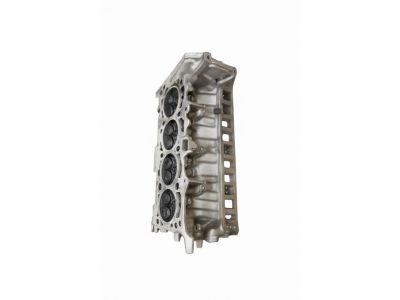

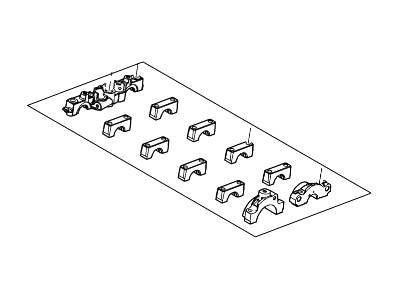
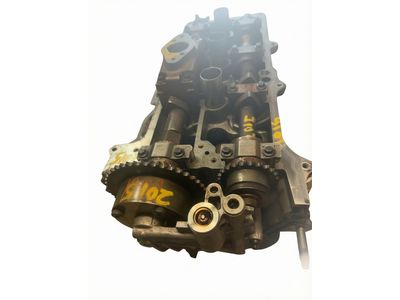
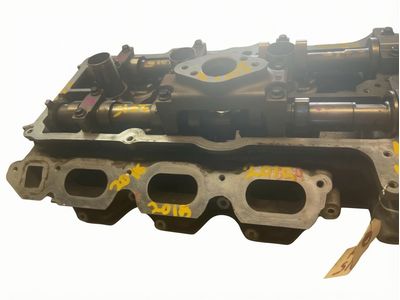
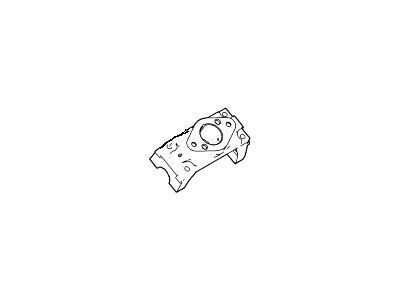
Ford Taurus Cylinder Head
Part Number: CJ5Z-6049-B$749.72 MSRP: $1050.77You Save: $301.05 (29%)Ships in 1-3 Business Days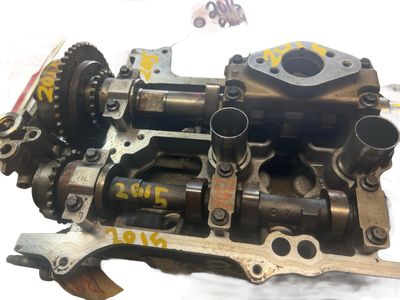
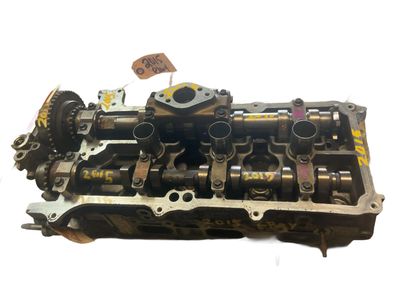
Ford Taurus Cylinder Head
Part Number: AA5Z-6049-D$2224.57 MSRP: $3081.54You Save: $856.97 (28%)Ships in 1-3 Business Days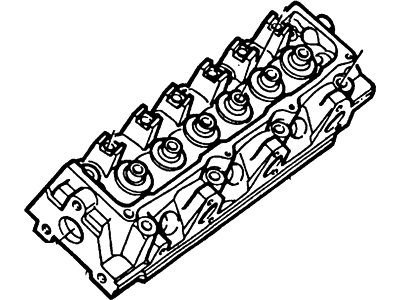

Ford Taurus Cylinder Head
Part Number: F6DZ-6049-BA$789.32 MSRP: $1092.12You Save: $302.80 (28%)Ships in 1-2 Business Days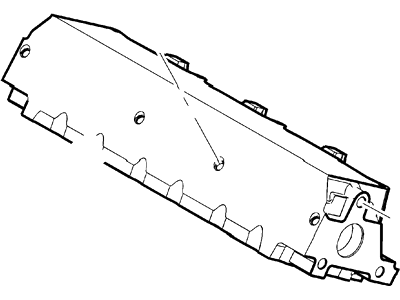
Ford Taurus Cylinder Head Assembly
Part Number: YL8Z-6049-AA$779.53 MSRP: $1078.00You Save: $298.47 (28%)Ships in 1-2 Business Days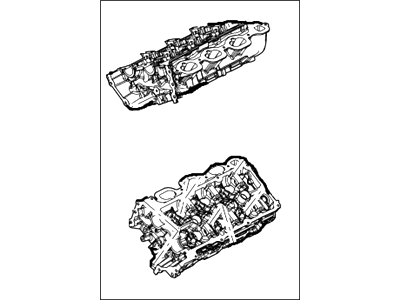
Ford Taurus Cylinder Head Assembly
Part Number: AT4Z-6049-C$859.52 MSRP: $1186.15You Save: $326.63 (28%)Ships in 1-3 Business DaysFord Taurus Cylinder Head Assembly
Part Number: YF1Z-6049-GA$761.24 MSRP: $1052.62You Save: $291.38 (28%)Ships in 1-3 Business DaysFord Taurus Cylinder Head Assembly
Part Number: AA5Z-6049-E$880.57 MSRP: $1215.38You Save: $334.81 (28%)Ships in 1-3 Business DaysFord Taurus Cylinder Head Assembly
Part Number: AT4Z-6049-D$892.76 MSRP: $1232.31You Save: $339.55 (28%)Ships in 1-3 Business DaysFord Taurus Cylinder Head Assembly
Part Number: 9T4Z-6049-A$586.62 MSRP: $807.23You Save: $220.61 (28%)Ships in 1-3 Business DaysFord Taurus Cylinder Head Assembly
Part Number: 7T4Z-6049-A$4079.37 MSRP: $5656.92You Save: $1577.55 (28%)Ships in 1-3 Business DaysFord Taurus Cylinder Head Assembly
Part Number: 7T4Z-6049-B$586.62 MSRP: $807.23You Save: $220.61 (28%)Ships in 1-3 Business DaysFord Taurus Cylinder Head Assembly
Part Number: 9T4Z-6049-B$4079.37 MSRP: $5656.92You Save: $1577.55 (28%)Ships in 1-3 Business Days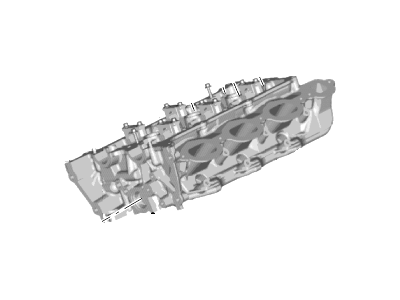
Ford Taurus Cylinder Head Assembly
Part Number: DG1Z-6049-A$859.52 MSRP: $1186.15You Save: $326.63 (28%)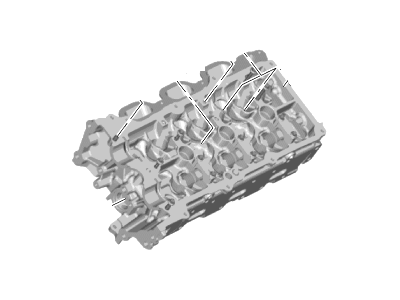
| Page 1 of 2 |Next >
1-20 of 33 Results
Ford Taurus Cylinder Head
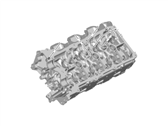
The Ford Taurus Cylinder Head contains precisely machined ports to allow for efficient breathing of the V6 and four cylinder engines by allowing in fresh air and fuel while letting exhaust out. On later Ford engines, the design of the Cylinder Head places the spark plugs, valves, coolant passages, and fuel injectors in a single rigid casting. Similarly, torque to yield head bolts clamp the Cylinder Head evenly, preventing gasket failure. The early Taurus models applied heavy cast iron, but many later Ford cars switched to lighter aluminum Cylinder Head designs that dissipate heat more rapidly, improve weight balance, and allow for higher compression. However, iron heads are stronger but heavier. A cracked Cylinder Head can happen if the coolant is neglected, and some common age related issues in the Taurus lineup involve worn guides, burnt valves, warped surfaces, or leaks that mix oil and coolant, causing misfires or overheating. According to factory Ford manuals, installers must replace bolts each time because proper torque maintains the Cylinder Head seal and helps every Taurus continue delivering smooth power.
We provide a wide range of Ford Taurus Cylinder Head at the optimal prices. If you need Ford Taurus Cylinder Head, you can shop with confidence on our website. All our OEM parts come with a manufacturer's warranty and are delivered to your doorstep with a fast delivery service.
Ford Taurus Cylinder Head Parts Questions & Experts Answers
- Q:How to remove and install cylinder heads in V6 engine on Ford Taurus?Posted by Pedro Q.A:Release the pressure of the fuel system, then, remove the connection of the negative terminal of the battery. Drain the cooling system. Depower the upper and lower intake manifold. Having selected the car, lift it on a rise and put it on the jackstands, then, turn off the frontal Oxygen Sensor and the catalytic converters. Disconnect the two Camshaft Position (CMP) sensors mounted at the rear of each cylinder head, and the Cylinder Head Temperature (CHT) sensor, the sensor for the catalytic converter monitor and the other two Camshaft Position (CMP) sensors. To enhance the removal process, it is also necessary to unscrew the camshafts from the cylinder head you want to remove. If necessary, remove bolts or clips used to attach wiring harnesses or ground straps to heads of cylinders. Remove the Exhaust Manifold(s). Any further fixture that could hinder the process of the removal of the cylinder head must also be undone. Take off all the hoses and electrical connectors from the coolant bypass tube, unscrew two bolts which hold this metal tubule. Either apply the above heating to each bolt for about half an hour then slacken each bolt in turn, or heat the cylinder head until it is at the correct temperature then slacken all the bolts a quarter turn at a time as follows: Take out the bolts and dispose them as a new bolt must be used when replacing cylinder head (s). Remove the cylinder head(s) from the engine, being very careful when doing so not to prise between the cylinder head and the engine block. To remove cylinder head knock off the wood block against a touching end of the head or apply a pry against a casting projection using hammer. To remove cylinder heads one need to store it on the blocks of wood so that gasket sealing surfaces would not be damaged. Cylinder head disassembly and inspection procedures must be done professionally and this should be done by an automotive machine shop. The surfaces where the cylinder heads are to be placed should be very clean when placing the cylinder heads and all other openings should be covered with several layers of shop rags to avoid accidental introduction of debris in the engine. Sweep the floor and clear the valley or intake ports if the centres will require a vacuum cleaner. Broken gasket surfaces must NOT be scraped or machined with a scraper or abrasives discs, as the block, heads, and intake manifold are made of aluminum. It is necessary to carefully inspect engine block and the surface of the cylinder head: shaving, deep scratches or other damages are often possible to remove with a file, but serious damage will require and additional engine block machining. Check the block for warpage, by placing a straightedge on the block and using a feeler gauge, if the block is warped, it is recommended that the head should be taken for machining. To chase the threads in the block head bolt holes use a tap of the right size because the bolt holes are often full of dirt, corrosion, sealant and even damaged threads. Place the new gasket(s) in the over the dowel pins located in the engine block with the correct orientation. If the cylinder head is to be replaced then a new secondary timing chain tensioner will be needed. Gently place the cylinder head(s) on the engine block putting the gasket in its right position without being disturbed. New cylinder head bolts should be lightly oiled and then run down until only slightly tight. Cylinder head bolts are of torque-to-yield type and must be thrown away and new ones installed at the time of assembling. Are: Turn the bolts in the sequence with a torque wrench and a breaker bar having your torque angle adapter to get to the correct angle of rotation tighten the bolts as follows to the required torque and angle of rotation. The rest part of the installation process is the process of dismantling with an addition of tightening of fasteners to the corresponding torque value. Replace the engine oil and the filter, then refuel and purge the cooling system. Switch on the engine to be used and look out for any signs of leakage.Answered by Ford Parts Specialist John / Apr 24, 2026
Related Ford Taurus Parts
 Ford Taurus Cylinder Head Bolts
 Ford Taurus Spool Valve
 Ford Taurus Exhaust Valve
 Ford Taurus Cylinder Head Gasket
 Ford Taurus Camshaft
 Ford Taurus Timing Cover
 Ford Taurus Intake Valve
 Ford Taurus Cylinder Head Temperature Sensor
 Ford Taurus Crankshaft Seal
 Ford Taurus Camshaft Seal
 Ford Taurus Rocker Arm
Browse by Year
2019 Cylinder Head 2018 Cylinder Head 2017 Cylinder Head 2016 Cylinder Head 2015 Cylinder Head 2014 Cylinder Head 2013 Cylinder Head 2012 Cylinder Head 2011 Cylinder Head 2010 Cylinder Head 2009 Cylinder Head 2008 Cylinder Head 2007 Cylinder Head 2006 Cylinder Head 2005 Cylinder Head 2004 Cylinder Head 2003 Cylinder Head 2002 Cylinder Head 2001 Cylinder Head 2000 Cylinder Head 1999 Cylinder Head 1998 Cylinder Head 1997 Cylinder Head 1996 Cylinder Head 1995 Cylinder Head 1994 Cylinder Head 1993 Cylinder Head 1992 Cylinder Head 1991 Cylinder Head 1990 Cylinder Head 1989 Cylinder Head 1988 Cylinder Head