

My Garage
My Account
Cart
Genuine 1998 Ford Ranger Crankshaft
Crank Shaft- Select Vehicle by Model
- Select Vehicle by VIN
Select Vehicle by Model
orMake
Model
Year
Select Vehicle by VIN
For the most accurate results, select vehicle by your VIN (Vehicle Identification Number).
6 Crankshafts found
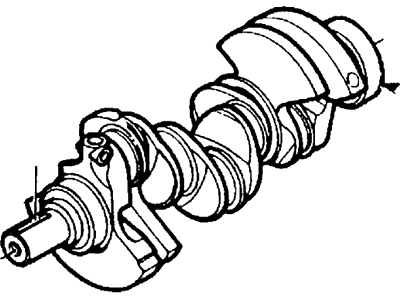 Product Specifications
- Other Name: Crankshaft Assy
- Manufacturer Note: OHV
- Replaced by: 5L2Z-6303-AA
- Item Weight: 51.40 Pounds
- Item Dimensions: 8.0 x 7.9 x 22.7 inches
- Condition: New
- Fitment Type: Direct Replacement
- SKU: F87Z-6303-BA
- Warranty: This genuine part is guaranteed by Ford's factory warranty.
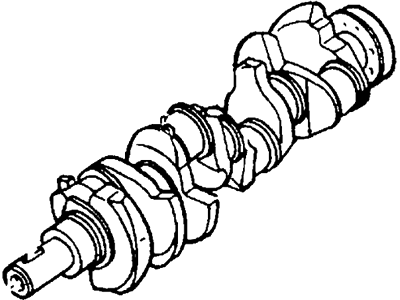 Product Specifications
- Other Name: Kit - Remanufactured Crankshaft
- Manufacturer Note: OHV
- Base No.: 6V303
- Item Dimensions: 7.6 x 8.0 x 23.1 inches
- Condition: Remanufactured
- Fitment Type: Direct Replacement
- SKU: F87Z-6V303-BBRM
- Warranty: This genuine part is guaranteed by Ford's factory warranty.
- Product Specifications
- Other Name: Crankshaft Assy; Crankshaft
- Base No.: 6303
- Item Dimensions: 7.8 x 8.1 x 22.9 inches
- Condition: Remanufactured
- Fitment Type: Direct Replacement
- SKU: F87Z-6303-AARM
- Warranty: This genuine part is guaranteed by Ford's factory warranty.
- Product Specifications
- Other Name: Crankshaft Assy
- Item Dimensions: 8.0 x 7.8 x 22.9 inches
- Condition: New
- Fitment Type: Direct Replacement
- SKU: F87Z-6303-AA
- Warranty: This genuine part is guaranteed by Ford's factory warranty.
- Product Specifications
- Other Name: Kit - Remanufactured Crankshaft
- Manufacturer Note: 12V
- Base No.: 6V303
- Item Weight: 11.00 Pounds
- Item Dimensions: 8.6 x 8.8 x 22.8 inches
- Condition: Remanufactured
- Fitment Type: Direct Replacement
- SKU: F5DZ-6V303-ARM
- Warranty: This genuine part is guaranteed by Ford's factory warranty.
- Product Specifications
- Other Name: CRANKSHAFT ASY
- Replaced by: XF1Z-6303-BA
- Item Weight: 45.70 Pounds
- Item Dimensions: 7.6 x 7.8 x 23.1 inches
- Condition: New
- Fitment Type: Direct Replacement
- SKU: F5DZ-6303-A
- Warranty: This genuine part is guaranteed by Ford's factory warranty.
1998 Ford Ranger Crankshaft
At FordPartsGiant.com, you will find an extensive inventory of genuine 1998 Ford Ranger Crankshaft offered at competitive prices online. These manufacturer-backed OEM 1998 Ford Ranger Crankshaft ensure your satisfaction with their quality and come with a hassle-free return policy and expedited delivery service, guaranteeing a delightful shopping experience.
1998 Ford Ranger Crankshaft Parts Questions & Experts Answers
- Q:How to properly inspect and maintain a crankshaft on 1998 Ford Ranger?Posted by Ava A.A:Remove all burrs from the crankshaft oil holes using a stone, file, or scraper. Clean the crankshaft with solvent and dry it with compressed air if available, ensuring to clean the oil holes with a stiff brush and flush them with solvent. Check the main and connecting rod bearing journals for uneven wear, scoring, pits, and cracks. Rub a penny across each journal several times; if a journal picks up copper from the penny, it is too rough and must be reground. Inspect the rest of the crankshaft for cracks and other damage, and have it magnafluxed to reveal hidden cracks, which an automotive machine shop can handle. Measure the diameter of the main and connecting rod journals with a micrometer and compare the results to the specifications, measuring at various points around each journal's circumference to determine if it is out-of-round, and take measurements at each end of the journal near the crank throws to check for taper. If the crankshaft journals are damaged, tapered, out-of-round, or worn beyond the specified limits, have the crankshaft re-ground by an automotive machine shop, ensuring to use the correct size bearing inserts if reconditioned. Check the oil seal journals at each end of the crankshaft for wear and damage; if the seal has worn a groove in the journal or if it is nicked or scratched, the new seal may leak upon reassembly. An automotive machine shop may be able to repair the journal by pressing on a thin sleeve, but if repair is not feasible, a new or different crankshaft should be installed. Finally, examine the main and rod bearing inserts.Answered by Ford Parts Specialist Sonny / Mar 21, 2026
Related 1998 Ford Ranger Parts
 1998 Ford Ranger Crankshaft Pulley
 1998 Ford Ranger Camshaft
 1998 Ford Ranger Oil Pump
 1998 Ford Ranger Oil Pan Gasket
 1998 Ford Ranger Oil Pump Gasket
 1998 Ford Ranger Crankshaft Gear
 1998 Ford Ranger Oil Pan
 1998 Ford Ranger Rod Bearing
 1998 Ford Ranger Crankshaft Thrust Washer Set
 1998 Ford Ranger Cam Gear
 1998 Ford Ranger Crankshaft Seal