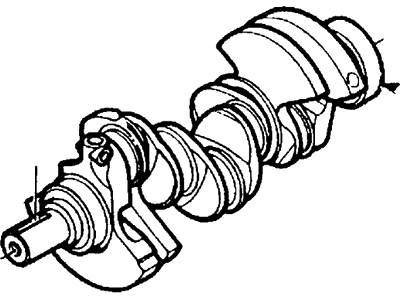
The crankshaft can only be removed after the engine has been taken out of the vehicle, assuming that the flywheel or driveplate, vibration damper, timing chain, oil pan, oil pump, and piston/connecting rod assemblies have already been detached. Before removal, check the endplay by mounting a dial indicator aligned with the crankshaft and touching one of the crank throws. Push the crankshaft to the rear and zero the dial indicator, then pry it to the front and check the reading; the movement indicates the endplay. If it exceeds the limit, inspect the thrust surfaces for wear, and if none is found, new main bearings may resolve the issue. If a dial indicator is unavailable, use feeler gauges by pushing the crankshaft to the front and slipping the gauges between it and the thrust main bearing to measure clearance. Check the main bearing caps for markings indicating their locations, ensuring they are numbered consecutively from front to rear, and mark them if necessary. Loosen the main bearing cap bolts gradually until they can be removed by hand, noting any stud bolts for proper reinstallation. Gently tap the caps with a soft-face hammer to separate them from the engine block, using bolts as levers if needed, and take care not to drop the bearing inserts. Finally, lift the crankshaft out of the engine, possibly with assistance due to its weight, and return the bearing inserts to their places in the engine block and main bearing caps, tightening the bolts finger tight.