

My Garage
My Account
Cart
Genuine 1998 Ford Ranger Oil Pan
Oil Drain Pan- Select Vehicle by Model
- Select Vehicle by VIN
Select Vehicle by Model
orMake
Model
Year
Select Vehicle by VIN
For the most accurate results, select vehicle by your VIN (Vehicle Identification Number).
4 Oil Pans found
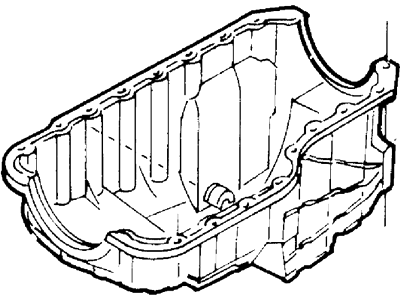 Product Specifications
- Other Name: Pan Assy - Engine Oil
- Manufacturer Note: w/o low oil sensor
- Replaced by: YL5Z-6675-AA
- Item Weight: 7.60 Pounds
- Item Dimensions: 20.7 x 10.9 x 10.7 inches
- Condition: New
- Fitment Type: Direct Replacement
- SKU: F87Z-6675-AA
- Warranty: This genuine part is guaranteed by Ford's factory warranty.
- Product Specifications
- Other Name: Pan Assy - Engine Oil; Oil Pan
- Base No.: 6675
- Item Weight: 10.60 Pounds
- Item Dimensions: 18.0 x 10.0 x 13.0 inches
- Condition: New
- Fitment Type: Direct Replacement
- SKU: F87Z-6675-EA
- Warranty: This genuine part is guaranteed by Ford's factory warranty.
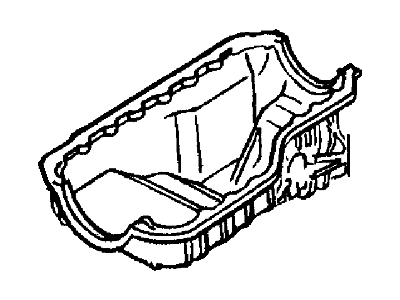 Product Specifications
- Other Name: Pan Assy - Engine Oil; Oil Pan
- Manufacturer Note: W/O low oil level sender, OHV
- Base No.: 6675
- Item Weight: 10.00 Pounds
- Item Dimensions: 8.2 x 12.0 x 20.3 inches
- Condition: New
- Fitment Type: Direct Replacement
- SKU: F5TZ-6675-B
- Warranty: This genuine part is guaranteed by Ford's factory warranty.
- Product Specifications
- Other Name: Pan Assy - Engine Oil; Oil Pan
- Item Weight: 11.80 Pounds
- Item Dimensions: 21.2 x 13.5 x 9.3 inches
- Condition: New
- Fitment Type: Direct Replacement
- SKU: F4TZ6675B
- Warranty: This genuine part is guaranteed by Ford's factory warranty.
1998 Ford Ranger Oil Pan
At FordPartsGiant.com, you will find an extensive inventory of genuine 1998 Ford Ranger Oil Pan offered at competitive prices online. These manufacturer-backed OEM 1998 Ford Ranger Oil Pan ensure your satisfaction with their quality and come with a hassle-free return policy and expedited delivery service, guaranteeing a delightful shopping experience.
1998 Ford Ranger Oil Pan Parts Questions & Experts Answers
- Q:How to remove and install the oil pan in SOHC four cylinder engine on 1998 Ford Ranger?Posted by Riccardo P.A:One thing that is worthy of note is that to be able to replace the oil pan, one will have to do so by pulling out the engine from the car. Think about starting with removing the oil and the removing of the oil filter. Then, unbolt the engine from the current position and lift it and set the engine on to a right side up engine stand. Following that, remove the oil pan mounting bolts and drop the pan. For installation, first, wash the oil pan and then check for any harm done to the oil pan transmission mounting pad, screw off any spacers fixed on this pad. The surface of the oil pan gasket on the cylinder block and the oil pan flange must be free of oil in order eliminate oil leaks, and the screen of the oil pump pick-up tube must also be thoroughly cleaned. Apply RTV sealant at six points: as applies at the joining between the front cover and the engine block as well as between the rear main bearing cap and the engine block must be installed and the gasket must be fitted into the channel of the oil pan. Put the oil pan on the engine and secure it using the oil pan mounting bolts but only do this by hand for now so that you can torque them when joining the engine to the transmission in order to achieve correct alignment. Reinstall the engine and tighten the two oil pan to transmission bolts to the required torque then loosen them by half a turn. After that you should reinstall the bolts which secure the oil pan to the engine block and use a torque wrench to tighten them to the recommended procedure that is to go around the circumference of the pan in clockwise sequence making a little turn at a time. Overflow-Tighten the oil pan-to-transmission bolts to the recommended torque. Last but not the least, undo the process in the same sequence and add the right engine oil capacity and type in the engine.Answered by Ford Parts Specialist Don / Mar 24, 2025
Related 1998 Ford Ranger Parts
 1998 Ford Ranger Oil Filter
 1998 Ford Ranger Drain Plug
 1998 Ford Ranger Dipstick Tube
 1998 Ford Ranger Crankshaft Pulley
 1998 Ford Ranger Oil Cooler
 1998 Ford Ranger Oil Pressure Switch
 1998 Ford Ranger Oil Pump
 1998 Ford Ranger Rod Bearing
 1998 Ford Ranger Crankshaft Thrust Washer Set