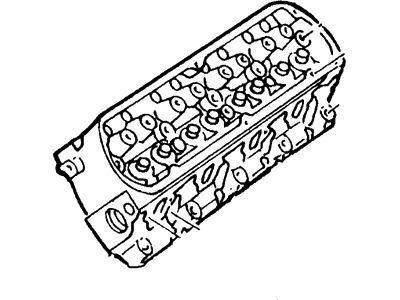
New and rebuilder cylinder heads are usually in stock for most engines at the dealers' shops or auto parts' stores. Again since, the appropriate tools are required for the disassembly and inspection of the head along with the fact that replacement parts may not always be readily available it may well be cheaper for the home mechanic to purchase a new head than to carry out the whole process of disassembly, inspection and reconditioning the original one. The disassembly includes the removal of intake and exhaust valves as well as other attaching ribs such as rocker arms and fulcrum which are to be labeled during removal to enable easy reinstallation due to their individual unique positions. Before the removal of the valves, the valves and related components must be placed in such a way that in the course of the valve replacement, correct valve guides can easily be identified. A spring compressor is used in removing the keepers, the retainer, spring, damper, stem seal, as well as the valve from the first valve and all these are stored together while the seal is disposed. If this happens, a valve can be pushed back into the head; Moreover, the region of the keeper groove needs to be 'cleaned' with a very fine file or whetstone. The same should be done with other valves and all the parts of each valve should be placed together to facilitate easy reassembly. Further, after removal of all valves and other related components-the head should be cleaned and inspected, and if the job at hand is an engine rebuild, one should get the complete disassembly of the engine done before a process of cleaning and inspection of the head starts.