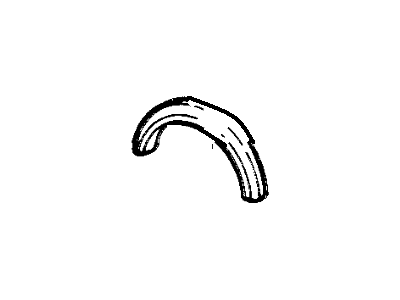
Clean the bore in the block and the seal contact surface on the crankshaft, checking for scratches and nicks that could damage the new Crankshaft Seal lip and cause oil leaks; if the crankshaft is damaged, a new or different crankshaft is necessary. Apply a light coat of engine oil or multipurpose grease to the outer edge of the new Crankshaft Seal and lubricate the seal lip with moly-base grease or engine assembly lube. Press the new Crankshaft Seal into place with a special tool, ensuring the seal lip faces the front of the engine; if the tool is unavailable, carefully work the seal lip over the end of the crankshaft and tap it in with a hammer and punch until seated. For split-type seals, inspect the rear Crankshaft Seal bearing cap and engine block mating surfaces, as well as the seal grooves, for nicks, burrs, and scratches, removing any defects with a fine file or deburring tool. Install one seal section in the block with the lip facing the front, leaving one end protruding from the block on V8 engines, while on 2.3L and 3.8L engines, position both ends flush with the block and the locating tabs to the rear, removing the tabs on 3.8L engines. Repeat the procedure for the remaining seal half in the rear Crankshaft Seal bearing cap, ensuring the opposite end of the seal protrudes the same distance as the block seal on V8 engines, while positioning both ends flush on 2.3L and 3.8L engines. During the final installation of the crankshaft, apply a thin, even coat of anaerobic-type gasket sealant to the shaded areas of the cap or block, avoiding contact with the bearing face, crankshaft journal, seal ends, or seal lips, and lubricate the seal lips with moly-base grease or engine assembly lube.