Make sure this part fits

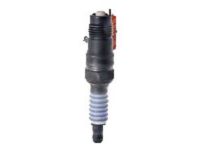
Ford F13Z-6049-A Remanufactured Kit

1988-1994 Ford F13Z6049A

Customer Questions & Expert Answers (11)
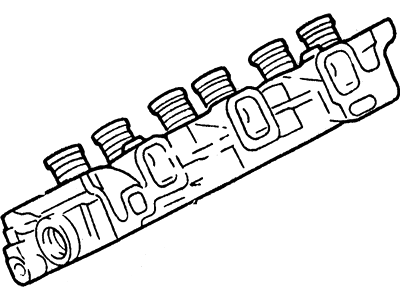
F13Z-6049-A Ford Remanufactured Kit Illustration 1 of 1
  • Part Description
    KIT - REMANUFACTURED
  • Manufacturer
    Ford
  • Manufacturer's Notes
    This part is discontinued.
Make sure this part fits
  • Related Parts
  • Specifications
  • Fitment
  • Q&A
  • Product Specifications

    BrandGenuine Ford
    Manufacturer Part NumberF13Z-6049-A, F13Z6049A
    Part DescriptionKIT - REMANUFACTURED
    Item Dimensions6.2 x 6.1 x 18.5 inches
    ConditionNew
    Fitment TypeDirect Replacement
    ManufacturerFord
    SKUF13Z-6049-A
    WarrantyThis genuine Ford part is guaranteed by Ford's factory warranty.
    Shipping & ReturnShipping Policy Return Policy
    Warning: California's Proposition 65
  • Vehicle Fitment

    Year Make Model Engine Important vehicle option details
    1988-1989 Ford Escort4 Cyl 1.9L3AT ATX, 4MT, 5MT
    1988-1989 Ford Festiva4 Cyl 1.3L3AT ATX, 4MT, 5MT
    1988-1989 Ford Mustang4 Cyl 2.3L, 8 Cyl 5.0L4AT A4LD, 4AT AOD, 5MT
    1989 Ford Probe4 Cyl 2.2L4AT, 5MT
    1988-1989 Ford Taurus4 Cyl 2.5L, 6 Cyl 3.0L, 6 Cyl 3.8L3AT ATX, 4AT AXOD, 5MT
    1988-1994 Ford Tempo4 Cyl 2.3L3AT ATX, 5MT
    1988-1989 Ford Thunderbird4 Cyl 2.3L, 6 Cyl 3.8L, 8 Cyl 5.0L4AT A4LD, 4AT AOD, 5MT
    1988-1989 Lincoln Continental6 Cyl 3.8L4AT AXOD
    1988-1989 Lincoln Mark VII8 Cyl 5.0L4AT AOD
    1988-1989 Lincoln Town Car8 Cyl 5.0L4AT AOD
    View More
  • Customer Questions & Expert Answers

    Q:
    Is the the correct part for the attached VIN? Posted by FordPartsGiant Specialist
    A:
    You can Select Your Vehicle to check if F13Z-6049-A fits your vehicle.
    Posted by FordPartsGiant Specialist
    Q:
    What precautions should be taken when removing and installing cylinder heads on Mercury Cougar? Posted by Customer
    A:
    When removing the heads, the engine must be cold to minimize on warping of the heads. First, unplug the negative cable of the battery and then the drive belt with belt tensioner, and then drain the cooling system. Then to it, take off the valve cover(s), the pushrods and the rocker arms, and at last the intake manifold. For the left cylinder head, remove the bolts of the power steering pump and set it aside but retaining the hoses connected, do the same to the exhaust manifold. On supercharged models, the intercooler and its tubes should be detached, and the wiring of the alternator should be disconnected, as well as the bolts of the alternator and power steering bracket from the engine should be loosened. To get to the proper side of the cylinder head, first, remove the air conditioning compressor, if fitted, by unbolted and set aside, with the AC hoses still connected, then remove the exhaust manifold. Shake the head bolts counterclockwise in incremental turns of about 90 degrees each until they can be turned out by hand; this should be done in reverse of the turning pattern followed during the tightening sequence. Head bolts are not supposed to be used again; they have to be removed and disposed of, and new bolts used on the machine. They must be raised gently if any force is offering resistance a prybar should be placed under the head(s) against a casting protrusion and the head should be placed on blocks made of wood so as to avoid damaging the gasket sealing surfaces of the head(s). In mating the cylinder heads to the block ensure the two mating surfaces are clean as possible, you can use gasket scraper and clean with thinner or acetone. Look out for nicks or damage on any mating surfaces fit and if the require fitting a file or perhaps reconsider machining. Align the new gasket(s) in right way over the dowel pins in the block and gently place the head(s) on the block on top of the gasket(s). Apply more pipe sealant to the threads of the four short bolts and lightly lubricate the rest of the head bolts, the head bolts are not exchangeable between the supercharged and non-supercharged engines. Screw in the bolts and merely turn them clockwise until they are tight, then the use the correct pattern to turn them a further additional three times to the correct torque level. When the required torque value is achieved, turn all the head bolts by two or three turns counter clockwise and then alternately torque to the final torque value again. The following activities are the exact opposite of removal; All the remaining installation steps are the reverse of removal. Last, renew the engine oil and filter with the right kind of oil compatible with your vehicle, fill the coolant and step on the accelerator, be keen and ensure that you do not see signs of oil or coolant leakage. Once cylinder head bolts have been lightened using the above procedure, it is not imperative that they should be lightened again after long use of the vehicle though it is advisable to check on their tightness if one so wishes to.

    Posted by FordPartsGiant Specialist
    Q:
    How to remove and install cylinder heads on Lincoln Mark VII Overhead valve (OHV)engines? Posted by Customer
    A:
    Remove the valve cover(s), pushrods, intake manifold, drive belts, idler pulley bracket, Thermactor valve and pump, and crossover tube first. For the left cylinder head, take out and unbolt the air conditioning compressor and bracket(s). Disconnect the fuel line from the right cylinder head and remove the exhaust manifold(s). Then draw on cardboard around each cylinder and bolt pattern using a new head gasket. Loosen the head bolts in 1/4 turn increments; store them; then lift off the heads. When installing, clean surfaces; check for damage; chase holes for bolts; position new gasket(s). Put heads in place on the block after oiling bolt threads and tighten them according to this sequence. Finally, perform the reverse order of the remaining steps plus change the engine oil & filter before starting the engine.
    Posted by FordPartsGiant Specialist
    Q:
    How to disassemble and inspect cylinder heads on Ford Thunderbird? Posted by Customer
    A:
    New and remanufactured cylinder heads can be easily purchased for virtually all kinds of engines at the dealerships and auto part stores. Since specialized tools are required for the disassembly and inspections and since the actual core parts may be difficult to obtain, it may actually be wiser and more cost effective for the home mechani to purchase off new heads than to carry out acquisitions, dismantlings and thorough inspections, and reconditioning. Start it with the withdrawal of the rocker arms. After that, using a scraper and wire brush, remove all carbon from the combustion chamber and the valve heads and while doing so do not damage the gasket surface of the valves. Fit over the valve and use a valve spring compressor to compress the valve springs and thereby remove the keepers and the springs. That, then, would require the removal of the retainer, spring assembly, and the seal from the valve to allow the head and the valve to be removed through the bottom of the head. If the valve binds in the guide, force it back into the head and take off the head of the stem with a file or whetstone. This should be done to the other valves with all the parts kept together likely in small poly bags with the valve location on the bag for ease of reinstallation. After all valves have been removed and are set aside, clean and inspect the head and perform all related disassembly steps to a complete engine if you are doing an engine overhaul before you begin the cylinder head cleaning and inspection.
    Posted by FordPartsGiant Specialist
    Q:
    How to disassemble and inspect cylinder heads on Lincoln Town Car? Posted by Customer
    A:
    Dealerships and auto parts shops sell new and rebuilt cylinder heads. One would require some specialized tools for dissembling and inspecting it. Buying replacement heads may be more feasible than trying to find replacement parts. When disassembling the cylinder head, remove valves and rocker arm components then label or store them separately. Use a spring compressor in removing the keepers and other parts.
    Posted by FordPartsGiant Specialist
    Q:
    What steps should be taken for thorough cleaning and inspection of cylinder heads and valve train components during an engine overhaul on Mercury Cougar? Posted by Customer
    A:
    The cylinder heads together with the related valve train ought to be cleaned to look fordamage and then thoroughly inspected so that you can determine how much of the valve service work is required during the engine overhaul. One should first of all, remove all existing debris of gasket material as well as the sealing compound on the surfaces of the head gasket, intake manifold, and exhaust manifold. Deposit the scale accumulation in the coolant passages and scrub in and out of the oil holes as well by a stiff wire brush. To clean the threaded holes, one may use a tap to remove corrosion and thread sealant followed by a cleaning of debris using compressed air that users eye protection while doing so. Scrub the threads of the rocker arm pivot bolt with a wire brush; clean the cylinder head with solvent and after that dry the head with air assistance for better results. It is therefore clear that decarbonising chemicals may be useful but should be taken with some precautions. Using solvent clean the rocker arms, the fulcrums, bolts and the pushrods and be sure to dry them out. Always service all valve springs, keepers, retainers, rotators, sleeves and shims to one valve at a time so as to avoid confusion between them. Remove thick build-up from valves and then proceed to use a motorized wire brush in the valve head and stem surfaces while keeping the valves in order. Check if the head is cracked and if there is leakage of coolant; if so get a new cylinder head. Run a straightedge and feeler gauge across the head gasket mating surfaces and if the numbers are off in regards to the specification the head can be machined. Check on the face of the valve seats for pitting, cracking signs or just plain burning where professional valve service may be needed. Using a dial indicator check the valve stem-to-valve guide clearance, and if there is any doubt about the condition of guides they should be sent to the machine shop. Make sure all the parts are very cleaned and that all conduits of oil are clear. Feel the top of the rocker arms for grooving and look for wear on the tips of the valves lifter push rods and roll each push rod on a flat surface to feel for bends. See that any worn out part is replaced or any part that has wattles in it due to the stress it pulls. Looking at each of the valves one by one it is recommended to ensure that the valve face is not cracked, pitted, or in the worst-case scenario burned, while ensuring the stem as well as the neck of the valve are not cracked, and more to it, the valve itself should not be bent. Determine the valve margin thickness from the specifications and any valve whose margin is thinner than specified must be resent. Each valve spring should be closely checked for signs of wear and the free length of the valve spring should also be checked, and any which are shorter than that mentioned above should be discarded. 2 Check the thin section springs retainers and keepers for wear, and check for cracks; lubricate rotators. If the inspection reveals that the valve components are worn out, then re fit the valves in the cylinder head and go by the recommendations for valve servicing. If no heavily worn areas are noticeable and the faces and seats of the valve are in fine condition, then the valve train members can be replaced in the cylinder head without much overhauling.
    Posted by FordPartsGiant Specialist
    Q:
    What should you inspect on the cylinder head during the preparation process for the 1988 Lincoln Town Car? Posted by Customer
    A:
    Inspect the cylinder head for cracks, signs of coolant leakage, and other damage.
    Posted by FordPartsGiant Specialist
    See expert answers on similar Cylinder Head
    Q:
    How should the spring be compressed and the keepers installed for the 1989 Mercury Cougar? Posted by Customer
    A:
    Compress the spring and install the keepers. Release the compressor, making sure the keepers are seated properly in the valve stem grooves. If necessary, use a small dab of grease to hold the keepers in place until the compressor is released.
    Posted by FordPartsGiant Specialist
    See expert answers on similar Cylinder Head
    Q:
    What should be done once the valves and related components have been removed and stored for the 1988 Mercury Grand Marquis? Posted by Customer
    A:
    The head should be thoroughly cleaned and inspected. If a complete engine overhaul is being done, finish the engine disassembly procedures before beginning the cylinder head cleaning and inspection process.
    Posted by FordPartsGiant Specialist
    See expert answers on similar Cylinder Head
    Q:
    What position should the crankshaft be in before placing the cylinder heads back on the block for the 1989 Mercury Grand Marquis? Posted by Customer
    A:
    Rotate the crankshaft counterclockwise so the keyway is in the 9 o'clock position to avoid damage to pistons or valve train parts.
    Posted by FordPartsGiant Specialist
    See expert answers on similar Cylinder Head
    Q:
    What should be ensured before placing the cylinder heads back on the block for the 1988 Lincoln Town Car? Posted by Customer
    A:
    Before placing the cylinder heads back on the block, rotate the crankshaft counterclockwise to position the keyway at the 9 o'clock position.
    Posted by FordPartsGiant Specialist
    See expert answers on similar Cylinder Head
    If you have any questions about this product, please don't hesitate to ask us. We will be happy to help you!

Genuine Ford Part F13Z-6049-A, the Right Choice

To ensure reliability, purchase part # F13Z-6049-A Remanufactured Kit. It is also called Cylinder Head. OEM parts are of high quality and known for their longevity. This is because they are built to the Ford standards which are relatively high and undergo rigorous quality control testing. This part fits specific Ford Escort, Mustang, Probe models. It fits Lincoln Continental, Mark VII, Town Car. It also fits Mercury Cougar, Sable, Tracer.

FordPartsGiant.com is a leading supplier of genuine components and accessories such as F13Z6049A Remanufactured Kit. Looking to purchase quality low-cost OEM Ford parts? You have just found the right place. For detailed Ford parts information, click here.

Why choose Ford Parts Giant

  • Dedicated Service

    Your complete satisfaction is our #1 goal

  • Lowest Prices

    Best deals on genuine OE parts from dealerships

  • Fast Delivery

    Orders are processed and delivered promptly