

My Garage
My Account
Cart
Genuine 2002 Ford Explorer Sport Trac Cylinder Head
Head- Select Vehicle by Model
- Select Vehicle by VIN
Select Vehicle by Model
orMake
Model
Year
Select Vehicle by VIN
For the most accurate results, select vehicle by your VIN (Vehicle Identification Number).
4 Cylinder Heads found
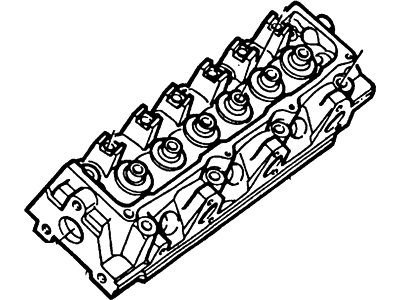
2002 Ford Explorer Sport Trac Cylinder Head Assembly
Part Number: 7U7Z-6049-AARH$812.56 MSRP: $1128.78You Save: $316.22 (29%)Ships in 1-2 Business DaysProduct Specifications- Other Name: Cylinder Head Assy; Cylinder Head
- Position: Passenger Side
- Replaces: 1L2Z-6049-JA, 5L2Z-6049-AA, 7R3Z-6049-A, 5R3Z-6049-AB, 6L2Z-6049-A, XL2Z-6049-CA, YL2Z-6049-CA
- Base No.: 6049
- Item Weight: 30.30 Pounds
- Item Dimensions: 20.6 x 13.7 x 12.1 inches
- Condition: New
- Fitment Type: Direct Replacement
- SKU: 7U7Z-6049-AARH
- Warranty: This genuine part is guaranteed by Ford's factory warranty.
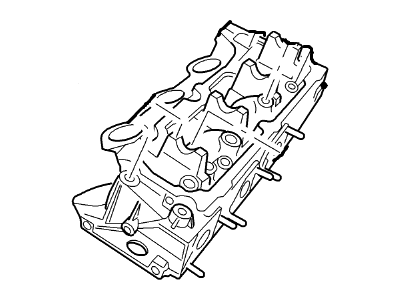
2002 Ford Explorer Sport Trac Cylinder Head Assembly
Part Number: 7U7Z-6049-A$1649.52 MSRP: $2283.08You Save: $633.56 (28%)Ships in 1-3 Business DaysProduct Specifications- Other Name: Cylinder Head Assy; Cylinder Head
- Position: Passenger Side
- Replaces: 1L2Z-6049-GA, 6L2Z-6049-C
- Base No.: 6049
- Item Weight: 26.40 Pounds
- Item Dimensions: 9.8 x 7.0 x 11.7 inches
- Condition: New
- Fitment Type: Direct Replacement
- SKU: 7U7Z-6049-A
- Warranty: This genuine part is guaranteed by Ford's factory warranty.
- Product Specifications
- Other Name: Cylinder Head Assy; Cylinder Head
- Position: Driver Side
- Replaces: 1L2Z-6049-EA, 1L2Z-6049-HA, 6L2Z-6049-D, YL2Z-6049-DA
- Base No.: 6049
- Item Weight: 29.60 Pounds
- Item Dimensions: 10.0 x 6.9 x 11.6 inches
- Condition: New
- Fitment Type: Direct Replacement
- SKU: 7U7Z-6049-B
- Warranty: This genuine part is guaranteed by Ford's factory warranty.
- Product Specifications
- Other Name: Cylinder Head Assy; Cylinder Head
- Position: Driver Side
- Replaces: 1L2Z-6049-FA, 6L5Z-6049-A, 5R3Z-6049-AA, 5H2Z-6049-A, YL2Z-6049-AA, XL2Z-6049-DA
- Base No.: 6049
- Item Weight: 32.90 Pounds
- Item Dimensions: 6.5 x 7.7 x 19.6 inches
- Condition: New
- Fitment Type: Direct Replacement
- SKU: 7U7Z-6049-AALH
- Warranty: This genuine part is guaranteed by Ford's factory warranty.
2002 Ford Explorer Sport Trac Cylinder Head
At FordPartsGiant.com, you will find an extensive inventory of genuine 2002 Ford Explorer Sport Trac Cylinder Head offered at competitive prices online. These manufacturer-backed OEM 2002 Ford Explorer Sport Trac Cylinder Head ensure your satisfaction with their quality and come with a hassle-free return policy and expedited delivery service, guaranteeing a delightful shopping experience.
2002 Ford Explorer Sport Trac Cylinder Head Parts Questions & Experts Answers
- Q:What precautions should be taken when removing the cylinder heads in 4.0L SOHC V6 engine on 2002 Ford Explorer Sport Trac?A:The heads are readjusted and put back while the engine is still warm, therefore, it necessitates that the heads should be removed only when the engine is cool to avoid head warpage. On this engine, the process of the cylinder head removal is a very tiresome job which needs a lot of tools. Start by removing the negative terminal of the battery, and follow that up with the draining of the cooling system. For models through 2000 remove upper intake manifold, politically label or disconnect electrical connectors from fuel injectors, and then remove lower intake manifold. For 2001 and subsequent production years, take off the one-piece intake manifold. Subsequently, take off the exhaust manifolds, the engine cooling fan/shroud assembly, the drive belt and the alternator with the wires disconnected and it will be set aside. Unbolt the first one on the accessory bracket and dispose of it, then loosen wires connected to the camshaft position sensor and the crankshaft position sensor and the EGR valve as well as the engineer ground strap on the rear of the right cylinder head. Take off the valve covers, relocate the wiring harness to the side and pry off the electrical connectors for the engine coolant temperature sensor and the coolant temperature gauge sending units. For models through 2003 in the below steps the transmission dipstick tube has to be disconnected from the heater hose bracket and then the bracket should be removed. The heater hoses have to be disconnected from the engine, the bypass hose has to be removed and the bolts as well as the thermostat housing. On the left cylinder head, remove hydraulic chain tensioner, then remove the bolt from camshaft sprocket and the Tone bolt beneath it which fixes the camshaft chain "cassette" to the head. Take off the screw that c-ons the chain cassette to the , pulling up the chain when sliding out the sprocket and secure it with a large rubber band. The cylinder heads can also be removed with the camshafts, rocker arms and lash adjusters still fitted by simply slackening the cylinder head bolts in the correct order. If the head is to be completely overhauled, it will be necessary to remove the rocker arms and follow the same procedure for the right-hand cylinder head, but note that the sprocket bolt for the right cylinder head is a left hand threaded item. Sometimes a pry bar can be used on the corners of the head-to-block mating surface and the cylinder head(s) can be lifted off of the engine using a pry bar; if not a wood block with a hammer can be used. Take off the former cylinder head gasket(s); the ones used differ in position and cannot be switched. It is recommended the mating surfaces of the cylinder heads and the block are clean and the process is done using a gasket scraper and given a cleaning of lacquer thinner or acetone. Undo the cylinder head bolts and washers and then examine the mating surfaces and then chase the threads in the holes created by the cylinder head bolts with the help for a tap. Place the new gaskets in a proper manner on the dowels in the block, fit the cylinder heads without upsetting the gaskets and then fit the new cylinder head bolts and tighten as recommended with the right sequence. Place the slinger, put in the camshaft sprocket, and fix the sprocket bolt loosely. Sling the camshaft chain tensioning tool into position, rotate the engine until cylinder no 1 is at top dead centre and then clamp the special tool over the crankshaft damper. Place the holding tool on the left camshaft, make sure that the shafts match and tighten screws of the holding tool. Now fit the camshaft sprocket holding tool and tighten the camshaft sprocket bolt skiffully. Do the same for the right cylinder head; in this case, one has to remove the inner fenderwell liner to access the tensioner. The remaining installation steps are opposite to the removals, this will enable you install the update. Last but not the least, replace the engine oil and the filter, crank the engine to determine leaks in the oil and coolant.
Related 2002 Ford Explorer Sport Trac Parts
 2002 Ford Explorer Sport Trac Rocker Arm
 2002 Ford Explorer Sport Trac Cylinder Head Bolts
 2002 Ford Explorer Sport Trac Camshaft
 2002 Ford Explorer Sport Trac Timing Cover
 2002 Ford Explorer Sport Trac Intake Valve
 2002 Ford Explorer Sport Trac Cylinder Head Gasket
 2002 Ford Explorer Sport Trac Exhaust Valve