

My Garage
My Account
Cart
Genuine 1999 Ford Ranger Intake Manifold
Engine Intake Manifold- Select Vehicle by Model
- Select Vehicle by VIN
Select Vehicle by Model
orMake
Model
Year
Select Vehicle by VIN
For the most accurate results, select vehicle by your VIN (Vehicle Identification Number).
7 Intake Manifolds found
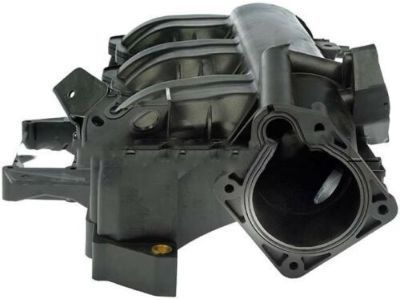
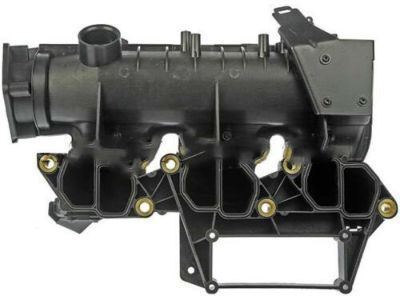
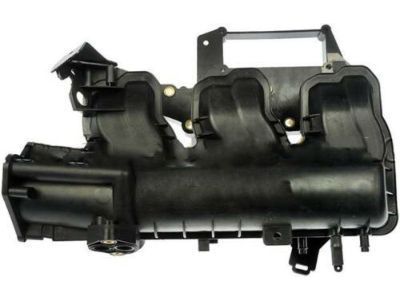
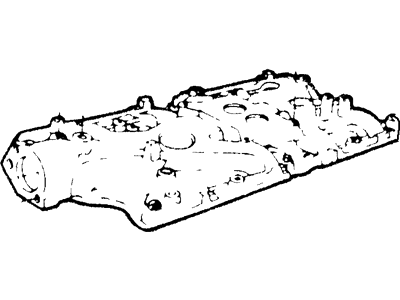 Product Specifications
- Other Name: Manifold Assy - Inlet; Intake Manifold, Manifold
- Replaces: F57Z-9424-B
- Base No.: 9424
- Item Weight: 7.80 Pounds
- Item Dimensions: 18.2 x 14.1 x 9.0 inches
- Condition: New
- Fitment Type: Direct Replacement
- SKU: F77Z-9424-CA
- Warranty: This genuine part is guaranteed by Ford's factory warranty.
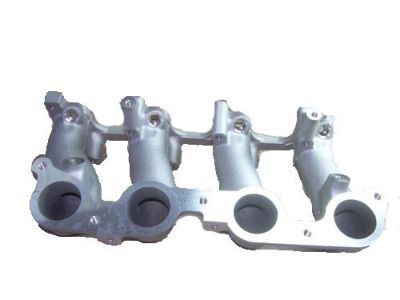
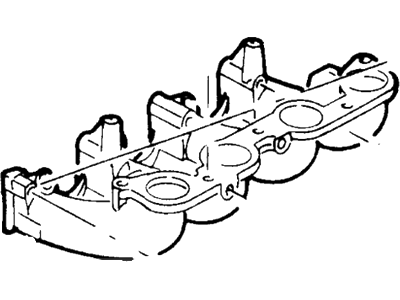 Product Specifications
- Other Name: Manifold Assy - Inlet; Intake Manifold, Manifold
- Position: Lower
- Base No.: 9424
- Item Weight: 7.60 Pounds
- Item Dimensions: 19.0 x 13.0 x 9.3 inches
- Condition: New
- Fitment Type: Direct Replacement
- SKU: F57Z-9424-D
- Warranty: This genuine part is guaranteed by Ford's factory warranty.
- Product Specifications
- Other Name: Manifold Assy - Inlet; Intake Manifold, Manifold
- Manufacturer Note: Lower...Used with larger injectors, Unleaded fuel & Flex fuel Ethanol, FROM 7/26/99
- Base No.: 9424
- Item Weight: 13.10 Pounds
- Item Dimensions: 19.3 x 13.5 x 9.2 inches
- Condition: New
- Fitment Type: Direct Replacement
- SKU: YL5Z-9424-AA
- Warranty: This genuine part is guaranteed by Ford's factory warranty.
- Product Specifications
- Other Name: Manifold Assy - Inlet; Intake Manifold, Manifold
- Manufacturer Note: Upper. Serv 8A505 elbow nipples in assembly only. Note: Dealers must also order/install fitinggs D5AE-9996-DA (pressure regulator) & F2LE-6B608-BA (PCV).
- Base No.: 9424
- Item Weight: 7.10 Pounds
- Item Dimensions: 19.5 x 13.4 x 9.4 inches
- Condition: New
- Fitment Type: Direct Replacement
- SKU: F87Z-9424-HA
- Warranty: This genuine part is guaranteed by Ford's factory warranty.
- Product Specifications
- Other Name: Manifold Assy - Inlet; Intake Manifold, Manifold
- Manufacturer Note: Upper , Unleaded/Flex Fuel Ethanol
- Position: Upper
- Base No.: 9424
- Item Weight: 15.80 Pounds
- Item Dimensions: 19.1 x 13.3 x 9.2 inches
- Condition: New
- Fitment Type: Direct Replacement
- SKU: F87Z-9424-GA
- Warranty: This genuine part is guaranteed by Ford's factory warranty.
- Product Specifications
- Other Name: Manifold Assy - Inlet; Intake Manifold
- Manufacturer Note: Lower. #96TF-9424-AB. Filled rear water pockets. Attaching bolt (6) W703492-S303 & Nut (6) E822110-S72 Lower to Upper 9424., OHV
- Base No.: 9424
- Item Weight: 11.30 Pounds
- Item Dimensions: 21.2 x 8.2 x 5.6 inches
- Condition: New
- Fitment Type: Direct Replacement
- SKU: F6TZ-9424-AB
- Warranty: This genuine part is guaranteed by Ford's factory warranty.
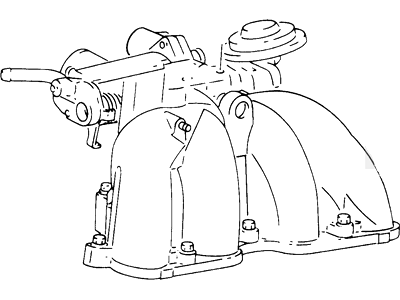 Product Specifications
- Other Name: Manifold Assy - Inlet; Intake Manifold, Manifold
- Manufacturer Note: Upper - #98TF-9E648-CA. Includes gaskets 9E436/9F670/9E936, OHV - without EGR
- Position: Upper
- Base No.: 9424
- Item Weight: 7.60 Pounds
- Item Dimensions: 19.1 x 13.7 x 9.0 inches
- Condition: New
- Fitment Type: Direct Replacement
- SKU: 98TZ-9424-CA
- Warranty: This genuine part is guaranteed by Ford's factory warranty.
1999 Ford Ranger Intake Manifold
At FordPartsGiant.com, you will find an extensive inventory of genuine 1999 Ford Ranger Intake Manifold offered at competitive prices online. These manufacturer-backed OEM 1999 Ford Ranger Intake Manifold ensure your satisfaction with their quality and come with a hassle-free return policy and expedited delivery service, guaranteeing a delightful shopping experience.
1999 Ford Ranger Intake Manifold Parts Questions & Experts Answers
- Q:How to remove and install Intake Manifold in 4.0L pushrod V6 engine on 1999 Ford Ranger?Posted by Fadhel N.A:Before doing this there is a need to release the fuel system pressure as well as pull the negative cable on the battery. Then, pull out the ignition coil, the installation bracket of which also has to be unbolted, and the upper intake manifold. Remove the valve covers and if needed the camshaft position sensor housing. Exterior and interior lamps disconnected include the engine compartment, rear lamp, shift function lamp, shift lock release, fuel pump relay, electric connectors and fuel lines of the various sensors and fuel injectors, and lines to the fuel rail. Remove the heater hose from the front of the intake manifold, or remove the thermostat and housing, and or take of the upper end of the radiator hose. Take out the nuts and bolts of the intake manifold and raise the manifold out; if it is jammed, use a soft-face hammer gently or pry it gently. As for installation, scrape off all existing gasket material and, using a cloth and solvent, clean off oil and dirt. Squeeze RTV sealant around the coolant ports and the front sealing surface as well as towards the four corners where the manifold comes in contact with the engine; then ensure that the manifold gasket is fitted soon after the sealant is applied. Position the manifold over the studs then fit on the nuts and the bolts before engaging them only slightly with your hands, then follow a prescribed torque pattern that is done in four steps. Returning back to Removal step: Reinstating it by reverse method and then the engine should be started to check for oils, coolants and vacuum leaks.Answered by Ford Parts Specialist Don / May 31, 2026
Related 1999 Ford Ranger Parts
 1999 Ford Ranger Air Filter
 1999 Ford Ranger Intake Manifold Gasket
 1999 Ford Ranger Intake Valve
 1999 Ford Ranger Mass Air Flow Sensor
 1999 Ford Ranger Exhaust Manifold
 1999 Ford Ranger Air Intake Hose
 1999 Ford Ranger Cabin Air Filter
 1999 Ford Ranger Air Intake Coupler
 1999 Ford Ranger Intake Air Temperature Sensor
 1999 Ford Ranger Air Filter Housing