

My Garage
My Account
Cart
Genuine 1999 Ford Ranger Axle Shaft
Car Axle Shaft- Select Vehicle by Model
- Select Vehicle by VIN
Select Vehicle by Model
orMake
Model
Year
Select Vehicle by VIN
For the most accurate results, select vehicle by your VIN (Vehicle Identification Number).
3 Axle Shafts found
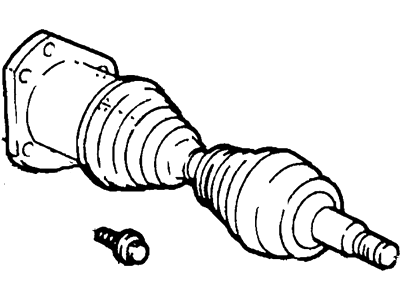 Product Specifications
- Other Name: Shaft Assy
- Item Weight: 18.30 Pounds
- Condition: New
- Fitment Type: Direct Replacement
- Require Quantity: 2
- SKU: XL5Z4K138AA
- Warranty: This genuine part is guaranteed by Ford's factory warranty.
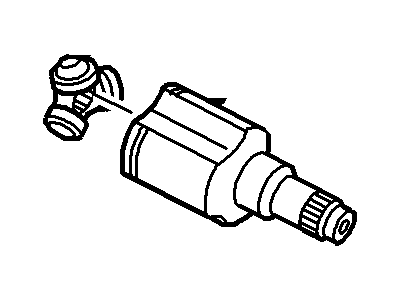 Product Specifications
- Other Name: Joint And Stub Shaft Assy; Inner Joint, Inner Joint Assembly
- Position: Driver Side
- Base No.: 3B414
- Item Weight: 4.70 Pounds
- Item Dimensions: 26.6 x 5.3 x 18.0 inches
- Condition: New
- Fitment Type: Direct Replacement
- SKU: F5TZ-3B414-B
- Warranty: This genuine part is guaranteed by Ford's factory warranty.
- Product Specifications
- Other Name: Joint And Stub Shaft Assy; Inner Joint, Inner Joint Assembly
- Position: Passenger Side
- Base No.: 3B414
- Item Weight: 4.70 Pounds
- Item Dimensions: 34.2 x 6.1 x 7.7 inches
- Condition: New
- Fitment Type: Direct Replacement
- SKU: F5TZ-3B414-A
- Warranty: This genuine part is guaranteed by Ford's factory warranty.
1999 Ford Ranger Axle Shaft
At FordPartsGiant.com, you will find an extensive inventory of genuine 1999 Ford Ranger Axle Shaft offered at competitive prices online. These manufacturer-backed OEM 1999 Ford Ranger Axle Shaft ensure your satisfaction with their quality and come with a hassle-free return policy and expedited delivery service, guaranteeing a delightful shopping experience.
1999 Ford Ranger Axle Shaft Parts Questions & Experts Answers
- Q:What are the functions and common issues of the rear axle shaft assembly, and what diagnostic procedures are associated with it on 1999 Ford Ranger?Posted by Lakon T.A:Located at the rear is the hypoid semi-floating type of rear axle assembly that has a differential carrier formed by casting with a pressed steel cover to keep it intact. An optional limited slip Traction-Lok rear axle is offered, which will work in a normal way under normal conditions but in case one wheel loses its traction, it has multi disc clutch packs and a speed sensitive engagement mechanism to lock the two axleshafts to the supply equal revolving power to the two wheels. Having identifiable numbers on the axle, often found on small metal tag along the cover bolts is very vital for some operations particularly for when replacing axleshafts. Many a time what may be thought as originating from the rear axle may actually be far from the truth, a close assessment is normally warranted before coming to conclusion that indeed there is a problem with the rear axle. The most common sound related to rear axle diagnosis include; road noise, which does not vary with power or coasting, tire noise which is constant with worn or under-inflated tires, and engine and transmission noise that leads to misleading results; filtering these noises require the noting of the engine speed then performing the diagnosis in Neutral. Assembly and general repair about the rear axle need specific tools and critical dimensions, so, operations such as the removal and installation of axleshaft, replacement of oil seal, replacement of bearing, and removal of complete unit for repair or for replacement are more fit for expert mechanics than for do-it-yourself mechanics.Answered by Ford Parts Specialist Bastien / Feb 05, 2024
Related 1999 Ford Ranger Parts
 1999 Ford Ranger Transmission Assembly
 1999 Ford Ranger Torque Converter
 1999 Ford Ranger Transmission Pan