

My Garage
My Account
Cart
Genuine 1994 Ford Ranger Crankshaft
Crank Shaft- Select Vehicle by Model
- Select Vehicle by VIN
Select Vehicle by Model
orMake
Model
Year
Select Vehicle by VIN
For the most accurate results, select vehicle by your VIN (Vehicle Identification Number).
3 Crankshafts found
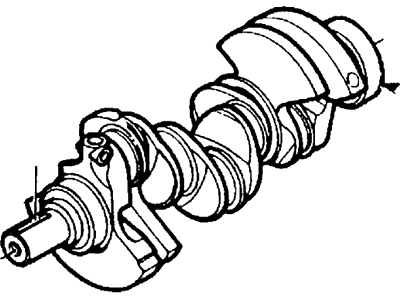 Product Specifications
- Other Name: Kit - Remanufactured Crankshaft
- Manufacturer Note: OHV, FROM 5/10/90
- Base No.: 6V303
- Item Dimensions: 7.7 x 7.7 x 22.4 inches
- Condition: Remanufactured
- Fitment Type: Direct Replacement
- SKU: FOTZ-6V303-BRM
- Warranty: This genuine part is guaranteed by Ford's factory warranty.
- Product Specifications
- Other Name: Kit - Remanufactured Crankshaft
- Base No.: 6V303
- Item Weight: 8.20 Pounds
- Item Dimensions: 6.4 x 6.1 x 23.9 inches
- Condition: Remanufactured
- Fitment Type: Direct Replacement
- SKU: E9TZ-6V303-ARM
- Warranty: This genuine part is guaranteed by Ford's factory warranty.
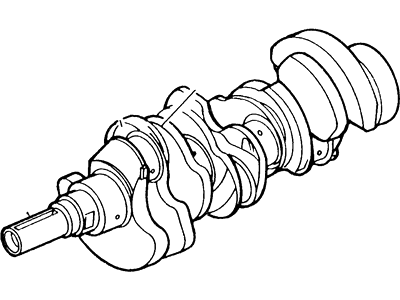 Product Specifications
- Other Name: Kit - Remanufactured Crankshaft
- Manufacturer Note: 12V
- Base No.: 6V303
- Item Weight: 36.40 Pounds
- Item Dimensions: 8.3 x 8.9 x 21.7 inches
- Condition: Remanufactured
- Fitment Type: Direct Replacement
- SKU: E8DZ-6V303-ARM
- Warranty: This genuine part is guaranteed by Ford's factory warranty.
1994 Ford Ranger Crankshaft
At FordPartsGiant.com, you will find an extensive inventory of genuine 1994 Ford Ranger Crankshaft offered at competitive prices online. These manufacturer-backed OEM 1994 Ford Ranger Crankshaft ensure your satisfaction with their quality and come with a hassle-free return policy and expedited delivery service, guaranteeing a delightful shopping experience.
1994 Ford Ranger Crankshaft Parts Questions & Experts Answers
- Q:How can the crankshaft be removed from the engine after it has been taken out of on 1994 Ford Ranger?Posted by Boone C.A:The crankshaft can only be removed after the engine has been taken out of the vehicle, assuming that the flywheel or driveplate, vibration damper, timing chain, oil pan, oil pump, and piston/connecting rod assemblies have already been detached. First, check the endplay by mounting a dial indicator with the stem aligned with the crankshaft and touching one of the crank throws. Push the crankshaft to the rear and zero the dial indicator, then pry it to the front and check the reading; the movement distance indicates the endplay. If it exceeds the limit, inspect the crankshaft thrust surfaces for wear, and if no wear is found, new main bearings may resolve the issue. If a dial indicator is unavailable, use feeler gauges by prying or pushing the crankshaft to the front and slipping the gauges between the crankshaft and the thrust main bearing to measure clearance. Check the main bearing caps for markings indicating their locations, ensuring they are numbered consecutively from front to rear; if not, mark them appropriately. Loosen the main bearing cap bolts gradually until they can be removed by hand, noting any stud bolts for proper reinstallation. Gently tap the caps with a soft-face hammer to separate them from the engine block, using the bolts as levers if necessary, and take care not to drop the bearing inserts. Finally, carefully lift the crankshaft out of the engine, possibly with assistance due to its weight, and return the bearing inserts to their places in the engine block and main bearing caps, tightening the bolts finger tight.Answered by Ford Parts Specialist Patrick / Jun 08, 2023
Related 1994 Ford Ranger Parts
 1994 Ford Ranger Crankshaft Pulley
 1994 Ford Ranger Camshaft
 1994 Ford Ranger Oil Pump
 1994 Ford Ranger Oil Pan Gasket
 1994 Ford Ranger Oil Pump Gasket
 1994 Ford Ranger Crankshaft Gear
 1994 Ford Ranger Oil Pan
 1994 Ford Ranger Rod Bearing
 1994 Ford Ranger Crankshaft Thrust Washer Set
 1994 Ford Ranger Cam Gear
 1994 Ford Ranger Crankshaft Seal