Make sure this part fits

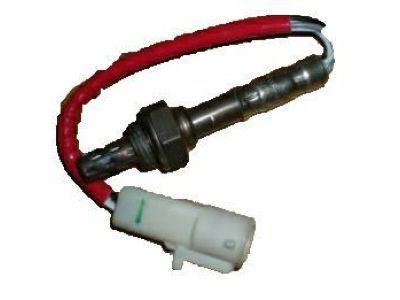
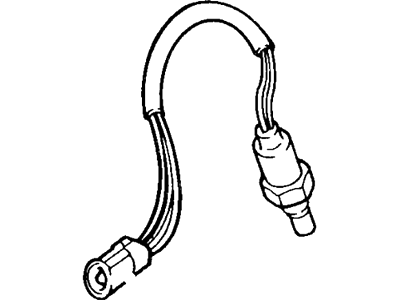
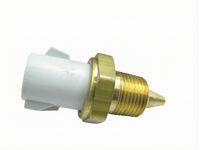
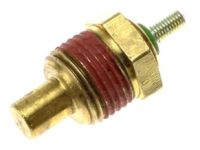
Mercury F4DZ-9F472-A Sensor Assembly

1990-2006 Mercury F4DZ9F472A

Customer Questions & Expert Answers (5)
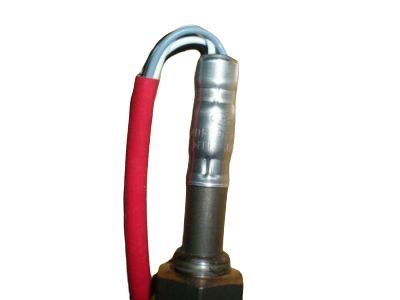
F4DZ-9F472-A Ford Sensor Assembly Product Photo 1 of 2
  • Part Description
    Sensor Assy
  • Replaced By
    GU2Z-9G444-A
  • Manufacturer
    Ford
Make sure this part fits
$56.90 MSRP: $92.18
You Save: $35.28 (39%)
Ships in 1 Business Day
1
ADD TO CART
  • Related Parts
  • Specifications
  • Fitment
  • Q&A
  • Product Specifications

    BrandGenuine Mercury
    Manufacturer Part NumberF4DZ-9F472-A, F4DZ9F472A
    Part DescriptionSensor Assy
    Item Dimensions8.3 x 7.8 x 7.6 inches
    Item Weight0.50 Pounds
    ConditionNew
    Fitment TypeDirect Replacement
    ManufacturerFord
    SKUF4DZ-9F472-A
    WarrantyThis genuine Ford part is guaranteed by Ford's factory warranty.
    Shipping & ReturnShipping Policy Return Policy
    Warning: California's Proposition 65
  • Vehicle Fitment

    Year Make Model Engine Important vehicle option details
    1991-1994 Mercury Capri4 Cyl 1.6L4AT 4EAT, 5MT
    1999-2002, 1990-1997 Mercury Cougar4 Cyl 2.0L, 6 Cyl 2.5L, 6 Cyl 3.8L, 8 Cyl 4.6L, 8 Cyl 5.0L4AT, 4AT 4R70W, 4AT AOD, 4AT AODE, 4AT CD4E, 5MT
    1990-2006 Mercury Grand Marquis8 Cyl 4.6L, 8 Cyl 5.0L4AT, 4AT 4R70W, 4AT AOD, 4AT AODE
    1995-2000 Mercury Mystique4 Cyl 2.0L, 6 Cyl 2.5L4AT CD4E, 5MT
    1990-2005 Mercury Sable6 Cyl 3.0L, 6 Cyl 3.8L4AT 4F50N, 4AT AX4N, 4AT AX4S, 4AT AXOD, 4AT AXOD-E, 6AT
    1990-1994 Mercury Topaz4 Cyl 2.3L, 6 Cyl 3.0L3AT ATX, 5MT
    1991-1999 Mercury Tracer4 Cyl 1.8L, 4 Cyl 1.9L, 4 Cyl 2.0L4AT 4EAT, 4AT F4E-III, 4AT IF4E, 5MT
  • Customer Questions & Expert Answers

    Q:
    Is the the correct part for the attached VIN? Posted by FordPartsGiant Specialist
    A:
    You can Select Your Vehicle to check if F4DZ-9F472-A fits your vehicle.
    Posted by FordPartsGiant Specialist
    Q:
    How to check and replace the Brake Light Switch,Camshaft Position Sensor,Coolant Temperature Sensor,Crankshaft Position Sensor,Intake Manifold Temperature Sensor,MAP Sensor,Mass Air Flow Sensor,Neutral Safety Switch,Oxygen Sensors,Throttle Position Sensor and Vehicle Speed Sensor on Lincoln Mark VII? Posted by Customer
    A:
    The engine coolant temperature sensor works like a thermistor that changes its power through temperature shifts, and its connection circuit can show trouble by triggering certain problems. Start by finding out how well the sensor works: take the cold and warm resistance readings, then see if warming the sensor makes the resistance go down. Check the voltage sent from the PCM to make sure the resistance values are accurate. To put in the new sensor, wait until the engine cools down fully, cover the threads with special tape, and treat the sensor gently to keep it from getting hurt. The MAP sensor takes readings from the intake manifold pressure, turns them into electrical voltage, and gives this information to the PCM to decide how much fuel to release and when to ignite the fuel. During MAP sensor electrical troubles, special fault codes show up. You can check the MAP sensor by looking at both reference voltage and signal voltage with a voltmeter, then put the system under vacuum and watch for tachometer activity. The PCM reads the oxygen content in the exhaust through the oxygen sensor. The sensor provides electrical input that tells the PCM when to add or reduce fuel in the air/fuel mixture. The MAP sensor works best when the electrical components are connected right, it gets the air it needs, runs at the right temperature, and only uses fuel without lead. Make sure the oxygen sensor gives a constant reading once it warms up, then look to see if its heating element gets power from the battery. The TPS, found on the throttle body, reads how open the throttle valve is to send correct fuel to your engine. You can examine TPS performance by measuring voltage at idle and full throttle, plus looking at PCM reference voltage. The Mass Air Flow (MAF) sensor tells the PCM how much air goes into the engine by converting it into a changing electrical voltage value. To find out if the MAF sensor is working, look for power and voltage at the signal, and check the wire for any breaks. The MLP sensor tells the PCM where the transmission is, which controls different features. Check if the MLP sensor works correctly by making sure the signal wires have the correct voltage. Combinations of problems with the Vehicle Speed Sensor lead directly to a determined fault code. To inspect the VSS, make sure the signal voltage is present at the connection. The Intake Manifold Temperature Sensor tells the PCM how warm the incoming air is, making the PCM work properly. You should measure voltage and resistance in the Intake Manifold Temperature Sensor while testing it to see how temperature affects its readings. A faulty power steering pressure switch can cause problems maintaining proper idling by monitoring fluid pressure. Your car can't tell where it's going without working crankshaft and camshaft sensor signals. Seek out a qualified mechanic to fix location problems that pop up. The brake system lets the PCM know when drivers push their brakes. When checking this part, we look for the brake light system's electricity as well as how connected points are from the brake light bulbs.
    Posted by FordPartsGiant Specialist
    Q:
    How to check and replace the Brake Light Switch,Camshaft Position Sensor,Coolant Temperature Sensor,Crankshaft Position Sensor,Intake Manifold Temperature Sensor,MAP Sensor,Mass Air Flow Sensor,Neutral Safety Switch,Oxygen Sensors,Throttle Position Sensor and Vehicle Speed Sensor on Lincoln Town Car? Posted by Customer
    A:
    The engine coolant temperature sensor is a thermistor that varies its voltage output based on temperature changes. Resistance values decrease as the sensor temperature increases and vice versa. Failure in the coolant sensor circuit triggers codes 21, 51, or 61 (two-digit) or 116, 117, 118 (three-digit). Resistance values should be checked while cold (58,750 to 40,500 ohms) and at operating temperature (3,600 to 1,840 ohms). Signal voltage to the sensor from the PCM should be around 5.0 volts. During replacement, wait for the engine to cool, use Teflon tape on threads, and handle the sensor with care.The Manifold Absolute Pressure (MAP) sensor monitors intake manifold pressure changes, converting them into a voltage output. A failure triggers codes 22 or 72 (two-digit) or 126, 128, 129 (three-digit). Check reference voltage (4.0 to 6.0 volts), backprobe the MAP/BP Signal wire, and apply vacuum to observe tachometer readings. Incorrect results indicate MAP sensor replacement.Oxygen sensors monitor exhaust oxygen content, adjusting air/fuel mixture. Check for a steady signal voltage between 0.35 and 0.55 volts at normal operating temperature. Codes 41, 42, 91, 92 (two-digit) or 136, 137, 139, 144, 171-178 (three-digit) indicate issues. Ensure the oxygen sensor heater receives battery voltage. Special care during service is essential.The Throttle Position Sensor (TPS) monitors throttle angle. Check for proper signal voltage (0.50 to 1.0 volts at idle, 4.0 to 5.0 volts at full throttle) and reference voltage (approximately 5.0 volts). Check potentiometer resistance (0.8 to 1.0 K ohms at closed throttle, 3.0 to 4.0 K ohms at full throttle). Replace if readings are incorrect.The Mass Air Flow (MAF) sensor, for 4.6L engines, measures air entering the engine. Check for power, signal voltage (0.2 to 1.5 volts at idle, increasing to about 2.0 volts at 60 mph), and use an ohmmeter for resistance checks. Replacement involves disconnecting the electrical connector, removing the air cleaner assembly, and uninstalling the MAF sensor.The Manual Lever Position (MLP) sensor, now Transmission Range (TR) sensor, indicates transmission gear. Check terminal connectors for attachment, verify power, and adjust if necessary. Diagnostics require special tools.The air conditioning clutch control involves PCM control of the compressor clutch. If the air conditioning does not function, check relays and switches. To test, remove the relay and bridge the battery feed and compressor clutch terminals. The Vehicle Speed Sensor (VSS) monitors speed, usually setting Code 24 if faulty. Check for signal voltage (10 volts or more). Replacement involves disconnecting the electrical connector, removing the retaining bolt, and lifting the VSS from the transmission. The Intake Manifold Temperature Sensor measures air temperature entering the engine. Check for correct reference voltage (5 volts) and resistance changes with temperature. Code 54 indicates issues.The power steering pressure switch affects idle quality. Problems may set Code 52. Check for open or closed circuits affecting engine timing.The crankshaft position sensor defines engine position for the PCM, and any issues require professional diagnosis. Replacement involves removing the electrical connector and retaining bolt.The camshaft position sensor is triggered by the camshaft sprocket's high point. Diagnostic work should be done by professionals.The Brake Light Switch informs the PCM when brakes are applied. Ensure proper voltage and continuity, and replace if needed. Brake light circuit and bulb conditions can impact idle quality.

    Posted by FordPartsGiant Specialist
    Q:
    What should be done if a fault code has been generated by a faulty sensor for the 2002 Ford Focus? Posted by Customer
    A:
    If a fault code has been generated by a faulty sensor, it should be addressed to ensure proper engine management.
    Posted by FordPartsGiant Specialist
    See expert answers on similar Oxygen Sensors
    Q:
    What is the function of the Air Charge Temperature (ACT) sensor for the 1992 Mercury Capri? Posted by Customer
    A:
    The ACT sensor provides the ECA with fuel/air mixture temperature information, which the ECA uses to correct fuel flow and control fuel flow during cold starts.
    Posted by FordPartsGiant Specialist
    See expert answers on similar Oxygen Sensors
    If you have any questions about this product, please don't hesitate to ask us. We will be happy to help you!

Genuine Ford Part F4DZ-9F472-A, the Right Choice

To ensure reliability, purchase part # F4DZ-9F472-A Sensor Assembly. It is also called Oxygen Sensors. OEM parts are of high quality and known for their longevity. This is because they are built to the Ford standards which are relatively high and undergo rigorous quality control testing. This part fits specific Mercury Capri, Cougar, Mystique models.

FordPartsGiant.com is a leading supplier of genuine components and accessories such as F4DZ9F472A Sensor Assembly. Looking to purchase quality low-cost OEM Ford parts? You have just found the right place. For detailed Mercury parts information, click here.

Why choose Ford Parts Giant

  • Dedicated Service

    Your complete satisfaction is our #1 goal

  • Lowest Prices

    Best deals on genuine OE parts from dealerships

  • Fast Delivery

    Orders are processed and delivered promptly