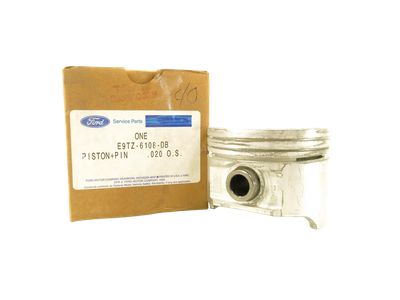
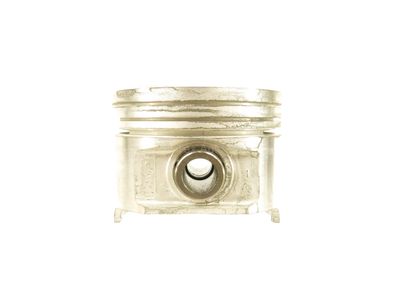
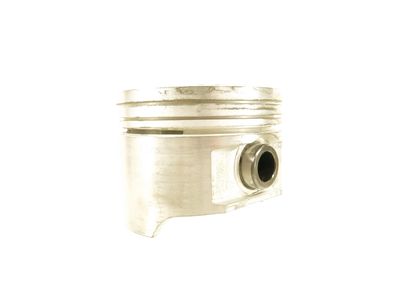
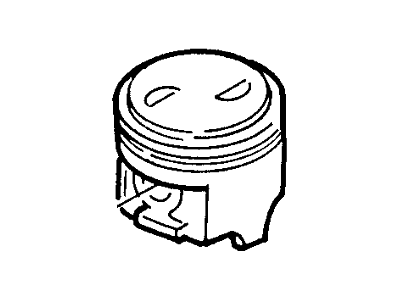
Before installing the piston and connecting rod assemblies, ensure the cylinder walls are clean, the top edge of each cylinder is chamfered, and the crankshaft is in place. Remove the connecting rod cap from the number one connecting rod, take out the old bearing inserts, and wipe the bearing surfaces with a clean, lint-free cloth. Clean the back side of the new upper bearing half and lay it in place in the connecting rod, ensuring the tab fits into the recess without hammering it in or nicking the bearing face. Clean the back side of the remaining bearing insert and install it in the rod cap, again ensuring the tab fits into the recess without applying lubricant. Position the piston ring gaps at intervals around the piston and slip a section of plastic or rubber hose over each connecting rod cap bolt. Lubricate the piston and rings with clean engine oil, attach a piston ring compressor, and leave the skirt protruding about 1/4-inch to guide the piston into the cylinder. Rotate the crankshaft until the number one connecting rod journal is at bottom dead center and apply engine oil to the cylinder walls. With the notch or arrow on top of the piston facing the front of the engine, gently insert the piston/connecting rod assembly into the number one cylinder bore, resting the bottom edge of the ring compressor on the engine block, and tap the top edge to ensure contact. Carefully tap on the top of the piston with a wooden hammer handle while guiding the connecting rod into place on the crankshaft journal, maintaining downward pressure on the ring compressor to prevent the piston rings from popping out. Once installed, check the connecting rod bearing oil clearance before permanently bolting the rod cap in place. Cut a piece of Plastigage slightly shorter than the width of the connecting rod bearing and lay it on the number one connecting rod journal. Clean the connecting rod cap bearing face, remove the protective hoses, and install the rod cap, ensuring the mating marks align. Tighten the nuts to the specified torque in three steps, avoiding any crankshaft rotation during this process. Remove the rod cap carefully to avoid disturbing the Plastigage, compare the width of the crushed Plastigage to the scale on the container to obtain the oil clearance, and ensure it meets specifications. If the clearance is incorrect, check for dirt or oil between the bearing inserts and the connecting rod or cap, and recheck the journal diameter. Scrape off any Plastigage material carefully without scratching the bearing, then apply a uniform layer of clean moly-base grease or engine assembly lube to both bearing faces. Slide the connecting rod back into place on the journal, remove the protective hoses, install the rod cap, and tighten the nuts to the specified torque, again working up to it in three steps. Repeat the procedure for the remaining piston/connecting rod assemblies, keeping all components clean and ensuring the correct piston is used for each cylinder with the notch facing the front of the engine. After all assemblies are installed, rotate the crankshaft by hand to check for binding, and finally, check the connecting rod end play against specifications to ensure it is correct, addressing any issues with resizing if necessary.