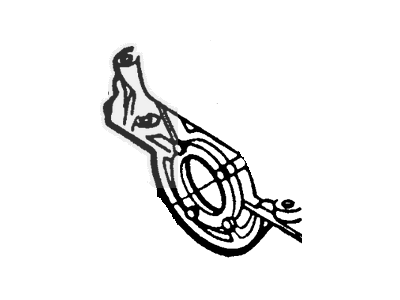
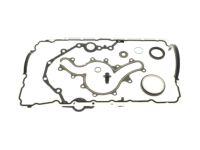
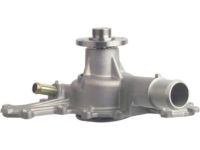
On this model, the manufacturer recommends removing the engine from the vehicle to perform timing cover removal, as the oil pan must be removed to properly seal the bottom of the timing cover. An alternative method allows the oil pan to remain attached, making for an in-vehicle procedure. Begin by removing the engine cooling fan/shroud and water pump, then disconnect the radiator and heater hoses. Drain the engine oil and remove the oil filter. Next, remove the crankshaft pulley, disconnect the electrical connector from the crankshaft position sensor, and remove the sensor. Unbolt and remove all accessory brackets attached to the timing cover, tying the power steering pump aside with the hoses still connected. For models equipped with air conditioning, remove the compressor front support bracket while leaving the compressor in place. Position the number one piston at TDC on the compression stroke, then remove the oil pan-to-timing cover bolts. Use a razor knife or blade to cut the oil pan gasket flush with the engine block face, ensuring a clean cut to prevent tearing the original gasket during cover removal. Remove the bolts and separate the timing cover from the engine block, tapping gently with a soft-face hammer if necessary, and double-check that all bolts are removed. To install, stuff a shop rag into the oil pan opening to keep debris out, then use a gasket scraper to remove all traces of old gasket material and sealant from the cover, oil pan, and engine block, cleaning them with lacquer thinner or acetone. Cut the front section from a new oil pan gasket to fit the timing cover and attach it with contact adhesive, allowing it to dry thoroughly. Apply a 1/8-inch bead of RTV sealant to the oil pan-to-block joints, lubricate the front crankshaft oil seal lip with engine oil, and apply a thin coat of RTV sealant to the block side of the new cover gasket before positioning it on the engine. Apply a thin coat of RTV sealant to the gasket surface of the cover and attach it to the engine, ensuring the oil pan gasket remains in place. It may be necessary to compress the rubber seal by forcing the cover down before installing the cover bolts to the block. Install the four cover-to-engine block bolts followed by the oil pan-to-cover bolts, tightening them to the specified torque while ensuring the gasket remains in place. Reinstall the remaining components in the reverse order of removal, applying a dab of RTV sealant to the keyway in the pulley before reinstalling it. Finally, add engine oil and coolant, then run the engine and check for leaks.