My Garage
My Account
Cart
Genuine Mercury Crankshaft
Crank Shaft- Select Vehicle by Model
- Select Vehicle by VIN
Select Vehicle by Model
orMake
Model
Year
Select Vehicle by VIN
For the most accurate results, select vehicle by your VIN (Vehicle Identification Number).
35 Crankshafts found
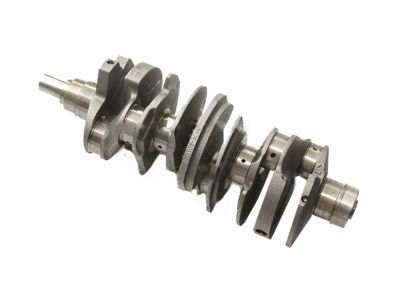
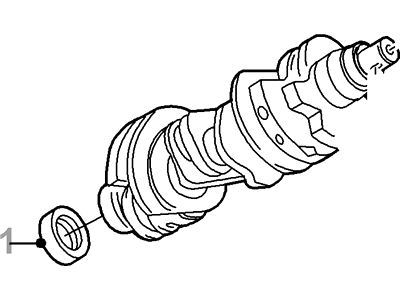
Mercury Crankshaft Assembly
Part Number: 5L2Z-6303-AA$306.00 MSRP: $425.09You Save: $119.09 (29%)Ships in 1-2 Business DaysProduct Specifications- Other Name: Crankshaft Assy; Crankshaft
- Replaces: 1L2Z-6303-BA, F87Z-6303-BA
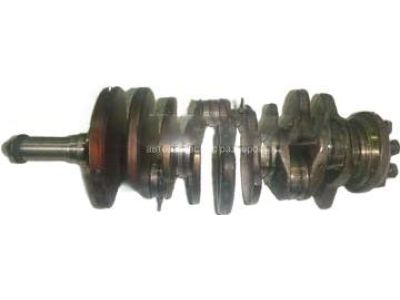
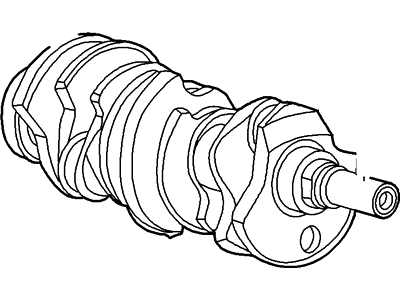
Mercury Crankshaft Assembly
Part Number: F7DZ-6303-AA$267.34 MSRP: $395.00You Save: $127.66 (33%)Ships in 1-3 Business DaysProduct Specifications- Other Name: Crankshaft Assy; Crankshaft
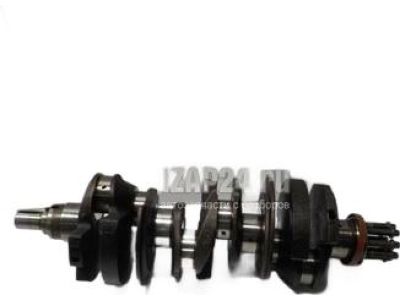
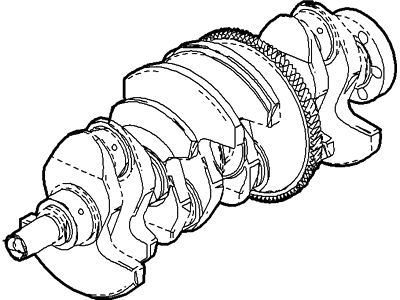 Product Specifications
- Other Name: Crankshaft Assy
- Manufacturer Note: SOHC
- Replaced by: 5L2Z-6303-AA
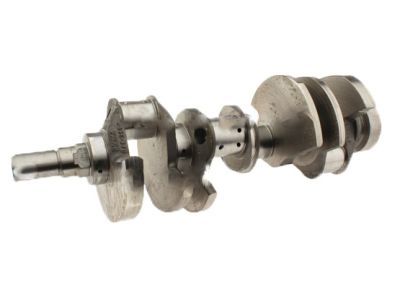
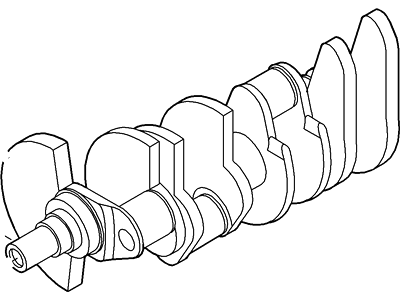 Product Specifications
- Other Name: Crankshaft Assy; Crankshaft
- Replaces: 2F3Z-6303-AA, 2C5Z-6303-AA
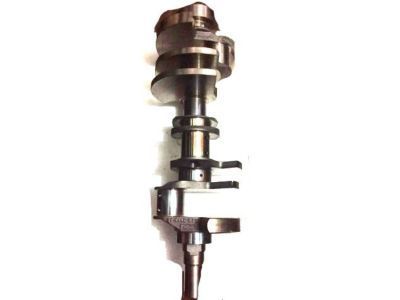
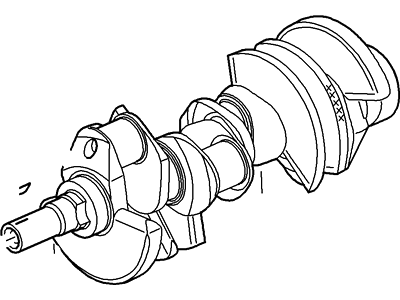 Product Specifications
- Other Name: Crankshaft Assy
- Replaced by: 2C5Z-6303-BA
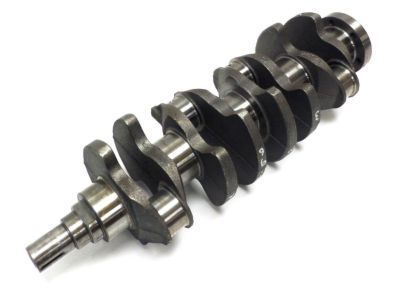
 Product Specifications
- Other Name: Crankshaft Assy; Crankshaft
 Product Specifications
- Other Name: Crankshaft Assy; Crankshaft
 Product Specifications
- Other Name: Crankshaft Assy
- Manufacturer Note: OHV
- Replaced by: 5L2Z-6303-AA
 Product Specifications
- Other Name: Kit - Remanufactured Crankshaft
 Product Specifications
- Other Name: Crankshaft Assy; Crankshaft
- Replaces: F5RZ-6303-B
 Product Specifications
- Other Name: Kit - Remanufactured Crankshaft
- Product Specifications
- Other Name: CRANKSHAFT ASY
- Manufacturer Note: INCL. 6701 SEAL
 Product Specifications
- Other Name: Crankshaft Assy; Crankshaft
 Product Specifications
- Other Name: CRANKSHAFT ASY
- Manufacturer Note: Incl. 6B316 key & 7G371 (Auto Trans only) sleeve., BEFORE 7/14/97
- Replaced by: F7RZ-6303-AA
- Product Specifications
- Other Name: Crankshaft Assy
- Replaced by: EM5Z-6303-ARM
- Product Specifications
- Other Name: Kit - Remanufactured Crankshaft
- Manufacturer Note: 12V
- Product Specifications
- Other Name: CRANKSHAFT ASY
- Replaced by: XF1Z-6303-BA
 Product Specifications
- Other Name: Crankshaft Assy; Crankshaft, Crankshaft Gear
- Manufacturer Note: Service only kit,.020" U/S
 Product Specifications
- Other Name: Crankshaft Assy
- Manufacturer Note: Service only kit-.020" U/S
 Product Specifications
- Other Name: Kit - Remanufactured Crankshaft; Crankshaft
- Manufacturer Note: exc SC
| Page 1 of 2 |Next >
1-20 of 35 Results
Mercury Crankshaft
We offer a wide variety of genuine Mercury Crankshafts at competitive prices online. Our OEM Mercury Crankshafts come with the assurance of a manufacturer's warranty, alongside a hassle-free return policy and prompt delivery service, ensuring a worry-free shopping experience.
Mercury Crankshaft Parts Questions & Experts Answers
- Q:How to properly inspect and maintain a crankshaft on Mercury Cougar?A:Clean the crankshaft with solvent and dry it with compressed air while wearing eye protection. Ensure the oil holes are cleaned with a stiff brush and flushed with solvent. Check the main and connecting rod bearing journals for uneven wear, scoring, pits, and cracks. Rub a penny across each journal several times; if copper rubs off and embeds in the crankshaft, the journals should be reground. Remove all burrs from the crankshaft oil holes with a stone, file, or scraper, ensuring the oil holes are chamfered to prevent gouging or scratching new bearings. Inspect the rest of the crankshaft for cracks and other damage, and have it magnafluxed to reveal hidden cracks. Measure the diameter of the main and connecting rod journals with a micrometer, comparing the results to the specifications, and check for taper and out-of-round conditions by measuring at several points around each journal's circumference. If the crankshaft journals are damaged, tapered, out-of-round, or worn beyond the specified limits, have the crankshaft reground by an automotive machine shop, using the correct size bearing inserts if reconditioned. The crankshaft journals cannot be machined more than 0.010 inch under the standard dimension, and the rear journal on supercharged engines cannot be refinished as it is already 0.010 inch under size. Check the oil seal journals at each end of the crankshaft for wear and damage; if grooves, nicks, or scratches are present, the new seals may leak upon reassembly. An automotive machine shop may repair the journal by pressing on a thin sleeve, but if repair isn't feasible, a new or different crankshaft should be installed. Examine the main and rod bearing inserts for further assessment.
- Q:How to crankshaft install in engine reassembly on Mercury Grand Marquis?A:Crankshaft fitting is the initial process of the entire engine assembly, if and only if the block and crankshaft had been washed, checked, and reinforced. Place the engine in such a manner that the bottom is up and then remove the main bearing cap bolts and extract the caps and arrange those caps at one place in sequence for fitting. If present, carefully unscrew the original bearing inserts from block and caps, then clean bearing surfaces with a cloth free of having any lint on it. Scrub the back sides of the new main bearing inserts and then install them one on each of the main bearing saddens in the block; the grooved insert should be on the correct side. Place the matching bearing from each set into the main bearing cap so that the tab is in place into the recess, while the holes for the oiling must be aligned. The flanged thrust bearing has to be properly fitted to the corresponding cap and saddle depending on the type of the engine. I tell the workshop mechanics to clean the bearing faces and crankshaft main bearing journals, then lay the crankshaft in position. Measuring the main bearing oil clearance and using Plastigage-make sure that the material is not disturbed during placing the caps at their places. Lock the main bearing cap bolts in three increments from the center in an anticlockwise direction to the end of the crankshaft. When the caps have been taken off, You should compare the width of the crushed Plastigage to get the oil clearance and you should be sure that no dirt or oil hindered your measurement. Scrape off the used or remaining Plastigage material as possible, then raise and remove the crankshaft while coating the bearing journals with a thin layer of moly-based assembly lube or engine assembly lube before reinstalling the crankshaft . Place the caps and make the proper tension on the main cap bolts, as well as bring the thrust bearing contacting surfaces into line by lifting the crankshaft and the thrust bearing cap in directions at right angles the one to the other. Tightly do the main bearing cap bolts, turn the crankshaft and see if it binds, and also check the crankshaft end clearance. Bolt the rear main oil seal into position and screw the jack bolts into the main caps, tapping the caps home before finally tightening the bolts to suit.Most L engines do not come with timing sprockets fitted from new, which requires the following procedure to be carried out: The sprockets are a cost option, offered by Holden for an additional price, but they will not fit on most L engines that are brand new right out Insert the crankshaft forward to locate the thrust bearings; further preloading is done by applying pressure on the thrust bearing until all the bolts are tightened and then tightened according to the prescribed sequence for the main bearing cap bolts, jack screws, and side bolts. Last but not least repeat the same operation where you check on crankshaft end play position it a little and turn the crankshaft just to test for binding.