

My Garage
My Account
Cart
Genuine Lincoln Town Car Exhaust Manifold
Engine Exhaust Manifold- Select Vehicle by Model
- Select Vehicle by VIN
Select Vehicle by Model
orMake
Model
Year
Select Vehicle by VIN
For the most accurate results, select vehicle by your VIN (Vehicle Identification Number).
9 Exhaust Manifolds found
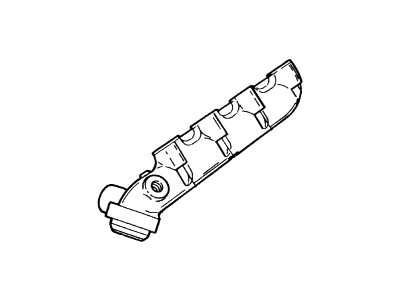
Lincoln Town Car Exhaust Manifold Assembly
Part Number: F1AZ9431B$495.47 MSRP: $682.60You Save: $187.13 (28%)Ships in 1-2 Business Days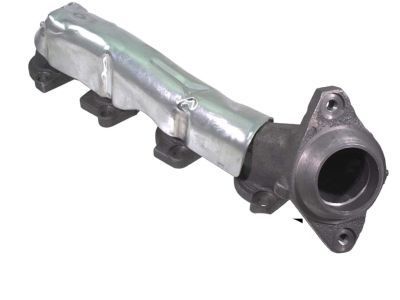
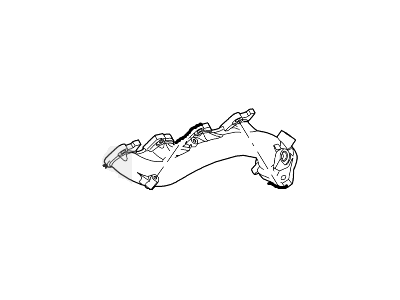
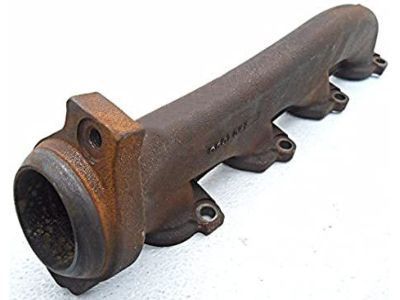
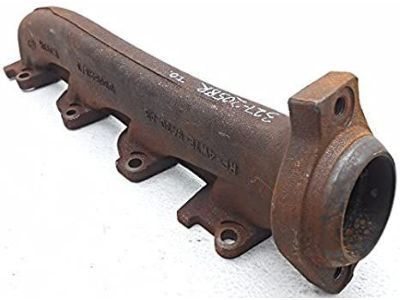
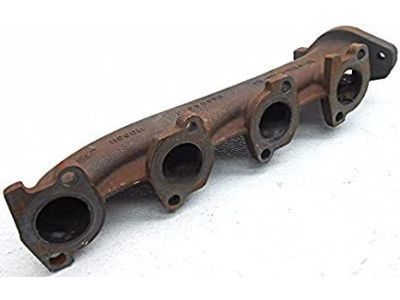
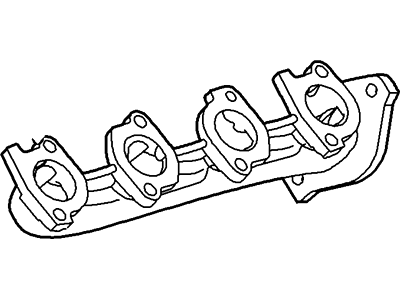
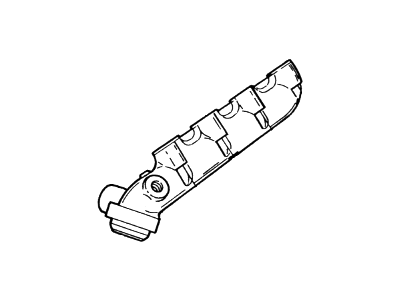
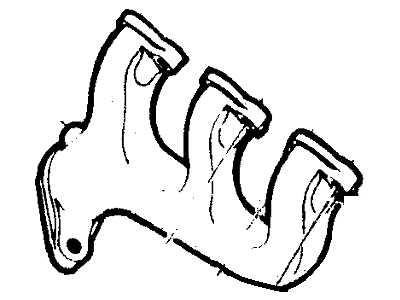
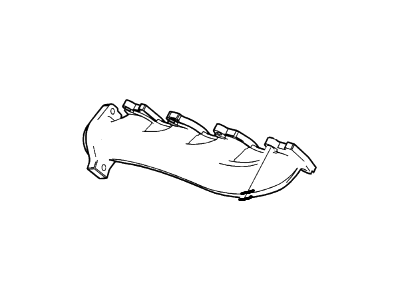
Lincoln Town Car Exhaust Manifold
The Exhaust Manifold in Lincoln Town Car vehicles plays the vital role of channeling or leading hot exhaust gases from the engine to exhaust system so as to protect, enhance and maintain the efficiency of the engines and also minimizing the emission of toxic gases. Depending on the layout of the engine, it is located at various places; it is usually made of cast iron or stainless steel and usually consists of several tubes in relation to the numbers of cylinders of the engine. There are standard manifolds and headers noted and used over the years for exhaust manifold designs. Unlike standard manifolds that are made to capture exhaust gases, headers are made in such a way that they offer as little restriction as possible and will augment the velocity of the exhaust gases. Other enhancements like the use of H/X pipes in V8 engines, enhances the pressure balance of the exhaust, and thus increases the performance. The exhaust manifold must be maintained well, due to the fact that deterioration can result into performance problems and also health complications if there are exhaust leaks.
We provide a wide range of Lincoln Town Car Exhaust Manifold at the optimal prices. If you need Lincoln Town Car Exhaust Manifold, you can shop with confidence on our website. All our OEM parts come with a manufacturer's warranty and are delivered to your doorstep with a fast delivery service.
Lincoln Town Car Exhaust Manifold Parts Questions & Experts Answers
- Q:How to remove and reinstall an exhaust manifold on Lincoln Town Car Overhead valve (OHV)engines?A:Disconnect the battery cable from the negative terminal of the battery. Raise the vehicle and support it securely on jackstands. Working under the vehicle, apply penetrating oil to the exhaust pipe-to-manifold studs and nuts. Remove the nuts that hold the exhaust pipe flange to the exhaust manifold. Unplug the electrical connector for the oxygen sensor. Lower the vehicle and remove the spark plug heat shields, if equipped. First, remove the spark plug heat shield nuts and then remove the shield, and spark plugs. Remove the manifold heat shields, if equipped. On some models, it is necessary to remove the heat shield nuts and the heat shield to gain access to the exhaust manifold bolts - use penetrating oil to make the fasteners easier to remove. Remove the air cleaner assembly and heat stove tube, if equipped. For the right side manifold, remove the Thermactor hardware, if equipped. Remove the automatic transmission fluid dipstick tube, if necessary. For the left side manifold, if it's in the way, remove the engine oil dipstick and tube. For both manifolds, bend back the locking tabs. Some models are equipped with manifold bolt locking tabs -bend these down before removing the bolts - use new locking assemblies on installation, bending the tabs up to lock the bolts in place, if equipped. Remove the mounting bolts and separate the manifold from the head. Use a deep socket to remove the special stud bolts used to retain the spark plug heat shield. Note the locations of the pilot bolts.Check the manifold for cracks and make sure the bolt threads are clean and undamaged. The manifold and cylinder head mating surfaces must be clean before the manifolds are reinstalled - use a gasket scraper to remove all carbon deposits and old gasket material. Position the manifold and gasket, if used, on the head and install the mounting bolts. When tightening the mounting bolts, work from the center to the ends and tighten the bolts in three equal steps. The remaining installation steps are the reverse of removal. Start the engine and check for exhaust leaks.
Related Lincoln Town Car Parts
 Lincoln Town Car Door Handle
 Lincoln Town Car Headlight
 Lincoln Town Car Catalytic Converter
 Lincoln Town Car EGR Valve
 Lincoln Town Car Window Regulator
 Lincoln Town Car Emblem
 Lincoln Town Car Seat Belt
 Lincoln Town Car Lift Support
 Lincoln Town Car Bumper
 Lincoln Town Car Spare Wheel
 Lincoln Town Car Clock Spring
 Lincoln Town Car Door Check
Browse by Year
2011 Exhaust Manifold 2010 Exhaust Manifold 2009 Exhaust Manifold 2008 Exhaust Manifold 2007 Exhaust Manifold 2006 Exhaust Manifold 2005 Exhaust Manifold 2004 Exhaust Manifold 2003 Exhaust Manifold 2002 Exhaust Manifold 2001 Exhaust Manifold 2000 Exhaust Manifold 1999 Exhaust Manifold 1998 Exhaust Manifold 1997 Exhaust Manifold 1996 Exhaust Manifold 1995 Exhaust Manifold 1994 Exhaust Manifold 1993 Exhaust Manifold 1992 Exhaust Manifold 1991 Exhaust Manifold 1990 Exhaust Manifold 1989 Exhaust Manifold 1988 Exhaust Manifold 1987 Exhaust Manifold 1986 Exhaust Manifold