

My Garage
My Account
Cart
Genuine Ford Taurus CV Boot
Axle Boot- Select Vehicle by Model
- Select Vehicle by VIN
Select Vehicle by Model
orMake
Model
Year
Select Vehicle by VIN
For the most accurate results, select vehicle by your VIN (Vehicle Identification Number).
19 CV Boots found
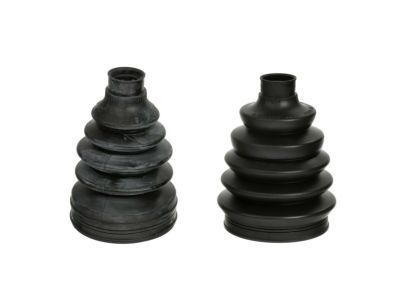
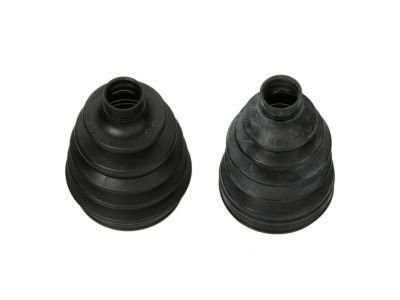
Ford Taurus Boot Kit
Part Number: 8G1Z-3A331-B$27.22 MSRP: $44.39You Save: $17.17 (39%)Ships in 1-2 Business Days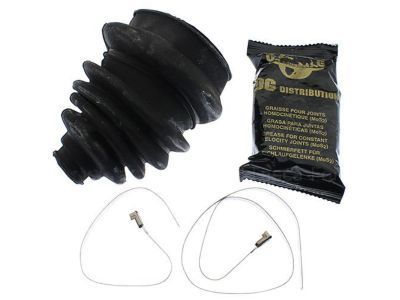
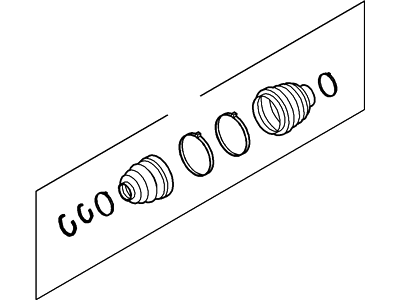
Ford Taurus Boot Kit
Part Number: 7T4Z-3A331-B$68.12 MSRP: $110.36You Save: $42.24 (39%)Ships in 1-2 Business Days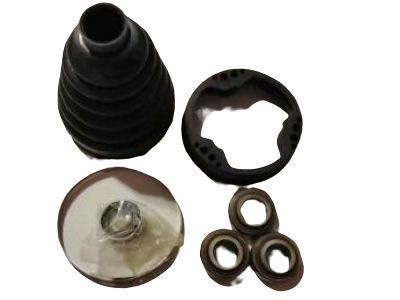
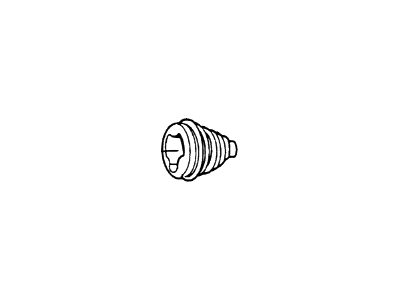
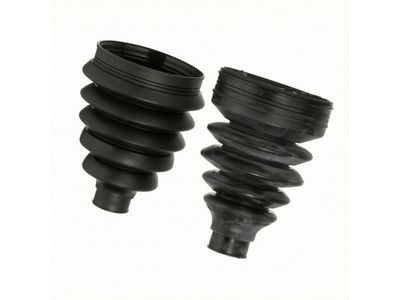
Ford Taurus Inner Boot
Part Number: F2DZ-3A331-A$6.00 MSRP: $8.34You Save: $2.34 (29%)Ships in 1-2 Business Days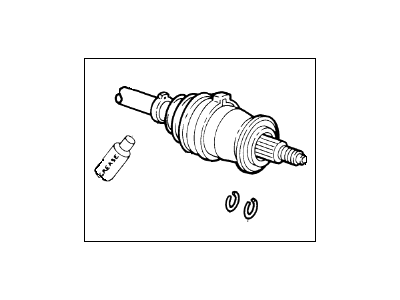
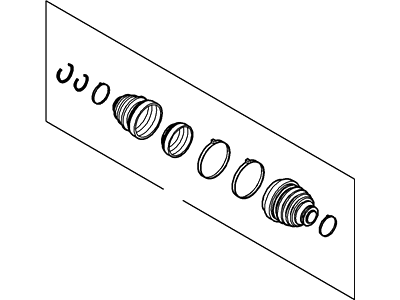
Ford Taurus Inner Boot
Part Number: E6DZ-3A331-H$16.34 MSRP: $22.70You Save: $6.36 (29%)Ships in 1-2 Business Days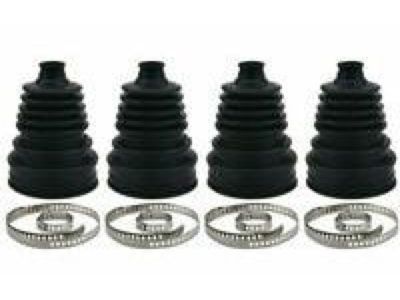
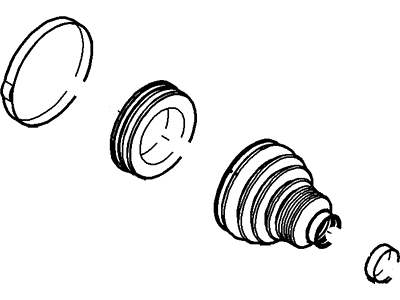
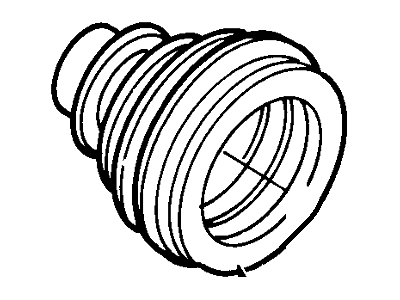
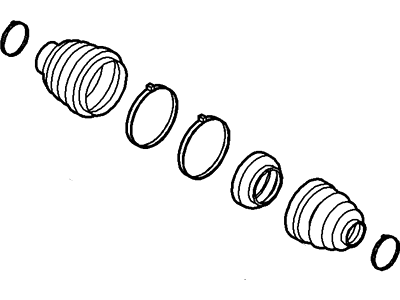
Ford Taurus CV Boot
CV Boot in Ford Taurus cars is an important one that holds in specific amount of grease of the CV joint and also does not allow entry of various unwanted elements. Typically there are different sorts of CV joints used in Taurus vehicles, such as fixed as an outboard joint and the plunging joint on the inboard side. The outer joints work at larger angles, and inboard joints allow shaft length which changes during the suspension movement. Rzeppa joints are normally used on the outboard side; tripod, and double offset joints are used on the inboard side. It is recommended to always inspect the CV boot commonly for CV joint failure since they are easily damaged and should be looked for cracks, tears and other signs of deterioration.
We provide a wide range of Ford Taurus CV Boot at the optimal prices. If you need Ford Taurus CV Boot, you can shop with confidence on our website. All our OEM parts come with a manufacturer's warranty and are delivered to your doorstep with a fast delivery service.
Ford Taurus CV Boot Parts Questions & Experts Answers
- Q:How to replace and inspect CV Boot on Ford Taurus?A:If CV joints are worn, you need to consider an overhaul, because there are, apparently, only full rebuilt CV Boots to be purchased on an exchange basis to save time. The CV Boots have the ABS sensor rings installed on the outer CV joint and therefore check for any chipped or missing teeth on them. First of all, you should take out the CV Boot from your vehicle and then fix it into a vise - the jaws of the vise should be saturated with wood or some kind of cloth for better protection to the CV Boot. Outboard CV joint is fixed and the outboard boot can be replaced only when the inboard CV joint of the joint is dismantled. I took off the boot clamps and then the retainer clip I pulled the boot back from the inner CV joint and then noted the relationship of the tri-pod to the outer housing. Take special care not to cause the bearings to drop off the tri-pod as you make separation of the joint housing from the CV Boot. That involves removing the retaining clip and using puller to pull the tri-pod off the shaft, as well as pulling out the old in-board boot. The outer CV joint boot can be had by simply removing the two boot clamps that hold it in position on the shaft and sliding it to the inboard end of the shaft. Remove the old grease from the outer race and tri-pod bearing assembly and wash with solvent, separate the parts before washing as they cannot be interchanged, wash the needle bearings with solvent. On the rollers, tri-pod, bearings, and the outer race, search for any wear that will call for a replacement of the inner CV joint. For reassembly, if replacing the outboard CV joint boot, it is required to slide a new boot on to the shaft, pack half the grease from the sealing boot kit in to the outboard CV joint and spread the remaining grease in the sealing boot. Place the small end of the outboard boot to the groove of the axleshaft and compress the boot clamps. Place a new inboard boot clamp and the inboard sealing boot over the axleshaft and then place the tri-pod with roller bearing over the Axle Shaft then install the new snap ring that should not come off; it drops down. Put half the grease into the bearing and distribute the other half inside the boot, after which place the outer housing over the bearing assembly and fasten the outer bearing retainer. Place the large end of the boot into the groove of the outer housing, slide two boot clamps onto the boot but do not tighten and pump the boot to the same pressure as the outer race by inserting the flat end of a small, dull screwdriver between the boot and the outer race. Last of all secure the boot clamps with the appropriate technique applicable to the type of clamp used, then fit the CV Boot. When it comes to AWD models the process is quite the same as when working with RHD: it starts with taking the CV Boot out of the car and fixing it in the vise. Take out the balls and bearing cage, then take off the boots inboard boot, pull back the boot cover and throw the clamps and retaining ring of the outer housing away. Pull the retaining clip away from the axle splines, take off the boot and also the outer CV joint boot. Wash all parts carefully and look for the signs of wear that would imply that the whole CV Boot should be changed. The same applies to the reassembly process where grease should be applied on the outboard CV joint and its sealing boot, the boots should be properly seated and the clamps well tightened before the retaining clip of the inboard end can be fitted back and the CV Boot reinstalled.
Related Ford Taurus Parts

Browse by Year
2019 CV Boot 2018 CV Boot 2017 CV Boot 2016 CV Boot 2015 CV Boot 2014 CV Boot 2013 CV Boot 2012 CV Boot 2011 CV Boot 2010 CV Boot 2009 CV Boot 2008 CV Boot 2007 CV Boot 2006 CV Boot 2005 CV Boot 2004 CV Boot 2003 CV Boot 2002 CV Boot 2001 CV Boot 2000 CV Boot 1999 CV Boot 1998 CV Boot 1997 CV Boot 1996 CV Boot 1995 CV Boot 1994 CV Boot 1993 CV Boot 1992 CV Boot 1991 CV Boot 1990 CV Boot 1989 CV Boot 1988 CV Boot 1987 CV Boot 1986 CV Boot