

My Garage
My Account
Cart
Genuine Ford F-150 Pushrod
Valve Push Rod- Select Vehicle by Model
- Select Vehicle by VIN
Select Vehicle by Model
orMake
Model
Year
Select Vehicle by VIN
For the most accurate results, select vehicle by your VIN (Vehicle Identification Number).
8 Pushrods found
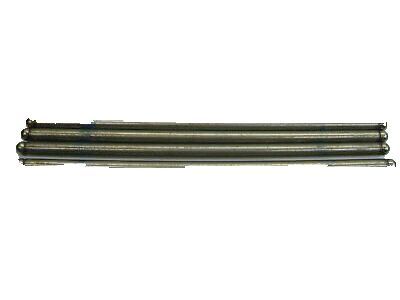
Ford F-150 Rod - Valve Push
Part Number: E5AZ-6565-A$3.31 MSRP: $5.14You Save: $1.83 (36%)Ships in 1-3 Business Days
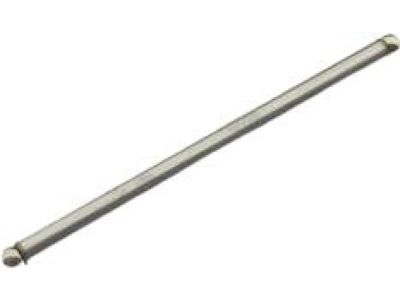
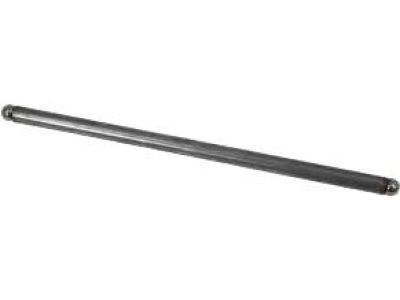
Ford F-150 Rod - Valve Push
Part Number: F7ZZ-6565-AA$5.91 MSRP: $9.18You Save: $3.27 (36%)Ships in 1-3 Business Days
Ford F-150 Rod - Valve Push
Part Number: E9SZ-6565-A$5.91 MSRP: $9.18You Save: $3.27 (36%)Ships in 1-3 Business Days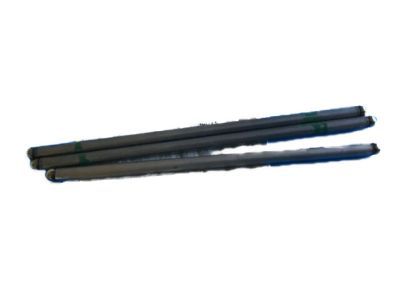
Ford F-150 Pushrod
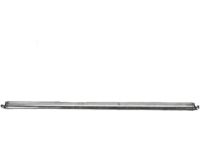
The design of the Ford F-150 Pushrod ensures that the cam-in-block engine can open and close valves with rugged straightforwardness, providing dependable torque for work trucks. A lifter rides on the cam lobe to raise a Pushrod that tips a rocker arm. This lets an intake or exhaust valve open at exactly the right moment. This seals the cylinder and makes power. The early Ford truck generations of the F-150 had an OHV design, which means every cylinder had its own steel Pushrod. Later on, the modular V8 and EcoBoost engines in the F-150 line did an overhead cam design, which loses the Pushrods and instead uses cam followers directly on the valves. The main difference is in the number of parts and the height. In the OHV system, the cam is kept low on the block and a long Pushrod is applied. This is fine, but if the valve lash ever grows, that Pushrod can bend. So essentially, you lose some performance. In contrast, with an OHC scheme, the camshaft gets raised up, which shortens the path and avoids the bending risk. Wear that enlarges clearance in an OHV Ford results in extra lash that pounds components. Additionally, weak springs can allow valves to float. Further, a bent Pushrod ticks, causes a misfire, and robs power. As a result, owners shouldn't ignore any Ford F-150 problem that manifests. Instead, they should take action right away.
We provide a wide range of Ford F-150 Pushrod at the optimal prices. If you need Ford F-150 Pushrod, you can shop with confidence on our website. All our OEM parts come with a manufacturer's warranty and are delivered to your doorstep with a fast delivery service.
Ford F-150 Pushrod Parts Questions & Experts Answers
- Q: How to remove and install rocker arms and pushrods in 4.2L V6 engine on Ford F-150?A:Remove the valve cover(s) from the cylinder head(s). Beginning at the front of one cylinder head, remove the rocker arm fulcrum bolts, which may not need to be completely removed in all cases; loosen them several turns and check if the rocker arms can be pivoted out of the way to allow pushrod removal. Store the bolts separately in marked containers to ensure they will be reinstalled in their original locations. If only the pushrods are being removed, loosen each bolt just enough to allow the rocker arms to be rotated to the side for pushrod extraction. Lift off the rocker arms and fulcrums, storing them in marked containers with the bolts for proper reinstallation. Remove the pushrods and store them separately to avoid mixing during installation, using a perforated cardboard box for organization and noting the label indicating the front of the engine. Check each rocker arm for wear, cracks, and other damage, especially where the pushrods and valve stems contact the rocker arm faces, ensuring the hole at the pushrod end of each rocker arm is open. Inspect the rocker arm pivot area and fulcrum for wear, cracks, and galling; if any rocker arms are worn or damaged, replace them along with the fulcrums. Inspect the pushrods for cracks and excessive wear at the ends, rolling each pushrod across a piece of plate glass to check for bending. Lubricate the lower end of each pushrod with clean engine oil or moly-base grease and install them in their original locations, ensuring each pushrod seats completely in the lifter. Apply moly-base grease to the ends of the valve stems and the upper ends of the pushrods before positioning the rocker arms and fulcrums, also applying moly-base grease to the fulcrums to prevent damage to the mating surfaces before engine oil pressure builds up. Set the rocker arms and guides in place, then install the fulcrums and bolts, tightening the rocker arm bolts to the specifications. Finally, install the valve covers, completing the installation in reverse order of removal.
Related Ford F-150 Parts
 Ford F-150 Piston Ring Set
 Ford F-150 Power Steering Pump
 Ford F-150 Radiator
 Ford F-150 PCV Hose
 Ford F-150 Radiator Cap
 Ford F-150 Power Steering Hose
 Ford F-150 PCV Valve
 Ford F-150 Pilot Bearing
 Ford F-150 PCV Valve Elbow
 Ford F-150 PCV Valve Hose
 Ford F-150 Pressure Plate
 Ford F-150 Piston
Browse by Year
2008 Pushrod 2007 Pushrod 2006 Pushrod 2005 Pushrod 2004 Pushrod 2003 Pushrod 2002 Pushrod 2001 Pushrod 2000 Pushrod 1999 Pushrod 1998 Pushrod 1997 Pushrod 1996 Pushrod 1995 Pushrod 1994 Pushrod 1993 Pushrod 1992 Pushrod 1991 Pushrod 1990 Pushrod 1989 Pushrod 1988 Pushrod 1987 Pushrod 1986 Pushrod 1985 Pushrod 1984 Pushrod 1983 Pushrod 1982 Pushrod 1981 Pushrod 1980 Pushrod