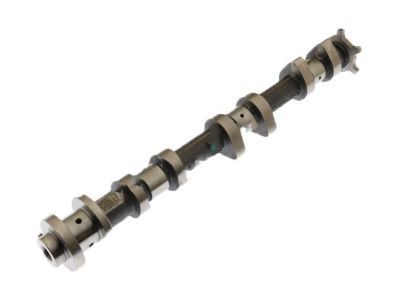
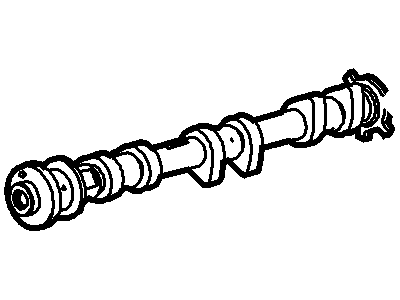
Before removing the timing chain, position the no.1 cylinder cam lobes and locate the slots in the ends of the camshaft for the alignment tool so that they will be in the same position, when replacing. Move downstream by removing the camshaft phaser and sprockets and by identifying some parts by means of indelible ink. Unscrew the camshaft sprocket bolts while turning the camshaft with another spanner so that it will not rotate. Disconnect the Variable Camshaft Timing VCT solenoid fasteners and pull the solenoids from the front camshaft bearing cap and then, remove the front camshaft bearing cap bolts, and lift the one-piece cap from both the cams. The bearing caps should therefore be marked in terms of the positions and directions they are supposed to occupy and the camshaft bearing cap bolts should therefore be loosened in a sequence so as not to affect the cams. Withdraw the caps taking note of their identification marks and the fact that they have locating dowels; extract also the camshafts with particular bearing in mind that the exhaust camshaft has a reference lobe for the high pressure fuel pump. It is recommended to use sixteen small, clean containers that can hold each lifter separately in order that they are not switched with others. Once the cams and the lifters are out, it is good to examine whether the cams have worn out and whether they are round to warrant replacement. Outside diameter of each lifter should be measured at several points in its length and if any of it is tapered or oval in shape then it is required to be changed. If any part of the engine the valve components are noisy, then the valve clearances may have to be rectified. Check visually (but with a magnifying glass) the camshaft lobes for signs of wear or overheating of those sections of the camshaft that is in contact with the valves Compare the camshaft bearing journals and cylinder head bearing surfaces for any signs of wear or pitting and get some advice from an automotive machine shop if possible. Take a number of measurements of the diameter of each journal and replace any which do not meet standard measurements. To examine the total end play, clean all the bearing surfaces, fit the camshafts and the bearing caps with Plastigage across every journal and measure the width of the squashed strands. If any of the clearances is above the service limit, fit a new camshaft and recheck the clearance; if it is still above the limit, the cylinder head has to be replaced. Regarding camshaft end play, it is required to clean bearing surfaces, place camshafts and bearing cap and check the end play with dial indicator. If end play is more than the service limits, remove the camshaft and reinstall it and again check the end play. Make sure the slot of timing pin locates in the groove of crankshaft and then lubricate the lifters and the corresponding bores of cylinder head, and then smoothly install the lifters in the original bores. Oil the camshaft bearing surfaces and avoid dripping oil on the mating area, then place the camshafts back on their respective locations, ensure that the cam lobes for cylinder 1 is in correct position. Make certain all mating surfaces are clean and install a valley of RTV sealant to the rear bearing cap of the exhaust camshaft, without contact with the oil galleys. With clean rags, lubricate the camshaft journals and lobes before positioning the camshaft bearing caps in the positions mentioned dealing them gently until they make contact with the cylinder head. Proceed with the other bolts of the bearing cap with equal stringed rotations to the prescribed torque as on the initial three; then, put the front bearing cap followed by the bolting on of the nut to the prescribed torque. Place installation of the VCT solenoids at the front camshaft bearing cap and fasten with the appropriate torque. Finally compose the camshaft alignment tool and the phasers as well sprockets along with the tightening of the related retaining bolts in a preliminary manner and other components of the reassembly process include timing chain replacement, valve timing setting, and clearance of valves just before the valve cover installation.