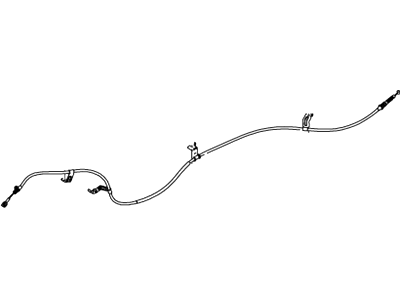
The parking brake is adjusted at two locations, one at the parking brake pedal in the driver's compartment and the other at the parking brake equalizer under the vehicle. The following dimensions are preliminary adjustments. As the cables age and stretch, it is most likely that these dimensions will have to be exceeded to obtain satisfactory parking brake operation. It's important not to over-adjust the cables, as this could cause the brakes to drag. To adjust the parking brake, first release the parking brake pedal. Use a wrench to tighten the adjusting nut so that the exposed threads equal 5/64-inch (2 mm). When the parking brake cables are old, they may have stretched and require more threads showing on the adjuster. Next adjust the cable at the equalizer from under the vehicle. The equalizer is located where the parking brake cable comes through the underside of the vehicle beneath the driver's seat. Use a wrench to tighten the adjusting nut on the equalizer so that the exposed threads equal 51/64-inch (20 mm). Verify the parking brake is actually holding the vehicle when applied. Raise and support the rear of the vehicle and block the front wheels. You can rotate the rear tires by hand to check for proper cable adjustment. Depress the pedal slightly, this should apply noticeable drag on the rear brakes. With the pedal 2/3 to the floor, the rear brakes should be locked. With the parking brake pedal released all the way, there should be no drag on the wheels.