My Garage
My Account
Cart
Genuine Mercury Cougar Cylinder Head
Head- Select Vehicle by Model
- Select Vehicle by VIN
Select Vehicle by Model
orMake
Model
Year
Select Vehicle by VIN
For the most accurate results, select vehicle by your VIN (Vehicle Identification Number).
14 Cylinder Heads found
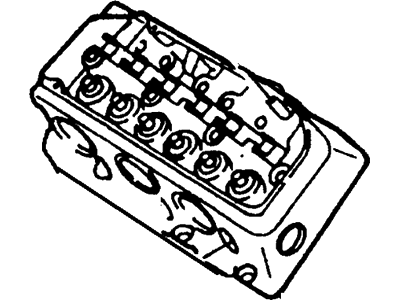
Mercury Cougar Cylinder Head Assembly
Part Number: F4AZ-6049-A$6.59 MSRP: $9.38You Save: $2.79 (30%)Ships in 1-3 Business Days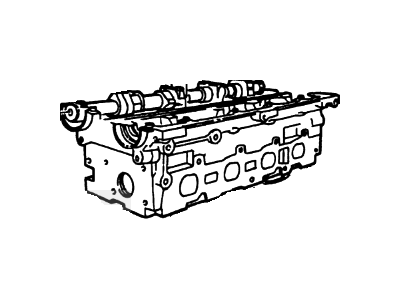
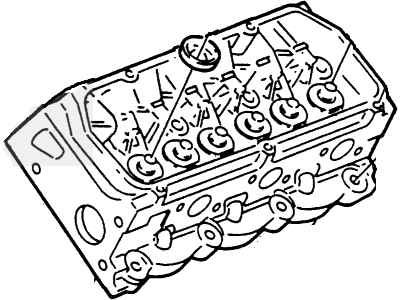
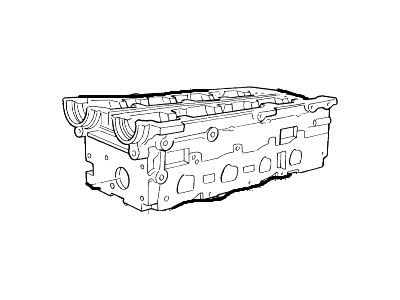
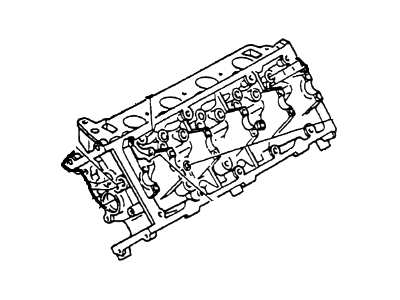
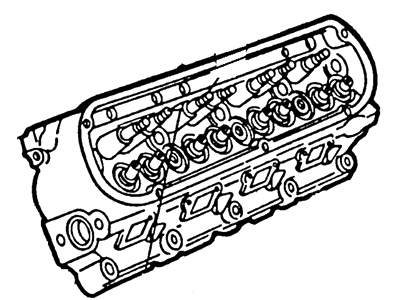
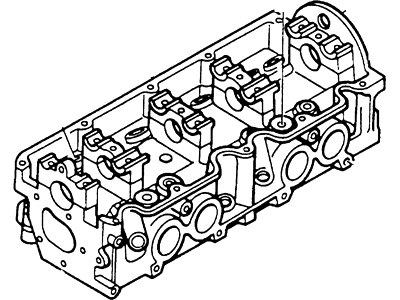
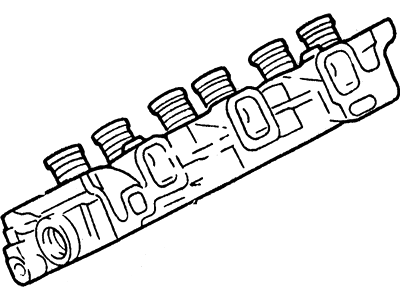
Mercury Cougar Cylinder Head
The Cylinder Head of a Mercury Cougar transports the intake mix into the combustion chamber and exhaust out. The head is located above the cylinders, features spark plugs, valves, and channels for coolant and oil. To prevent misfiring, overheating, and cross-contamination of fluids, the head gasket must keep these cavities separate. Mercury utilizes torque to yield bolts which elongate to a precise limit, ensuring even clamping to achieve the seal. The years saw two construction styles offered by the watchmakers: sturdy cast iron and lightweight aluminum. While cast iron brings strength to the table, aluminum offers a weight reduction. Cylinder Head also dissipates heat quicker and can handle greater compression. Both variants come beefed up around the ports, which enables us to shape the airflow for more horsepower. Both styles depend on a precision machined surface on the Cylinder Head to mate with the gasket. Making the restriction less allows the Cougar engine to breathe free and prevents the warping of surfaces. Further, it prevents cracks and burning of the valves. It is essential for the Cylinder Head to be warp free as every Mercury driver acknowledges that this benefits the Cougar. That promise has made Mercury fans and Cougar believers confident. Torque and regular checks of the Cylinder Head keep it tight for the long haul.
We provide a wide range of Mercury Cougar Cylinder Head at the optimal prices. If you need Mercury Cougar Cylinder Head, you can shop with confidence on our website. All our OEM parts come with a manufacturer's warranty and are delivered to your doorstep with a fast delivery service.
Mercury Cougar Cylinder Head Parts Questions & Experts Answers
- Q:What steps should be taken for thorough cleaning and inspection of cylinder heads and valve train components during an engine overhaul on Mercury Cougar?A:The cylinder heads together with the related valve train ought to be cleaned to look fordamage and then thoroughly inspected so that you can determine how much of the valve service work is required during the engine overhaul. One should first of all, remove all existing debris of gasket material as well as the sealing compound on the surfaces of the head gasket, intake manifold, and exhaust manifold. Deposit the scale accumulation in the coolant passages and scrub in and out of the oil holes as well by a stiff wire brush. To clean the threaded holes, one may use a tap to remove corrosion and thread sealant followed by a cleaning of debris using compressed air that users eye protection while doing so. Scrub the threads of the rocker arm pivot bolt with a wire brush; clean the cylinder head with solvent and after that dry the head with air assistance for better results. It is therefore clear that decarbonising chemicals may be useful but should be taken with some precautions. Using solvent clean the rocker arms, the fulcrums, bolts and the pushrods and be sure to dry them out. Always service all valve springs, keepers, retainers, rotators, sleeves and shims to one valve at a time so as to avoid confusion between them. Remove thick build-up from valves and then proceed to use a motorized wire brush in the valve head and stem surfaces while keeping the valves in order. Check if the head is cracked and if there is leakage of coolant; if so get a new cylinder head. Run a straightedge and feeler gauge across the head gasket mating surfaces and if the numbers are off in regards to the specification the head can be machined. Check on the face of the valve seats for pitting, cracking signs or just plain burning where professional valve service may be needed. Using a dial indicator check the valve stem-to-valve guide clearance, and if there is any doubt about the condition of guides they should be sent to the machine shop. Make sure all the parts are very cleaned and that all conduits of oil are clear. Feel the top of the rocker arms for grooving and look for wear on the tips of the valves lifter push rods and roll each push rod on a flat surface to feel for bends. See that any worn out part is replaced or any part that has wattles in it due to the stress it pulls. Looking at each of the valves one by one it is recommended to ensure that the valve face is not cracked, pitted, or in the worst-case scenario burned, while ensuring the stem as well as the neck of the valve are not cracked, and more to it, the valve itself should not be bent. Determine the valve margin thickness from the specifications and any valve whose margin is thinner than specified must be resent. Each valve spring should be closely checked for signs of wear and the free length of the valve spring should also be checked, and any which are shorter than that mentioned above should be discarded. 2 Check the thin section springs retainers and keepers for wear, and check for cracks; lubricate rotators. If the inspection reveals that the valve components are worn out, then re fit the valves in the cylinder head and go by the recommendations for valve servicing. If no heavily worn areas are noticeable and the faces and seats of the valve are in fine condition, then the valve train members can be replaced in the cylinder head without much overhauling.