My Garage
My Account
Cart
Genuine Ford F-250 Transmission Assembly
Trans Assembly- Select Vehicle by Model
- Select Vehicle by VIN
Select Vehicle by Model
orMake
Model
Year
Select Vehicle by VIN
For the most accurate results, select vehicle by your VIN (Vehicle Identification Number).
48 Transmission Assemblies found
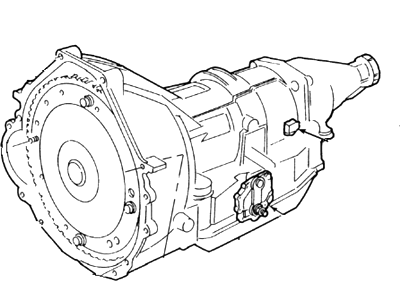
Ford F-250 Automatic Transmission Assembly
Part Number: XL3Z-7000-HBRM$3343.89 MSRP: $3998.67You Save: $654.78 (17%)Ford F-250 Remanufactured Automatic Transmission Kit
Part Number: F4TZ-7000-ERM$3343.89 MSRP: $3998.67You Save: $654.78 (17%)Ships in 1-3 Business Days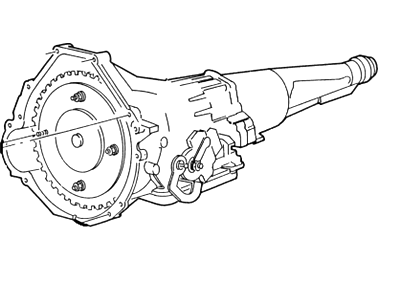

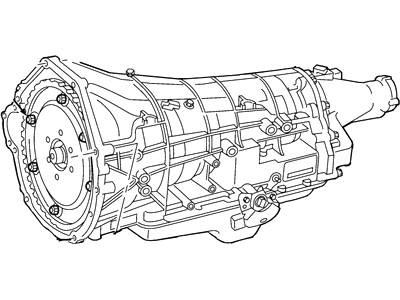
| Page 1 of 3 |Next >
1-20 of 48 Results
Ford F-250 Transmission Assembly
The Ford F-250's Transmission Assembly delivers engine torque to the wheels. This gives the heavy-duty pickup the ability to crawl up steep grades or cruise the highway. The early Ford F-250 trucks had a heavy-duty manual Transmission Assembly consisting of parallel shafts and driver-selected gears. Thus, the driver could select a higher engine speed to drive the rear wheels at a low speed, such as when towing, starting, or climbing hills. As drivers increasingly desired easier driving, Ford developed a hydraulic automatic Transmission Assembly that applied planetary gearsets, a fluid coupling, and computer-managed clutches that shifted without a clutch pedal. The updated generations of the F-250 come fitted with advanced multi-speed automatic Transmission Assembly designs that refine gear ratio ranges for improved fuel economy and emissions while handling massive torque. Different types of Transmission Assembly offer variants in the way in which the gears change but not much other than that. Manual units require the driver to operate, while in an automatic unit, shifting of gears is done through pressurized fluid and electronic commands. The Ford F-250 transmission assemblies are designed to keep the power flowing regardless of type. Whether driving under a heavy load or not, each part functions reliably.
We provide a wide range of Ford F-250 Transmission Assembly at the optimal prices. If you need Ford F-250 Transmission Assembly, you can shop with confidence on our website. All our OEM parts come with a manufacturer's warranty and are delivered to your doorstep with a fast delivery service.
Ford F-250 Transmission Assembly Parts Questions & Experts Answers
- Q:What is the role of the Transmission Assembly in the Ford F-250 manual transmissions?A:Many manually shifted transmissions have been available on F-series and Bronco vehicles over the years. From 1980 through 1987 these include the 3.03 3-speed, the Warner T-18 4-speed, the Warner T-19 4-speed, the New Process 435 4-speed, the single-rail 4-speed overdrive (SROD) and the top mounted shifter 4-speed overdrive (TOD). Transmissions available from 1988 include the Mazda MSOD 5-speed, the S5-42 ZF 5-speed light and heavy duty and the T-18 4-speed. Regardless of year, all transmissions are fully synchronized with all gears, except the reverse sliding gear, which is in constant mesh. The 3 and 4-speed models utilize a bolt-on clutch housing (bell housing) while the 5-speed models incorporate the clutch housing and transmission into a single casting. The 3-speed model is a side shifter with external shift levers and mechanism allowing the use of a steering column shift lever. The remaining transmissions contain the shift mechanisms internally allowing direct-shifting from a simple top mounted shift lever which extends through the floor of the cab. The S5-42 ZF 5-speed is available in two case configurations; concentric slave cylinder design (light duty) or external slave cylinder design (heavy duty). Application of the transmissions depends on the year, engine and model of the vehicle in which it is installed. If you are in doubt as to which transmission is in your particular vehicle, check with your local Ford dealer or automotive transmission facility. Due to the complexity of transmissions and because of the special tools and expertise required to perform an overhaul, it is not advised that it be undertaken by the home mechanic. Therefore, the procedures in are limited to routine adjustments, and removal and installation procedures. Depending upon the expense involved in having a faulty transmission overhauled, ii may be of advantage to consider replacing the unit with either a new or rebuilt one. Your local dealer or transmission specially shop should be able to supply you with information concerning these units as to their cost, availability and exchange policy. Regardless of how you decide to remedy a faulty trans-mission problem, however, you can still save considerable expense by removing it and vinstalling it yourself.