

My Garage
My Account
Cart
Genuine Ford Bronco Pilot Bearing
Clutch Pilot Bearing- Select Vehicle by Model
- Select Vehicle by VIN
Select Vehicle by Model
orMake
Model
Year
Select Vehicle by VIN
For the most accurate results, select vehicle by your VIN (Vehicle Identification Number).
2 Pilot Bearings found
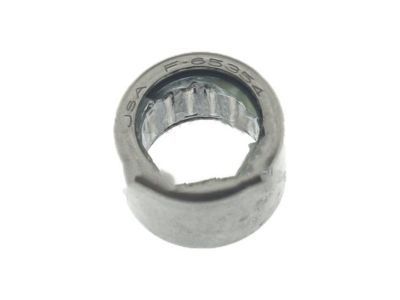
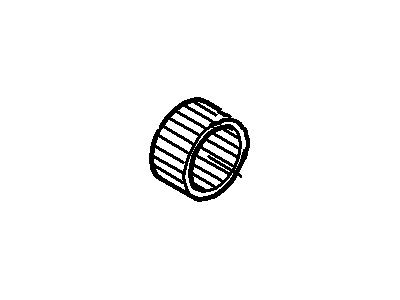
Ford Bronco Sleeve
Part Number: D4ZZ-7600-A$5.45 MSRP: $7.76You Save: $2.31 (30%)Ships in 1-2 Business Days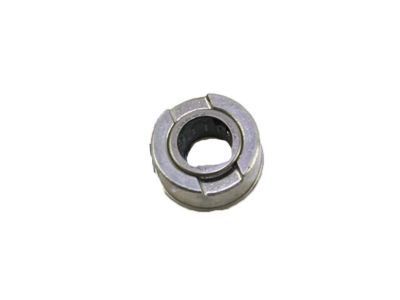
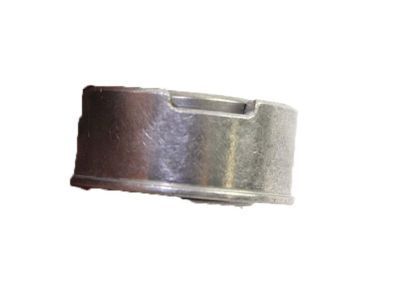
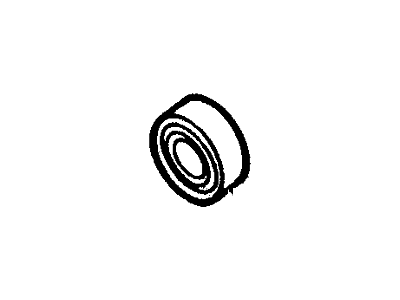
Ford Bronco Pilot Bearing
The transmission input shaft at the end of the crankshaft is stabilized by the Ford Bronco Pilot Bearing, which keeps the engine and gearbox aligned. By having balls or rollers running on hardened races, this element reduces friction and heat and avoids premature wear, which otherwise could make shifting harsh or noisy. The Pilot Bearing of a Ford gearbox is meant for sharing the load with its input support while a fresh Pilot Bearing helps create a light clutch engagement. The manuals for the early Bronco indicate the use of a sintered bronze pilot bushing, a plain bearing that uses an oil-impregnated sleeve to support the shaft on a thin film of lubricant. The later Bronco versions changed from a sintered bronze pilot bushing to a true Pilot Bearing consisting of ball or needle rollers. This allowed the load to be spread among the moving elements. This made them capable of higher speeds and also more axial support. The important difference is motion. The bushing does not rotate while the Pilot Bearing does internally; it can stand higher RPM and radial stress. Regardless of the type, drivers always inspect for scoring, spalling, or looseness to prevent future vibrations and gear clash when driving. The Ford Bronco gives you total confidence when tackling the trail.
We provide a wide range of Ford Bronco Pilot Bearing at the optimal prices. If you need Ford Bronco Pilot Bearing, you can shop with confidence on our website. All our OEM parts come with a manufacturer's warranty and are delivered to your doorstep with a fast delivery service.
Ford Bronco Pilot Bearing Parts Questions & Experts Answers
- Q:How to inspect, remove, and install the clutch pilot bearing on Ford Bronco?A:The crankshaft is equipped with a pilot bearing in the rear, made of a needle roller type, which gets factory prepped with grease does not require any topping-up; it supports the front of the transmission input shaft. It should be checked whenever the clutch parts are taken off; if there is any suspicion about the status of the bearing because of the difficulty in reaching it, it is best to change it. Early models may have a single-piece, oil-impregnated bronze bushing instead of a bearing, which are normally press-fit and usually have to be removed with some kind of puller. When the clutch assembly has been pulled out, examine for signs of wear and tear, fine scratches, greasing deficiency, dryness or apparent harm; any of these are symptoms of a weakened bearing; put on the flashlight to brighten the area. For removal, there is a specialized puller and slide hammer and, in a bid to avoid distortion, a standard and comparatively sized steel bar can be used. The bar should fit tightly up to the bearing and the space behind it should be filled up with thick grease so as to eliminate air. Swinging heavily on the bar with a hammer the bearing will be forced out by the grease. In the case of installation, it is advisable to lubricate the outside surface of the new bearing with multi-purpose grease and fitting it into the recess from the outside with a soft-face hammer with a view of having the seal on the outward side. The remaining steps are in the reverse order of removal steps, we have taken.
Related Ford Bronco Parts
 Ford Bronco Clutch Master Cylinder
 Ford Bronco Clutch Slave Cylinder
 Ford Bronco Clutch Disc
 Ford Bronco Pressure Plate
 Ford Bronco Clutch Master Repair Kit
 Ford Bronco Release Bearing
 Ford Bronco Clutch Fork
Browse by Year
2024 Pilot Bearing 2023 Pilot Bearing 2022 Pilot Bearing 2021 Pilot Bearing 1996 Pilot Bearing 1995 Pilot Bearing 1994 Pilot Bearing 1993 Pilot Bearing 1992 Pilot Bearing 1991 Pilot Bearing 1990 Pilot Bearing 1989 Pilot Bearing 1988 Pilot Bearing 1987 Pilot Bearing 1986 Pilot Bearing 1985 Pilot Bearing 1984 Pilot Bearing 1983 Pilot Bearing 1982 Pilot Bearing 1981 Pilot Bearing 1980 Pilot Bearing