

My Garage
My Account
Cart
Genuine 2004 Ford Expedition Cylinder Head
Head- Select Vehicle by Model
- Select Vehicle by VIN
Select Vehicle by Model
orMake
Model
Year
Select Vehicle by VIN
For the most accurate results, select vehicle by your VIN (Vehicle Identification Number).
6 Cylinder Heads found
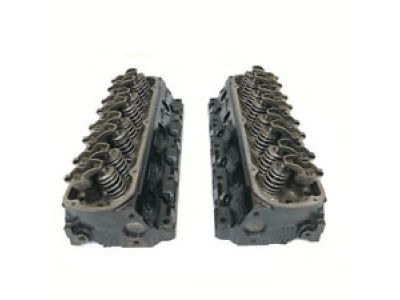
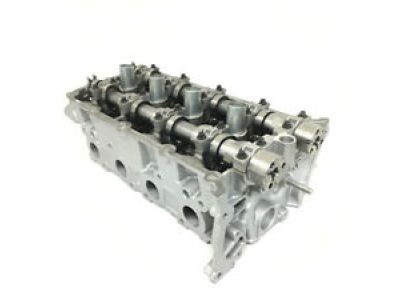
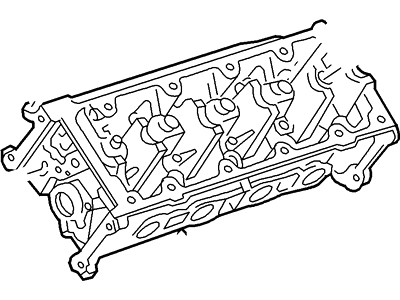
2004 Ford Expedition Cylinder Head Assembly
Part Number: 4L3Z-6049-AA$693.32 MSRP: $955.38You Save: $262.06 (28%)Ships in 1-2 Business DaysProduct Specifications- Position: Passenger Side
- Replaced by: 6W7Z-6049-A
- Item Weight: 50.40 Pounds
- Item Dimensions: 25.6 x 13.6 x 11.2 inches
- Condition: New
- Fitment Type: Direct Replacement
- SKU: 4L3Z-6049-AA
- Warranty: This genuine part is guaranteed by Ford's factory warranty.
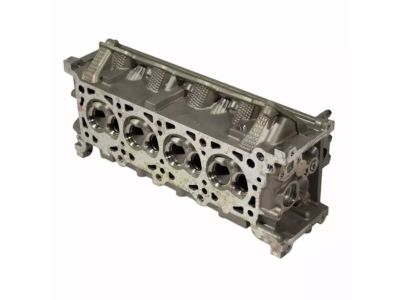
2004 Ford Expedition Cylinder Head Assembly
Part Number: 1L2Z-6049-LA$510.35 MSRP: $696.92You Save: $186.57 (27%)Ships in 1-3 Business DaysProduct Specifications- Other Name: Head Assembly - Cylinder - Less Valves
- Position: Passenger Side/Driver Side
- Replaced by: 6W7Z-6049-AA
- Item Weight: 69.90 Pounds
- Item Dimensions: 7.4 x 7.4 x 30.5 inches
- Condition: New
- Fitment Type: Direct Replacement
- SKU: 1L2Z-6049-LA
- Warranty: This genuine part is guaranteed by Ford's factory warranty.
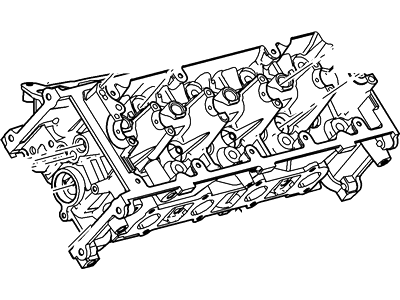
2004 Ford Expedition Cylinder Head Assembly
Part Number: 2L1Z-6049-DA$905.31 MSRP: $1325.08You Save: $419.77 (32%)Ships in 1-3 Business DaysProduct Specifications- Position: Passenger Side & Driver Side
- Replaced by: 9C2Z-6049-EA
- Item Weight: 38.70 Pounds
- Item Dimensions: 7.3 x 9.1 x 24.1 inches
- Condition: New
- Fitment Type: Direct Replacement
- Require Quantity: 2
- SKU: 2L1Z-6049-DA
- Warranty: This genuine part is guaranteed by Ford's factory warranty.
- Product Specifications
- Other Name: Cylinder Head Assy
- Position: Driver Side
- Replaced by: 6W7Z-6049-B
- Item Weight: 50.50 Pounds
- Item Dimensions: 7.3 x 9.5 x 24.1 inches
- Condition: New
- Fitment Type: Direct Replacement
- SKU: 4L3Z-6049-BA
- Warranty: This genuine part is guaranteed by Ford's factory warranty.
- Product Specifications
- Other Name: Cylinder Head Assy
- Position: Driver Side
- Base No.: 6049
- Item Dimensions: 7.3 x 9.2 x 24.4 inches
- Condition: New
- Fitment Type: Direct Replacement
- SKU: 2L3Z-6049-DA
- Warranty: This genuine part is guaranteed by Ford's factory warranty.
- Product Specifications
- Other Name: Cylinder Head Assy; Cylinder Head
- Position: Passenger Side
- Base No.: 6049
- Item Dimensions: 7.3 x 7.1 x 29.9 inches
- Condition: New
- Fitment Type: Direct Replacement
- SKU: 2L3Z-6049-BA
- Warranty: This genuine part is guaranteed by Ford's factory warranty.
2004 Ford Expedition Cylinder Head
At FordPartsGiant.com, you will find an extensive inventory of genuine 2004 Ford Expedition Cylinder Head offered at competitive prices online. These manufacturer-backed OEM 2004 Ford Expedition Cylinder Head ensure your satisfaction with their quality and come with a hassle-free return policy and expedited delivery service, guaranteeing a delightful shopping experience.
2004 Ford Expedition Cylinder Head Parts Questions & Experts Answers
- Q:Is it practical and economical for a home mechanic to purchase replacement cylinder heads instead of disassembling and reconditioning the originals on 2004 Ford Expedition?Posted by Maclain M.A:Many new or remanufactured cylinder heads are available in the market from dealers as well as auto parts stores for almost all types of engines. Since for the assembly and inspection, specialized tools are required which are not easily available and as the replacement parts may not be available in the market it may prove cheaper for the home mechanic to prefer purchasing new heads over the removal, inspection and refurbishing of the old heads. However, most machine shops may not have stock heads unless the car model has been available for nearly five years and therefore for relatively newer cars there may be some wait to get the rebuilding work done. Disassembly consists in the release of the intake and exhaust valves, as well as other related parts. Rocker arm nuts, pivot balls, and rocker arms should be detached from the cylinder head studs and should at least, be distinguished whether they should be used on the intake or exhaust side to facilitate reassembly. The springs on the first valve need to be unscrewed using a spring compressor, in order to get the keepers off the valve; in turn, the retainer, sleeve, spring and spring seat should be carefully lifted off. The cartridge screw can then be unscrewed and the valve withdrawn from the head and the oil seal withdrawn from the guide. However if the valve binds it may be now and then as a result of the keeper travel necessary to deburr the adjacent keeper groove. This should be done for the rest of the valves and all the parts for one valve should be kept in one pack. It is recommended to remove all the valves and place them and other components in order, together with the head, the head must be washed and all the parts of an engine, which are universal, should be removed before beginning with washing and examining.Answered by Ford Parts Specialist Ley / Nov 26, 2023
Related 2004 Ford Expedition Parts
 2004 Ford Expedition Rocker Arm
 2004 Ford Expedition Cylinder Head Bolts
 2004 Ford Expedition Timing Cover
 2004 Ford Expedition Camshaft
 2004 Ford Expedition Exhaust Valve
 2004 Ford Expedition Intake Valve
 2004 Ford Expedition Cylinder Head Gasket
 2004 Ford Expedition Cylinder Head Temperature Sensor
 2004 Ford Expedition Crankshaft Seal