

My Garage
My Account
Cart
Genuine 2003 Ford Ranger Exhaust Manifold
Engine Exhaust Manifold- Select Vehicle by Model
- Select Vehicle by VIN
Select Vehicle by Model
orMake
Model
Year
Select Vehicle by VIN
For the most accurate results, select vehicle by your VIN (Vehicle Identification Number).
5 Exhaust Manifolds found


2003 Ford Ranger Exhaust Manifold
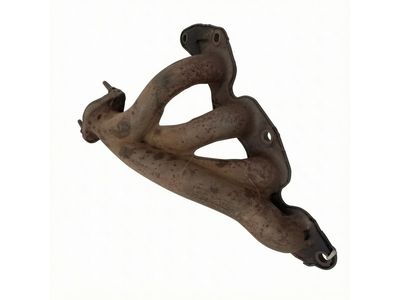
Part Number: 2L5Z-9431-AA$66.46 MSRP: $92.32You Save: $25.86 (29%)Ships in 1-2 Business DaysProduct Specifications- Other Name: Manifold Assembly - Exhaust; Exhaust Manifold, Manifold
- Position: Driver Side
- Base No.: 9430A
- Item Weight: 9.60 Pounds
- Item Dimensions: 17.4 x 8.7 x 5.6 inches
- Condition: New
- Fitment Type: Direct Replacement
- SKU: 2L5Z-9431-AA
- Warranty: This genuine part is guaranteed by Ford's factory warranty.



 Product Specifications
- Other Name: Manifold Assembly - Exhaust; Exhaust Manifold, Manifold
- Manufacturer Note: use with 1l5g-9448-ab gasket, FROM 6/6/2002
- Base No.: 9430
- Item Weight: 17.70 Pounds
- Item Dimensions: 22.8 x 11.5 x 5.3 inches
- Condition: New
- Fitment Type: Direct Replacement
- SKU: 1L5Z-9430-BF
- Warranty: This genuine part is guaranteed by Ford's factory warranty.

 Product Specifications
- Other Name: Manifold Assembly - Exhaust; Exhaust Manifold, Manifold
- Manufacturer Note: RH, Unleaded fuel
- Position: Passenger Side
- Base No.: 9430
- Item Weight: 11.60 Pounds
- Item Dimensions: 19.2 x 9.5 x 5.6 inches
- Condition: New
- Fitment Type: Direct Replacement
- SKU: 1L5Z-9430-CA
- Warranty: This genuine part is guaranteed by Ford's factory warranty.
 Product Specifications
- Other Name: Manifold Assembly - Exhaust
- Manufacturer Note: RH, SOHC; LHD
- Position: Passenger Side
- Replaced by: 1L2Z-9430-CB
- Item Weight: 14.90 Pounds
- Item Dimensions: 24.4 x 9.8 x 6.9 inches
- Condition: New
- Fitment Type: Direct Replacement
- SKU: 1L2Z-9430-CA
- Warranty: This genuine part is guaranteed by Ford's factory warranty.
- Product Specifications
- Other Name: Manifold Assembly - Exhaust
- Manufacturer Note: LH, SOHC; LHD
- Position: Driver Side
- Replaced by: 1L2Z-9431-CB
- Item Weight: 8.30 Pounds
- Item Dimensions: 19.6 x 11.6 x 5.3 inches
- Condition: New
- Fitment Type: Direct Replacement
- SKU: 1L2Z-9431-CA
- Warranty: This genuine part is guaranteed by Ford's factory warranty.
2003 Ford Ranger Exhaust Manifold
At FordPartsGiant.com, you will find an extensive inventory of genuine 2003 Ford Ranger Exhaust Manifold offered at competitive prices online. These manufacturer-backed OEM 2003 Ford Ranger Exhaust Manifold ensure your satisfaction with their quality and come with a hassle-free return policy and expedited delivery service, guaranteeing a delightful shopping experience.
2003 Ford Ranger Exhaust Manifold Parts Questions & Experts Answers
- Q:How to remove and install the exhaust manifold in 4.0L pushrod V6 engine on 2003 Ford Ranger?Posted by Andrian P.A:In particular, the removal of the block entails that it must start with the engine having cooled down to the maximum. The process should be started by first removing the cable which is attached to the negative terminal of the battery. Rust penetrant should then be applied to the exhaust pipe and manifold fasteners then left to wet for a 10 minute duration; if there was considerable effort in removing the fasteners they should be resprayed with rust penetrant first. Pull off the wires from the plugs, and wind them or secure them in such a way that you can be able to tell which wire goes to which plug so that you do not mix them up. Lose the nuts on the exhaust pipe to manifold connection; it may be necessary to jack up the vehicle to gain proper access to the nuts. Subsequent to that, take off the oil dipstick tube bracket from the engine. If the hoses from the power steering pump hinder the removal of the manifold then it is unadvisable to remove them, just detach them and cover them so that you don't let more dirt get to them. Disconnect the heater hoses from the left manifold, then un-bolt and take off the left manifold, un-bolt the heater hose bracket then take off the right manifold. In installation, it is necessary to scrape off the mating surfaces on the cylinder head, manifold and exhaust pipe using a scraper and solvent. These engines can be reassembled without exhaust manifold gaskets if the surfaces are flat and undamaged; however if they are warped or damaged then a gasket may be required or the manifolds may need to be machined. Put the graphite grease on the cylinder head mating surface and place the manifold onto it fastening the bolts symmetrically to the required torque. Fit the exhaust pipe on the manifold and tighten the nuts holding the pipes in an equal manner. Perform a process of reversing the removal procedure; the heater hoses, if disconnected, should be followed by filling of the cooling system. Last but not the least, start to run the engine and search for any possible exhaust leaks.Answered by Ford Parts Specialist Don / May 24, 2026
Related 2003 Ford Ranger Parts
 2003 Ford Ranger Door Handle
 2003 Ford Ranger EGR Valve
 2003 Ford Ranger Seat Belt
 2003 Ford Ranger Emblem
 2003 Ford Ranger Clock Spring
 2003 Ford Ranger Window Regulator
 2003 Ford Ranger Door Check
 2003 Ford Ranger Spare Wheel
 2003 Ford Ranger Bumper