

My Garage
My Account
Cart
Genuine 2001 Ford Ranger Flywheel
Clutch Flywheel- Select Vehicle by Model
- Select Vehicle by VIN
Select Vehicle by Model
orMake
Model
Year
Select Vehicle by VIN
For the most accurate results, select vehicle by your VIN (Vehicle Identification Number).
8 Flywheels found
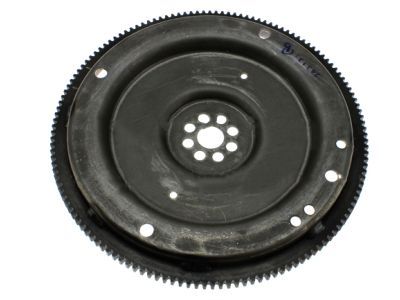
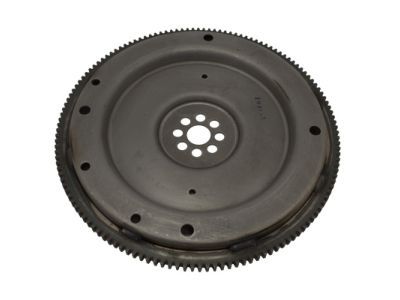
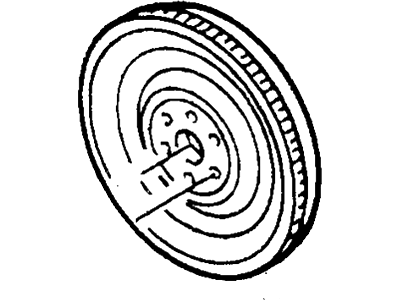
2001 Ford Ranger Automatic Transmission Flexplate Flywheel - 4.0L (AT)
Part Number: F77Z-6375-AA$57.00 MSRP: $83.33You Save: $26.33 (32%)Ships in 1-3 Business DaysProduct Specifications- Other Name: Drive Plate, Flywheel
- Manufacturer Note: 8 Mounting holes, A/T
- Base No.: 6375
- Item Weight: 9.90 Pounds
- Item Dimensions: 17.3 x 17.7 x 4.2 inches
- Condition: New
- Fitment Type: Direct Replacement
- SKU: F77Z-6375-AA
- Warranty: This genuine part is guaranteed by Ford's factory warranty.


 Product Specifications
- Other Name: Flywheel Assy
- Manufacturer Note: SOHC-Manual Transmission
- Replaced by: 2L5Z-6375-AA
- Item Weight: 29.60 Pounds
- Item Dimensions: 2.6 x 12.9 x 13.3 inches
- Condition: New
- Fitment Type: Direct Replacement
- SKU: 1L5Z-6375-AA
- Warranty: This genuine part is guaranteed by Ford's factory warranty.


2001 Ford Ranger Flywheel Assembly
Part Number: 1L5Z-6375-CA$44.78 MSRP: $64.33You Save: $19.55 (31%)Product Specifications- Other Name: Flywheel Assy; Drive Plate, Flywheel
- Manufacturer Note: A/T
- Base No.: 6375
- Item Weight: 5.30 Pounds
- Item Dimensions: 2.6 x 12.9 x 13.2 inches
- Condition: New
- Fitment Type: Direct Replacement
- SKU: 1L5Z-6375-CA
- Warranty: This genuine part is guaranteed by Ford's factory warranty.


2001 Ford Ranger Flywheel And Ring Gear Assembly
Part Number: 1L5Z-6375-BA$225.60 MSRP: $333.33You Save: $107.73 (33%)Product Specifications- Other Name: Flywheel And Ring Gear Assy; Drive Plate, Flywheel
- Manufacturer Note: Clutch dowels are F8CZ 6A328 AA, M/T
- Base No.: 6375
- Item Weight: 24.00 Pounds
- Item Dimensions: 2.4 x 15.7 x 15.8 inches
- Condition: New
- Fitment Type: Direct Replacement
- SKU: 1L5Z-6375-BA
- Warranty: This genuine part is guaranteed by Ford's factory warranty.

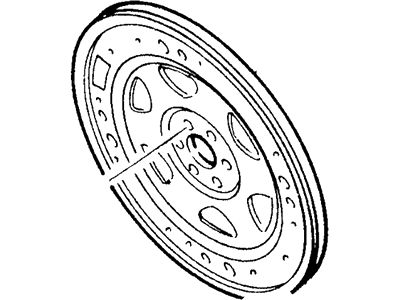 Product Specifications
- Other Name: Flywheel Assy; Drive Plate, Flywheel
- Manufacturer Note: A4LD A/T
- Base No.: 6375
- Item Weight: 5.40 Pounds
- Item Dimensions: 3.3 x 14.2 x 13.3 inches
- Condition: New
- Fitment Type: Direct Replacement
- SKU: E69Z-6375-A
- Warranty: This genuine part is guaranteed by Ford's factory warranty.
- Product Specifications
- Other Name: Flywheel Assy; Flywheel
- Manufacturer Note: M/T
- Base No.: 6375
- Item Weight: 9.70 Pounds
- Item Dimensions: 10.8 x 9.0 x 1.8 inches
- Condition: New
- Fitment Type: Direct Replacement
- SKU: F57Z-6375-B
- Warranty: This genuine part is guaranteed by Ford's factory warranty.
- Product Specifications
- Other Name: Flywheel Assy; Flywheel
- Manufacturer Note: M/T
- Base No.: 6375
- Item Dimensions: 10.8 x 9.4 x 1.8 inches
- Condition: New
- Fitment Type: Direct Replacement
- SKU: F57Z-6375-A
- Warranty: This genuine part is guaranteed by Ford's factory warranty.
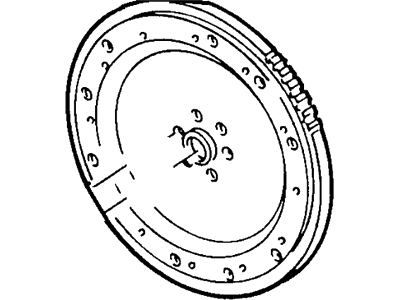 Product Specifications
- Other Name: Flywheel Assy; Drive Plate, Flywheel
- Base No.: 6375
- Item Weight: 5.10 Pounds
- Item Dimensions: 5.7 x 1.8 x 1.5 inches
- Condition: New
- Fitment Type: Direct Replacement
- SKU: E5TZ-6375-D
- Warranty: This genuine part is guaranteed by Ford's factory warranty.
2001 Ford Ranger Flywheel
At FordPartsGiant.com, you will find an extensive inventory of genuine 2001 Ford Ranger Flywheel offered at competitive prices online. These manufacturer-backed OEM 2001 Ford Ranger Flywheel ensure your satisfaction with their quality and come with a hassle-free return policy and expedited delivery service, guaranteeing a delightful shopping experience.
2001 Ford Ranger Flywheel Parts Questions & Experts Answers
- Q:How to remove and install the flywheel/driveplate in 4.0L SOHC V6 engine on 2001 Ford Ranger?Posted by Calum B.A:They have suggested to pull the transmission, make sure that the vehicle is properly jacked and supported by jackstands and then can proceed to the pull. Where there are, it is advisable to change the front pump seal or O-ring for automatic transmissions at this stage. For cars with manual gearbox consider removing the pressure plate and clutch disc and may opted for inspection or replacement of clutch parts as well as the pilot bearing. It is recommended to noting positions on the flywheel or driveplate and crankshaft with the center punch or paint so it could be easily matched again during the final assembling. Freeway bolts securing the or driveplate to the crankshaft; if turning the crankshaft causes the flywheel to run, place the blade of a screwdriver between the flywheel and its ring gear teeth to lock the flywheel. Lovely, to ease removal take out the last bolt supporting the flywheel or driveplate and you notice that the automatic transmission has a spacer in-between the crankshaft and the driveplate. For installation, remove all grease and oil from flywheel before examining it for cracks, rivet groves, burned or scored areas, while light scoring can be gently rubbed out using emery cloth. You should then ensure that none of the ring gear teeth is cracked or broken and that the flywheel does not have a warp by using a straight edge to do this. Check condition of mating surfaces of flywheel or driveplate and crankshaft and, if the seal is leaking, renew the crankshaft rear seal prior to refitting. Now place the flywheel or driveplate on the crankshaft aligning it with some marks previously made and you may discover that some engines have an alignment dowel or staggered bolt holes of this. Dip the bolt threads in thread-locking compound and use a screwdriver to jam the ring gear teeth before tightening the bolt using precisely the right sequence to the locktight torque. The procedures that remain include the reverse of the procedure used to remove the installation as shown below.Answered by Ford Parts Specialist Joseph / Jan 27, 2023
Related 2001 Ford Ranger Parts
 2001 Ford Ranger Motor And Transmission Mount
 2001 Ford Ranger Clutch Disc
 2001 Ford Ranger Automatic Transmission Shifter
 2001 Ford Ranger Clutch Slave Cylinder
 2001 Ford Ranger Flywheel Ring Gear
 2001 Ford Ranger Clutch Hydraulic Line