

My Garage
My Account
Cart
Genuine 1990 Ford Bronco Cylinder Head
Head- Select Vehicle by Model
- Select Vehicle by VIN
Select Vehicle by Model
orMake
Model
Year
Select Vehicle by VIN
For the most accurate results, select vehicle by your VIN (Vehicle Identification Number).
3 Cylinder Heads found
 Product Specifications
- Other Name: Kit - Remanufactured Cylinder Head
- Base No.: 6V049
- Item Dimensions: 7.1 x 7.1 x 29.6 inches
- Condition: Remanufactured
- Fitment Type: Direct Replacement
- Require Quantity: 2
- SKU: FOTZ-6V049-GXRM
- Warranty: This genuine part is guaranteed by Ford's factory warranty.
 Product Specifications
- Other Name: Kit - Remanufactured Cylinder Head
- Manufacturer Note: exc Lightning
- Base No.: 6V049
- Item Dimensions: 7.1 x 7.4 x 29.3 inches
- Condition: Remanufactured
- Fitment Type: Direct Replacement
- Require Quantity: 2
- SKU: E8TZ-6V049-FRM
- Warranty: This genuine part is guaranteed by Ford's factory warranty.
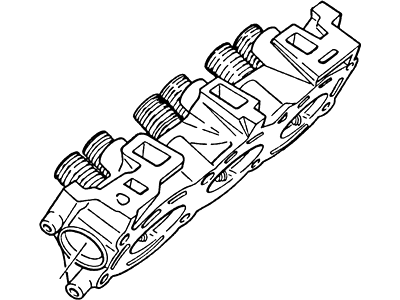 Product Specifications
- Other Name: CYLINDER HEAD ASY
- Item Dimensions: 7.5 x 9.3 x 24.9 inches
- Condition: New
- Fitment Type: Direct Replacement
- Require Quantity: 2
- SKU: E8TZ-6049-F
- Warranty: This genuine part is guaranteed by Ford's factory warranty.
1990 Ford Bronco Cylinder Head
At FordPartsGiant.com, you will find an extensive inventory of genuine 1990 Ford Bronco Cylinder Head offered at competitive prices online. These manufacturer-backed OEM 1990 Ford Bronco Cylinder Head ensure your satisfaction with their quality and come with a hassle-free return policy and expedited delivery service, guaranteeing a delightful shopping experience.
1990 Ford Bronco Cylinder Head Parts Questions & Experts Answers
- Q:How should you properly reassemble cylinder head on 1990 Ford Bronco?Posted by Janos K.A:Regardless of whether the head was sent to an automotive repair shop for valve servicing, ensure it is clean before beginning reassembly. If the head was sent out for valve servicing, the valves and related components will already be in place. Starting at one end of the head, lubricate and install the first valve, applying moly-base grease or clean engine oil to the valve stem. Slide a new valve stem seal over the valve and seat it on the guide using a deep socket and hammer, gently tapping the seal until it is completely seated on the guide, taking care not to deform or cock the seal during installation. Note that on some engines, the intake and exhaust valve seals may differ. Install the valve spring seats or shims if applicable, then set the valve spring damper and retainer in place. Compress the springs with a valve spring compressor, position the keepers in the valve stem grooves, and slowly release the compressor, ensuring the keepers seat properly. A small dab of grease can be applied to each keeper to hold it in place if necessary. Repeat this procedure for each valve, ensuring that components are returned to their original locations without mixing them up. Check the installed valve spring height with a ruler graduated in 1/64-inch increments or a dial caliper; if the head was sent out for service work, the installed height should be correct, but do not automatically assume it is. The measurement is taken from the underside of the spring damper to the underside of the spring retainer. If the height exceeds specifications, shims can be added under the springs to correct it, but do not shim the springs to the point where the installed height is less than specified.Answered by Ford Parts Specialist Clayton / May 07, 2026
Related 1990 Ford Bronco Parts
 1990 Ford Bronco Intake Valve
 1990 Ford Bronco Exhaust Valve
 1990 Ford Bronco Cylinder Head Bolts
 1990 Ford Bronco Cylinder Head Gasket
 1990 Ford Bronco Rocker Arm
 1990 Ford Bronco Crankshaft Seal