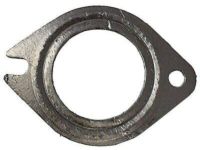
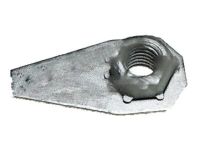
The catalytic converter is an emission control device added to the exhaust system to reduce pollutants from the exhaust gas stream. It uses a single-bed converter design in combination with a three-way (reduction) catalyst. The catalytic coating on the three-way catalyst contains platinum and rhodium, which lowers the levels of oxides of nitrogen (NOx) as well as hydrocarbons (HC) and carbon monoxide (CO). Some later models have a dual-exhaust system, with a three-way catalytic converter, muffler and tailpipe for each bank. Other late models have a single - exhaust system with one three-way catalytic converter for each bank, with both converter pipes joining to feed through a single exhaust pipe to the single muffler and tailpipe. The test equipment for a catalytic converter is expensive and highly sophisticated. If you suspect that the converter on your vehicle is malfunctioning, take it to a dealer or authorized emissions inspection facility for diagnosis and repair. Whenever the vehicle is raised for servicing of underbody components, check the converter for leaks, corrosion and other damage. If damage is discovered, the converter should be replaced. Because the converter is part of the exhaust system, converter replacement requires removal of the exhaust pipe assembly. Take the vehicle, or the exhaust system, to a dealer or a muffler shop.