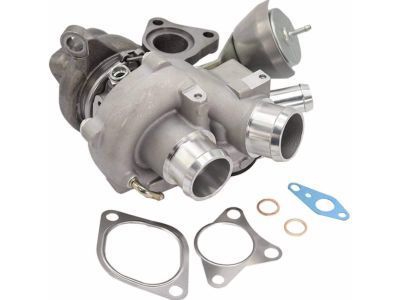
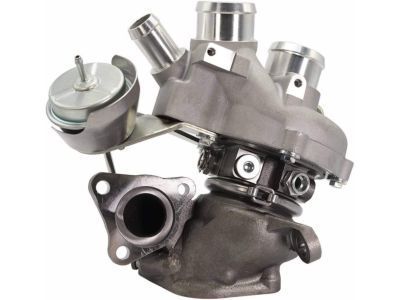
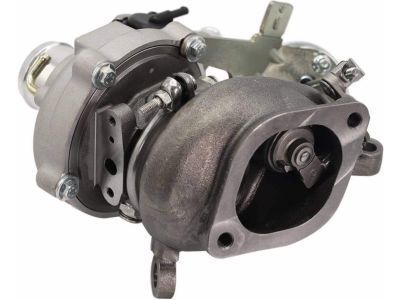
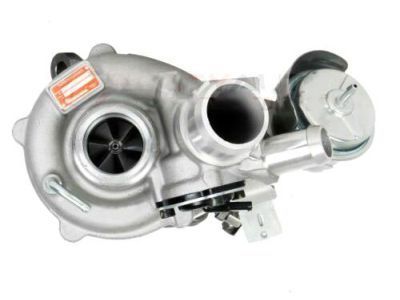
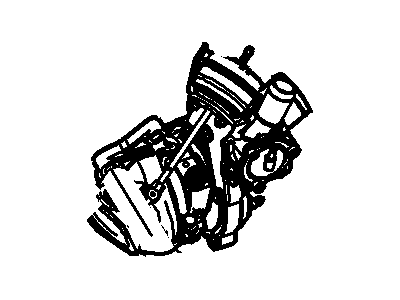
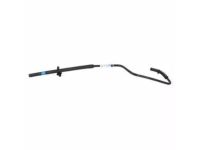
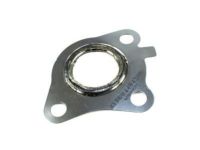
The engine must be cold before removing the Turbo(s), and heat insulation material should be removed before disconnecting any hoses, pipes, or connections from the Turbo. Drain the cooling system. When removing the right-hand Turbo, first remove the drivebelt and the air conditioning compressor from the block, supporting the compressor out of the way with a length of wire or rope. To disconnect the Y-pipe and catalytic converters, support the transmission with a suitable jack and remove the transmission mount retainer and the crossmember; for 4WD models, raise the transfer case and remove the insulator, retainer plate, and crossmember. After removing the Y-pipe and converter assembly, reinstall the transmission insulator, retainer plate, and crossmember, tightening the fasteners just snug. Disconnect the vacuum hose at the wastegate, tagging and disconnecting the two other vacuum hoses and the coolant pipe connection. Disconnect the electrical connector at the Turbo bypass valve, then disconnect the tube that feeds oil into the top of the center bearing housing for cooling, along with the pipe leading from the bottom of the center bearing housing to return oil to the engine's oil pan. Remove the duct from the air cleaner housing to the Turbo and tape the openings, then remove the exhaust heat shield if equipped. Tape off any openings on the Turbo assembly, remove the mounting bolt from the Turbo-to-block bracket while holding the Turbo, and then remove the Turbo. Installation is the reverse of removal, using new gaskets at the turbo-to-exhaust junction on each side and new gaskets where the oil supply and return pipes connect to the Turbo housing. Apply anti-seize compound on the new Turbo-to-exhaust manifold bolts and on the Y-pipe-to-Turbo junctions, tighten all fasteners to the specified torque, refill and bleed the cooling system, and install a new oil filter along with fresh engine oil.