Make sure this part fits

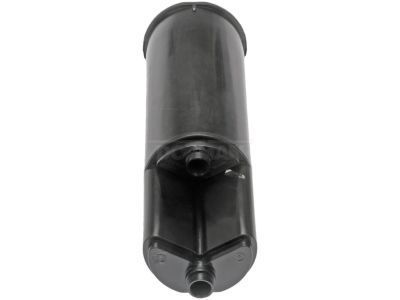
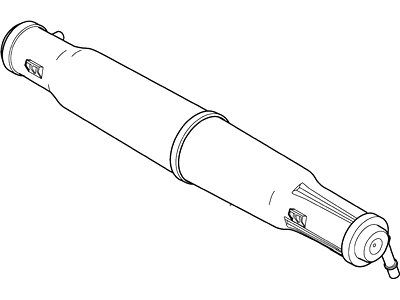
Lincoln F75Z-9D653-AC Reservoir Assembly

1998-2003 Lincoln F75Z9D653AC

Customer Questions & Expert Answers (8)
F75Z-9D653-AC Ford Reservoir Assembly Product Photo 1 of 1
  • Part Description
    Reservoir Assy
  • Base No.
    9D653
  • Manufacturer
    Ford
Make sure this part fits
$127.95 MSRP: $207.27
You Save: $79.32 (39%)
Ships in 1-2 Business Days
1
ADD TO CART
  • Related Parts
  • Specifications
  • Fitment
  • Q&A
  • Product Specifications

    BrandGenuine Lincoln
    Base No.9D653
    Manufacturer Part NumberF75Z-9D653-AC, F75Z9D653AC
    Part DescriptionReservoir Assy
    Other NamesVapor Canister
    Item Dimensions17.3 x 6.4 x 5.2 inches
    Item Weight3.20 Pounds
    ConditionNew
    Fitment TypeDirect Replacement
    ManufacturerFord
    SKUF75Z-9D653-AC
    WarrantyThis genuine Ford part is guaranteed by Ford's factory warranty.
    Shipping & ReturnShipping Policy Return Policy
    Warning: California's Proposition 65
  • Vehicle Fitment

    Year Make Model Engine Important vehicle option details
    2002-2003 Lincoln Blackwood8 Cyl 5.4L DOHC EFI4-Speed Automatic Transmission E4OD(4R100), Left Hand Drive, Rear-Wheel Drive (Left Hand Drive)
    1998-2002 Lincoln Navigator8 Cyl 5.4L4AT 4R100, 4AT E4OD
  • Customer Questions & Expert Answers

    Q:
    Is the the correct part for the attached VIN? Posted by FordPartsGiant Specialist
    A:
    You can Select Your Vehicle to check if F75Z-9D653-AC fits your vehicle.
    Posted by FordPartsGiant Specialist
    Installation and Repair Tips
    Q:
    How to Replace the Vapor Canister on the Ford Excursion? Posted by Customer
    A:
    The Evaporative Emission Control System (EVAP) traps and stores fuel vapors from the fuel tank, throttle body, and intake manifold when the engine is idle. The system includes a charcoal canister, fuel vapor management valve (VMV), fuel tank pressure sensor, and other components. The vapors are in the canister when the engine is off and purged when it is running and the fuel tank pressure sensor informs the PCM, which regulates the EVAP system. To replace the charcoal canister, relieve the fuel tank pressure and disconnect the purge control solenoid. Remove the outlet hose and mounting bolt, and remove the canister. To replace the VMV, disconnect the electrical connector, label and disconnect the vacuum hoses, and remove the mounting bolts. Installation is the reverse of removal.
    Posted by FordPartsGiant Specialist
    Q:
    What is the role of the Vapor Canister in the Evaporative Emission Control System (EVAP) on the Ford Explorer? Posted by Customer
    A:
    The fuel vapors from the throttle body, intake manifold and fuel tank are captured and stored on the EVAP. These vapors are then conveyed by a charcoal canister into the combustion chamber while engine is in progress. So far, it has gone from a system with an activated carbon canister to one that is electronically controlled including other parts of its composition. The inspections vary with the presence of loose or damaged components, smell of gasoline, or leakage of fuel. An increase in fuel pressure is checked by either removing the gas cap or using a SCAN tool. In case where there is increased pressure, tests are conducted on hoses, evaporative emission valve, and charcoal canister. Also, inspections include smelling for fuel vapor in the engine compartment as well as checking hoses and VMV voltage.
    Posted by FordPartsGiant Specialist
    Q:
    What Is the Vapor Canister in the Evaporative Emission Control System and how to replace it on Ford Expedition? Posted by Customer
    A:
    When the car is not running, the system catches fuel vapors from the fuel tank, throttle body, and intake manifold that drift up. It holds those fumes in the charcoal canister, then directs them back into the engine to burn during normal operation. The EVAP system includes a charcoal-filled canister, connecting hoses, fuel tank, fuel vapor control valve, fuel tank pressure sensor, fuel cap, fuel vapor opening, ported and intake vacuum. On all models, a box-shaped charcoal canister sits on the frame near the fuel tank, except that the Expedition and Navigator use a round-shaped canister. When the engine switches off, the vapor management valve lets fuel vapors escape from three sources - the fuel tank, throttle body, and intake manifold - and send them to a canister until the engine starts again. When the engine runs, the same valve sends the vapor from the canister through the PCM (powertrain control module) and mixes it with the engine fuel before burning it up. The fuel tank pressure sensor sends the fuel tank interior pressure readings to the fuel monitoring system. This system uses the readings to control EVAP system fuel processes. The system shows EVAP issues by creating special code alerts, such as P0452, P0453, and P1451, pointing at trouble spots. A broken vapor management valve, a defective canister, or cracked hose lines can cause your car to run poorly, be difficult to start, and drive badly. You may find fuel loss or odors from leakage through damaged fuel lines or the throttle body, cracks in the vapor canister, or when the air filter isn't tightly installed. Before starting the engine, check each canister hose for bends, leaks, and breaks. Also look for cracks or damage on the canister itself. You can check for too much pressure in the fuel tank by taking off the gas cap and listening for air escaping, while a special OBD-II tool will give the most correct reading. When pressurized fuel vapor shows up, we must look at two parts: examine the hose and inlet port for blockage and find out if the valve has air access. You test the charcoal canister's tightness by applying pressure and making sure it has air-flow when you release the pressure. Examine all the hoses around the vapor management valve for damage and correct placement. Test the valve's battery power. Label all vacuum hoses connected to the canister before pulling them out, then loosen the mounting clamp bolt to release the canister, and fix it back in place by following these steps in reverse when installing new parts.

    Posted by FordPartsGiant Specialist
    Q:
    What Are the Functions and Component Replacement Procedures for the Evaporative Emissions Control System,Canister Purge Valve and Vapor Canister on Ford F-150? Posted by Customer
    A:
    EVAP stands for Evaporative Emission Control and EVAP system is responsible for succumbing the fuel vapors and then emitting it into the intake manifold once the car engine is running so as to mix with the arriving air fuel mixture. The various parts of the EVAP system are the EVAP canister, the vent solenoid, the filter tube, the dust separator and the canister purge valve, with the canister together with related components situated within the vehicle above the spare tire while the purge valve is situated in the engine compartment adjacent to the brake fluid reservoir. Other accessories include Fuel Tank Pressure (FTP) sensor, Fuel Limit Vent Valve (FLW) assembly, check valve for fuel filler pipe, cap for filler neck as well as the EVAP system check. Overfilling and vapor escape is eliminated by the use of fuel filler neck cap and the FLW assembly has the responsibility of controlling the flow of fuel vapor and prohibiting the entry of liquid fuel into the EVAP lines in a case of a vehicle rollover. The FTP sensor triggers the purge valve where tank pressure is high, it also measures vacuum levels during testing. The EVAP system monitor in a vehicle will perform a 'running loss system leak test' in which the engine is started and tested for large leaks, before running the test to note the rate of decay as an indicator of minor leaks. For component replacement, there are the EVAP canister purge valve which at the removal, entails disconnecting the electrical connector and quick-connect couplings as well as releasing it from the mounting bracket. The EVAP canister assembly comprised different parts, and to check or replace any component, the negative terminal of the battery has to be disconnected, car has to be raised and some hoses and mounting bolts have to be disconnected or removed, and after installation, all the parts are refitted in the reverse order.
    Posted by FordPartsGiant Specialist
    Q:
    What Is the Vapor Canister in the Evaporative Emission Control System and how to replace it on Lincoln Navigator? Posted by Customer
    A:
    When the car is not running, the system catches fuel vapors from the fuel tank, throttle body, and intake manifold that drift up. It holds those fumes in the charcoal canister, then directs them back into the engine to burn during normal operation. The EVAP system includes a charcoal-filled canister, connecting hoses, fuel tank, fuel vapor control valve, fuel tank pressure sensor, fuel cap, fuel vapor opening, ported and intake vacuum. On all models, a box-shaped charcoal canister sits on the frame near the fuel tank, except that the Expedition and Navigator use a round-shaped canister. When the engine switches off, the vapor management valve lets fuel vapors escape from three sources - the fuel tank, throttle body, and intake manifold - and send them to a canister until the engine starts again. When the engine runs, the same valve sends the vapor from the canister through the PCM (powertrain control module) and mixes it with the engine fuel before burning it up. The fuel tank pressure sensor sends the fuel tank interior pressure readings to the fuel monitoring system. This system uses the readings to control EVAP system fuel processes. The system shows EVAP issues by creating special code alerts, such as P0452, P0453, and P1451, pointing at trouble spots. A broken vapor management valve, a defective canister, or cracked hose lines can cause your car to run poorly, be difficult to start, and drive badly. You may find fuel loss or odors from leakage through damaged fuel lines or the throttle body, cracks in the vapor canister, or when the air filter isn't tightly installed. Before starting the engine, check each canister hose for bends, leaks, and breaks. Also look for cracks or damage on the canister itself. You can check for too much pressure in the fuel tank by taking off the gas cap and listening for air escaping, while a special OBD-II tool will give the most correct reading. When pressurized fuel vapor shows up, we must look at two parts: examine the hose and inlet port for blockage and find out if the valve has air access. You test the charcoal canister's tightness by applying pressure and making sure it has air-flow when you release the pressure. Examine all the hoses around the vapor management valve for damage and correct placement. Test the valve's battery power. Label all vacuum hoses connected to the canister before pulling them out, then loosen the mounting clamp bolt to release the canister, and fix it back in place by following these steps in reverse when installing new parts.

    Posted by FordPartsGiant Specialist
    Q:
    What checks are conducted if excess pressure is detected in the Vapor Canister for the 2003 Ford Explorer Sport Trac? Posted by Customer
    A:
    If excess pressure is detected, checks are conducted on hoses, the evaporative emission valve, and the charcoal canister's tightness.
    Posted by FordPartsGiant Specialist
    Q:
    What does the Fuel Vapor Vent (FW) valve do for the Vapor Canister in the 2003 Ford Ranger? Posted by Customer
    A:
    The Fuel Vapor Vent (FW) valve prevents overfilling and liquid fuel entry. It is usually mounted on top of the fuel tank.
    Posted by FordPartsGiant Specialist
    See Complete Installation and Repair Tips

Genuine Ford Part F75Z-9D653-AC, the Right Choice

To ensure reliability, purchase part # F75Z-9D653-AC Reservoir Assembly. It is also called Vapor Canister. OEM parts are of high quality and known for their longevity. This is because they are built to the Ford standards which are relatively high and undergo rigorous quality control testing. This part fits specific Lincoln Blackwood, Navigator models.

FordPartsGiant.com is a leading supplier of genuine components and accessories such as F75Z9D653AC Reservoir Assembly. Looking to purchase quality low-cost OEM Ford parts? You have just found the right place. For detailed Lincoln parts information, click here.

Why choose Ford Parts Giant

  • Dedicated Service

    Your complete satisfaction is our #1 goal

  • Lowest Prices

    Best deals on genuine OE parts from dealerships

  • Fast Delivery

    Orders are processed and delivered promptly