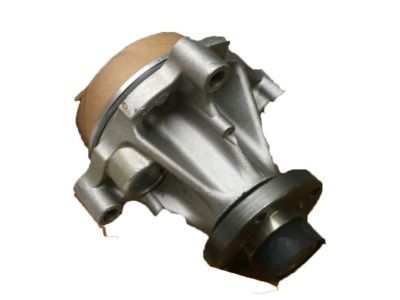
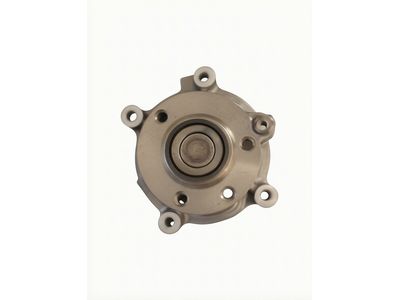
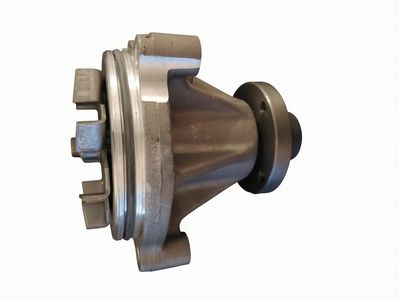
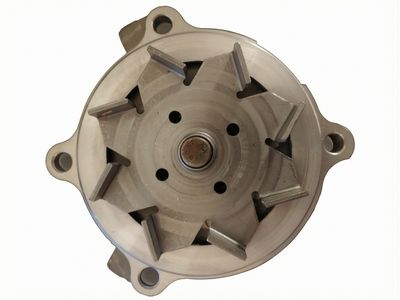
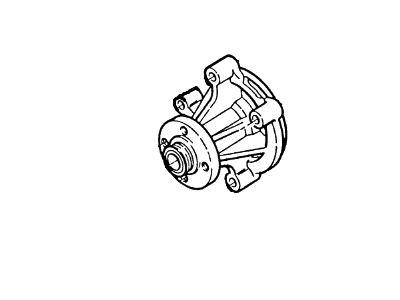
Water pump failure can cause overheating and serious damage to the engine. There are three ways to check the operation of the water pump while it's installed on the engine. If any one of the following three quick checks indicates water pump problems, it should be replaced immediately. Start the engine and warm it up to normal operating temperature. Squeeze the upper radiator hose. If the water pump is working properly, you should feel a pressure surge as the hose is released. A seal protects the water pump impeller shaft bearing from contamination by engine coolant. If this seal fails, a weep hole in the water pump snout will leak coolant. If there's coolant leaking from the weep hole the water pump should be replaced. An inspection mirror can be used to look at the underside of the pump if the hole isn't on top. If the weep hole is leaking, shaft bearing failure will follow. Replace the water pump immediately. Besides contamination by coolant after a seal failure, the water pump impeller shaft bearing can also prematurely wear out. If a noise is coming from the water pump during engine operation, the shaft bearing has failed - replace the water pump immediately. Note: Do not confuse drive belt noise with bearing noise. Loose or glazed drive belts may emit a high-pitched squealing noise. To identify excessive bearing wear before the bearing actually fails, grasp the water pump pulley and try to force it up-and-down or from side-to-side. If the pulley can be moved either horizontally or vertically, the bearing is nearing the end of its service life. Replace the water pump.