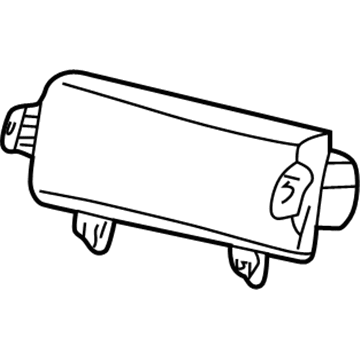
Every Prius from 2005 and earlier has a safety system keeping both driver and passenger safe in a frontal crash with airbags. An electronic crash sensor is fixed to the center tunnel concealously behind the dashboard instruments. Catch bags are installed both on the steering wheel and the passenger side panel. Beginning in 2002, new cars had optional seat belt pre-tensioners that helped get rid of loose seat belts by igniting small pyrotechnic devices at impact moments. The driver's seat airbag holder is push-started in the middle of the steering wheel, linked with the steering wheel rotation parts that pass electricity to the holder from all angles. The passenger's airbag on the left is bigger than the driver's airbag and attached to steel supporting brackets under the glove box. During crashes, the electronic crash sensor brings power to the airbag system even when regular power is cut off, and checks the system each time you start your vehicle. When the system finds a problem, it turns on the "SRS" light, telling you that you need to get your car serviced right away. Always turn off the SRS system before fixing things close to it to keep the airbags from blowing up on accident. Disabling the airbag system requires three steps: set the steering wheel to straight, turn the key to "Lock," and disconnect the negative battery terminal, waiting two minutes for backup power to drain. Procedure details vary depending on whether you're working on the driver's side air bag module with clock spring or the passenger's side air bag module. For driver's side work, follow precise instructions, but on the passenger's side, you'll lower the glovebox door to access, remove the connectors and hardware, all right according to rules. You finish assembly by undoing the screws used for removal and making sure all bolts stay tight.