

My Garage
My Account
Cart
This part fits
2006 Ford Ranger
Check another vehicle- Production Date: 04/2004-12/2011
Ford 4L5Z-10043B13-AAA Air Bag Module
2004-2006 Ford Ranger 4L5Z10043B13AAA
Customer Questions & Expert Answers (4)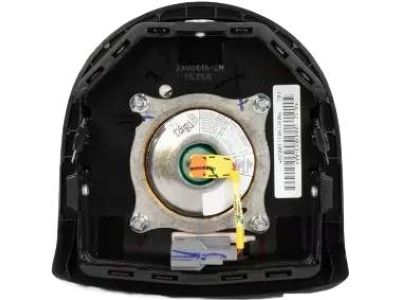
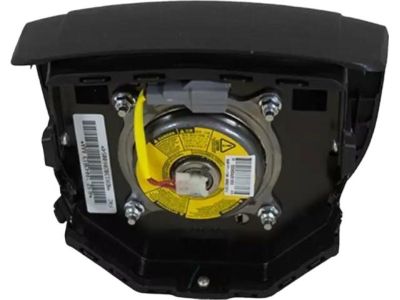

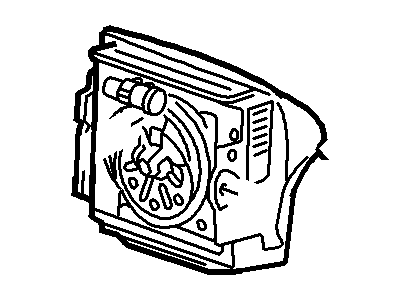
- Part DescriptionModule
- Base No.<043B13
- Replaced By
- ManufacturerFord
- Manufacturer's NotesThis part is discontinued.
This part fits
2006 Ford Ranger
Check another vehicle- Production Date: 04/2004-12/2011
- Related Parts
- Specifications
- Q&A
Product Specifications
Brand Genuine Ford Base No. <043B13 Manufacturer Part Number 4L5Z-10043B13-AAA, 4L5Z10043B13AAA Part Description Module Item Dimensions 14.8 x 14.3 x 6.3 inches Item Weight 10.50 Pounds Condition New Fitment Type Direct Replacement Manufacturer Ford SKU 4L5Z-10043B13-AAA Warranty This genuine Ford part is guaranteed by Ford's factory warranty. Shipping & Return Shipping Policy Return Policy Warning: California's Proposition 65Customer Questions & Expert Answers
- Q:Is the the correct part for the attached VIN? Posted by FordPartsGiant Specialist
- A:You can Select Your Vehicle to check if 4L5Z-10043B13-AAA fits your vehicle.Posted by FordPartsGiant Specialist
Installation and Repair Tips- Q:What is the purpose and functionality of the Supplemental Inflatable Restraint System and Air Bag on Ford Ranger? Posted by Customer
- A:Later models feature a Supplemental Inflatable Restraint (SIR) System, commonly known as an airbag, designed to protect the driver and front seat passenger from serious injury during a head-on or frontal collision. This system includes an airbag module in the center of the steering wheel and the right side of the instrument panel, two crash sensors at the front of the vehicle, and a diagnostic monitor with a backup power supply in the passenger compartment. On 2010 and later models, optional side-impact airbags are located in the top of the front seat backs. The steering wheel-mounted airbag inflator module contains a housing with the airbag and inflator unit, which inflates the bag almost instantaneously upon receiving an electrical signal. The passenger airbag, if equipped, is larger and mounted above the glove compartment, supported by a steel reaction housing. The Restraint Control Module (RCM) monitors the airbag system, checking it each time the vehicle starts, with an indicator light signaling proper operation or faults. When servicing components near the SRS system, it is crucial to disable the system to prevent accidental deployment. Early models have three sensors, while later models have four, all of which send signals to the electronic diagnostic monitor to inflate the airbags during a collision. The electronic diagnostic monitor ensures the airbag system is operational and alerts the driver to any faults. Disabling the system involves specific steps for both 2005 and earlier models and 2006 and later models, including disconnecting the battery and removing the RCM fuse. Enabling the system requires reconnecting the battery and reinstalling the fuse, with a test to confirm proper functionality indicated by the warning light behavior.Posted by FordPartsGiant Specialist
- Q:What is the purpose and function of the Air Bag System, commonly known as an airbag, on the Ford Ranger? Posted by Customer
- A:Later models feature a Supplemental Inflatable Restraint (SIR) System, commonly known as an airbag, designed to protect the driver and front seat passenger from serious injury during a head-on or frontal collision. This system includes an airbag module in the steering wheel and instrument panel, two crash sensors at the front, and a diagnostic monitor with a backup power supply in the passenger compartment. On 2010 and later models, optional side-impact airbags are located in the top of the front seatbacks. The steering wheel-mounted airbag inflator module contains a cushion and inflater unit, which inflates the bag almost instantaneously upon receiving an electrical signal. The passenger airbag, larger than the steering wheel unit, is mounted above the glove compartment and also inflates using a similar mechanism. The Restraint Control Module (RCM) monitors the airbag system, performing checks each time the vehicle starts, with an indicator light signaling proper operation or faults. If the light remains on or fails to illuminate, it indicates a system issue requiring professional diagnosis. Caution is advised when servicing components near the SRS system, as electrical test equipment can inadvertently deploy airbags. Early models have three sensors, while later models have four, all of which send signals to the electronic diagnostic monitor to inflate the airbags during sufficient impacts. The monitor supplies power to the airbag system even if the battery is disconnected and checks the system at startup. Disabling the system before working near airbag components is crucial, with specific procedures for both 2005 and earlier models and 2006 and later models to ensure safety. A switch is available on models with a passenger airbag to disable it when transporting a rear-facing child safety seat. Testing the SRS system involves observing the airbag warning light for proper function, with any irregularities indicating the need for a dealership check.Posted by FordPartsGiant Specialist
- Additional Installation and Repair Tips by AI Expert
- Removal: 1. WARNING: Supplemental Restraint Systems (airbags) can deploy and cause serious injury; if you are not experienced, have a qualified technician perform this work. 2. Park on level ground, turn off ignition, remove the key, and wear eye protection and gloves. 3. Disconnect and isolate the vehicle battery per manufacturer instructions; follow the factory-specified wait time before working on SRS circuits. 4. Remove any trim or covers needed to access the airbag module-access method varies by design. 5. Support the airbag module and release its retention hardware or clips as required by the design; avoid prying on the module face. 6. Carefully disengage the airbag electrical connectors using the connector release features; do not pull on wires and note connector orientation. 7. Lift the module free and place it face-up on a stable, insulated, non-conductive surface away from heat, static sources, and electrical equipment. 8. Store or tag the removed module so it is not mistaken for a serviceable part; do not attempt to repair or reuse a deployed airbag. Installation: 1. Confirm the replacement airbag is the correct, undamaged part and has not been previously deployed. 2. With the battery still disconnected and any required wait time observed, position the airbag where it mounts and route wiring as originally found. 3. Connect the airbag electrical connectors fully until their locks engage; ensure pins and terminals are undamaged and oriented correctly. 4. Reinstall the module retention hardware or clips per the design, using new fasteners if the manufacturer specifies replacement hardware. 5. Refit any trim or covers, making sure wiring is not pinched and all panels seat correctly. 6. Reconnect the vehicle battery and follow the manufacturer's prescribed reconnection/initialization steps for the SRS system; use an appropriate scan tool to read and clear SRS codes if available. 7. Verify the airbag warning lamp performs its self-check (illumination on key-on, then extinguish) and that no SRS faults remain; if the lamp stays on or flashes, stop and have the system diagnosed. 8. Repair tip: always handle modules with the deployment surface up, avoid static discharge, and replace mounting hardware or associated sensors if specified by the vehicle maker.
- Q:
Why choose Ford Parts Giant
- Dedicated Service
Your complete satisfaction is our #1 goal
- Lowest Prices
Best deals on genuine OE parts from dealerships
- Fast Delivery
Orders are processed and delivered promptly