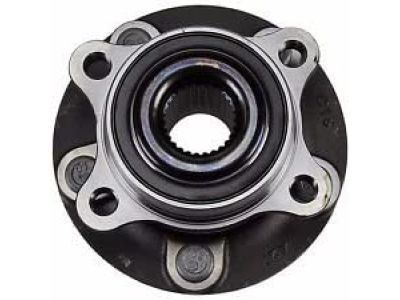
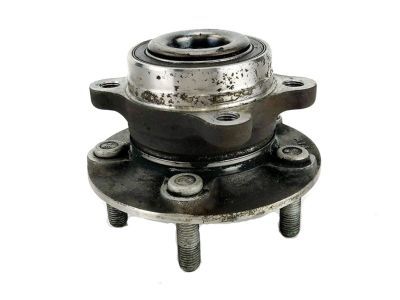
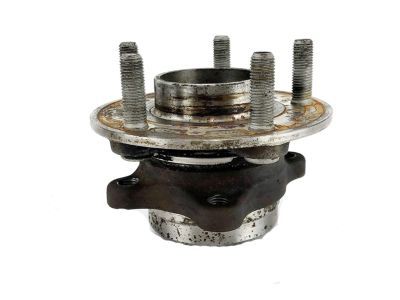
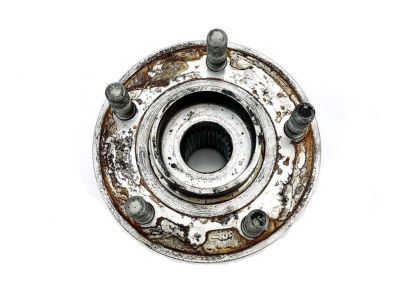
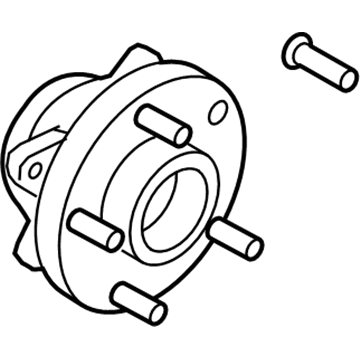
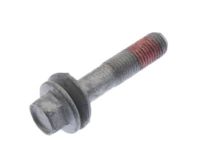
Raise and support the rear of the vehicle and remove the wheel speed sensor. Unbolt and set aside the caliper and caliper mounting bracket, ensuring the caliper does not hang by the rubber brake hose; instead, wire it to the spring or shock absorber with mechanic's wire. Remove the brake disc. For 2012 and earlier FWD models, pry off the grease cap with a screwdriver, tapping it with a small hammer if necessary, then remove the hub nut and slide the hub and bearing assembly from the wheel spindle. Installation is the reverse of removal, tightening all fasteners to the proper torque specifications and using a new hub nut. For AWD models, due to the special tools and expertise required to press the hub and bearing from the steering knuckle, this job should be left to a professional mechanic, although the knuckle and hub may be removed and taken to a qualified repair facility. For 2013 and later models, it is recommended to replace all fasteners with new ones during installation. On AWD models, remove the driveaxle, then remove the four hub mounting bolts from the back side of the knuckle and take out the hub and bearing assembly from the knuckle. Installation is the reverse of removal, ensuring the mating surfaces on the knuckle and the hub and bearing assembly are clean, tightening the mounting bolts in a diagonal pattern to the specified torque, tightening the driveaxle hub nut to the torque if equipped, installing the brake disc, installing the brake caliper and tightening the mounting bolts to the torque, and finally installing the wheel and wheel lug nuts before lowering the vehicle and tightening the nuts to the torque.