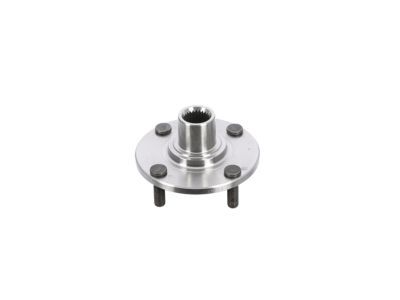
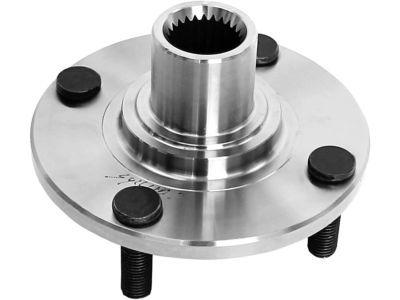
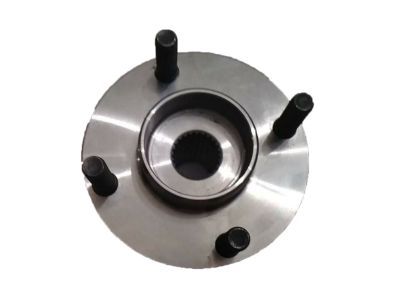
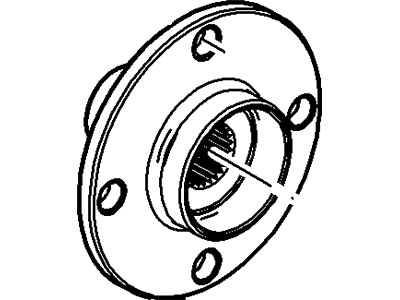
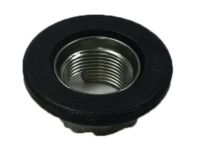
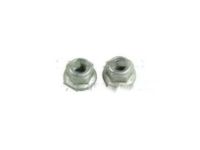
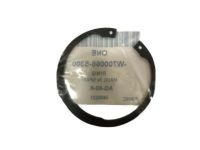
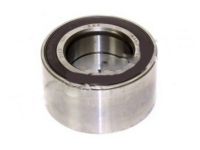
The rear hub bearings are non-adjustable, and to check for excessive wear, chock the front wheels, jack up the rear of the vehicle, and support it on axle stands while fully releasing the parking brake. Grip the rear wheel at the top and bottom, attempting to rock it; excessive movement or roughness when spinning indicates worn hub bearings. To replace, first remove the rear wheel, then tap off the dust cap and unscrew the hub nut, which is of special laminated design and should be reused a maximum of four times, marking it each time it is removed. Next, remove the rear brake drum, using a suitable puller if necessary, and apply penetrating oil or heat if the drum is stubborn. Ensure any remaining part of the inner race on the stub axle is removed with a puller, and take out the ABS sensor ring if equipped, as it must be replaced upon reinstallation. Extract the snap-ring securing the bearing in the hub/drum with snap-ring pliers, then press or drive out the bearing using a length of metal tubing slightly smaller than the bearing outer race, and clean the bearing seating faces. Press or drive the new bearing into the hub/drum until fully located, ensuring no pressure is applied to the inner race, then secure it with the snap-ring. Slowly and squarely press the new ABS sensor ring onto the hub assembly, as damage can cause ABS system failure. Locate the new rear hub/drum and bearing assembly on the stub axle, install the hub nut, and tighten it to the specified torque while rotating the hub assembly in the opposite direction to prevent bearing damage. Finally, tap the dust cap onto the hub, install the rear wheel, lower the vehicle, and tighten all bolts and nuts to their specified torque.