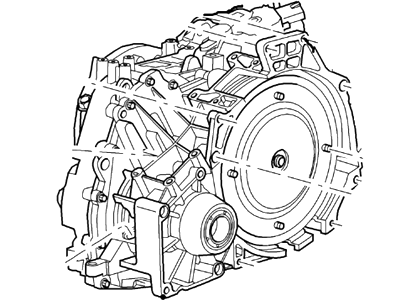
Models released after 2005 should begin with battery and battery tray removal before detaching the wiring harness from the tray support bracket on V6 models and afterward removing the air filter housing. Remove the wiring connector from the firewall with its disconnect while taking off the shift cable and wiring from the transaxle and then unscrew the top transaxle bolts. The procedure requires attaching an engine support fixture which transfers transaxle mount weight before vehicle lifting on jackstands. After securing the vehicle, remove the left transaxle mount through-bolt and rear transaxle mount in its entirety. The first step includes removing the transverse frame brace on V6 vehicles along with the alternator shield and oxygen sensor wiring. These steps should be followed by removing the plastic splash shields. Remove the through-bolt first and the cross brace mounting bolts and both driveaxles including the intermediate shaft followed by its bracket. The exhaust pipe needs to be detached from four-cylinder cars while V6 models need to remove their front exhaust pipe segment. The transfer case should be removed for all 4WD models whereas 2WD models require removal of their transaxle vibration damper. The technician must first remove the front mount plate and then disconnect the transaxle fluid cooler lines before removing the OSS sensor and starter. To access the crankshaft properly you should remove the bell housing cover along with all torque converter-to-driveplate bolts while rotating the crankshaft. Use the fixture to lower the transaxle a little before jacking it up to extract the remainder of mounting bolts safely starting from the torque converter position. To install reverse the uninstallation process by making sure the torque converter properly engages the transaxle fluid pump while matching the marks between the components before securing all bolts to their specified torque settings. The correct automatic transmission fluid must be added to the transaxle while shift cable adjustment takes place to enable the Powertrain Control Module to review idle and fuel mixture trim parameters so the unit functions optimally.