

My Garage
My Account
Cart
Genuine Lincoln Mark VII Differential Seal
- Select Vehicle by Model
- Select Vehicle by VIN
Select Vehicle by Model
orMake
Model
Year
Select Vehicle by VIN
For the most accurate results, select vehicle by your VIN (Vehicle Identification Number).
2 Differential Seals found
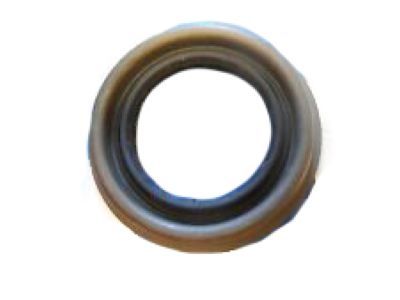
Lincoln Mark VII Oil Seal Assembly
Part Number: F89Z-4676-AA$18.72 MSRP: $26.67You Save: $7.95 (30%)Ships in 1-2 Business Days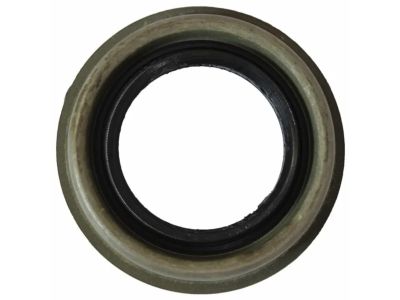
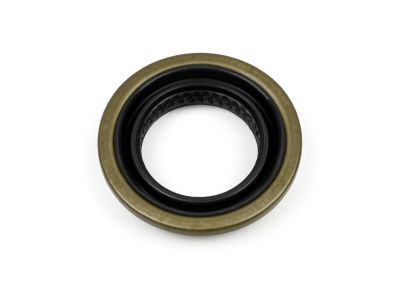
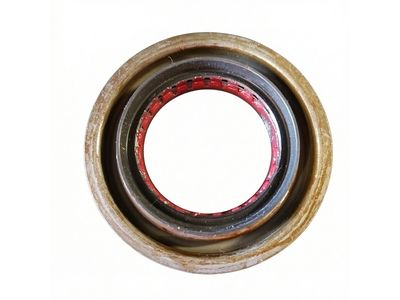
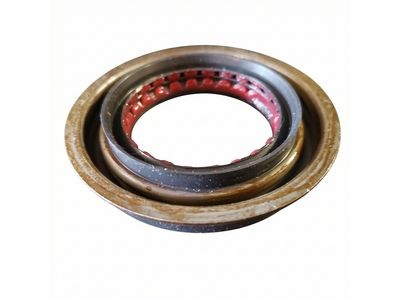
Lincoln Mark VII Oil Seal Assembly
Part Number: E8TZ-4676-C$18.72 MSRP: $26.67You Save: $7.95 (30%)Ships in 1-2 Business Days
Lincoln Mark VII Differential Seal
The Lincoln Mark VII Differential Seal keeps vital gear oil inside the rear differential while blocking road grit from entering. Differential Seal ensures smooth torque flow whenever the wheels turn. Early models relied on a simple open differential. However, later Mark VII editions featured a limited slip unit that applied clutch packs. These clutch packs allowed the differential to send extra power to the tire with traction. Both styles rely on a Differential Seal that is strong enough to contain 75W-90 lubricant under changing pressure. Seated around the pinion or axle shafts, the Differential Seal is molded from heat-tolerant synthetic rubber, with a flexible lip that hugs the spinning metal to stop leaks while expelling dirt on Lincoln axles. Most factory Differential Seals use nitrile or fluoroelastomer, materials that resist swelling and hardening. However, even they age, so it is wise for Lincoln Mark VII owners to inspect for seepage every few thousand miles. Swift replacement prevents bearing noise and protects the gears that let the Lincoln Mark VII corner smoothly. A fresh Differential Seal seats quickly, and using a spec one keeps operation factory tight.
We provide a wide range of Lincoln Mark VII Differential Seal at the optimal prices. If you need Lincoln Mark VII Differential Seal, you can shop with confidence on our website. All our OEM parts come with a manufacturer's warranty and are delivered to your doorstep with a fast delivery service.
Lincoln Mark VII Differential Seal Parts Questions & Experts Answers
- Q:How to remove and replace a Differential Seal on the pinion of a Lincoln Mark VII?A:Loosen the rear wheel lug nuts, raise the rear of the vehicle and place it securely on jackstands. Remove the rear wheels. Remove the brake drums or calipers. Mark the driveshaft and companion flange for ease of realignment during reassembly, then remove the driveshaft. Mark the relationship between the pinion and companion flange. Using an inch-pound torque wrench, measure and record the torque required to turn the pinion nut through several revolutions (pinion bearing preload). Using a suitable tool, hold the companion flange and remove the pinion nut. Using a suitable puller, remove the companion flange. Pry out the old seal with a slide hammer and reversed jaws or other appropriate tool. Clean the oil seal mounting surface. Tap the new seal into place, taking care to insert it squarely. Inspect the splines on the pinion shaft for burrs and nicks. Remove any rough areas with a crocus cloth. Wipe the splines clean. Install the companion flange, aligning it with the marks made during removal. Gently tap the flange on with a soft-faced hammer until you can start the pinion nut on the pinion shaft. Using a suitable tool, hold the companion flange while tightening the pinion nut to the minimum torque. While tightening, take frequent rotational torque measurements, using the inch-pound torque wrench, until the measurement recorded is reached. Caution: If the measurement was less than the pinion bearing preload torque, continue tightening until the specified preload is reached. If it was more than specified, stop when the specified preload is reached. Under no circumstances should the pinion nut be backed off to reduce pinion bearing preload. Increase the nut torque in small increments and check the preload after each increase. Reinstall the driveshaft, brake drums and wheels. Check the differential oil level and fill as necessary. Lower the vehicle and take a test drive to check for leaks.
Related Lincoln Mark VII Parts
 Lincoln Mark VII EGR Valve
 Lincoln Mark VII Drain Plug
 Lincoln Mark VII Differential
 Lincoln Mark VII Differential Cover
 Lincoln Mark VII Differential Bearing
 Lincoln Mark VII Differential Pinion Bearing
 Lincoln Mark VII Drain Plug Washer
 Lincoln Mark VII Drag Link
 Lincoln Mark VII Driveshaft Yokes
 Lincoln Mark VII Exhaust Manifold
 Lincoln Mark VII Exhaust Manifold Gasket