

My Garage
My Account
Cart
Genuine Ford Bronco II Cylinder Head
Head- Select Vehicle by Model
- Select Vehicle by VIN
Select Vehicle by Model
orMake
Model
Year
Select Vehicle by VIN
For the most accurate results, select vehicle by your VIN (Vehicle Identification Number).
2 Cylinder Heads found
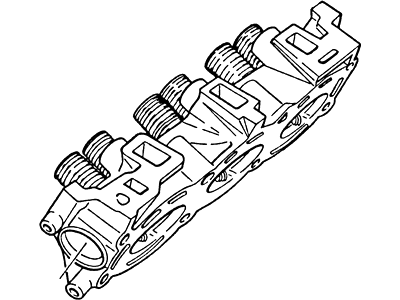
Ford Bronco II Cylinder Head
The Ford Bronco II Cylinder Head directs air fuel into the chambers and lets exhaust escape, giving the SUV smooth power and efficiency. The Cylinder Head was originally cast in durable iron and is now also offered in aluminum. Its head gasket seals against the block and is held by torque to yield (TTY) bolts. The TTY bolts stretch once to create even clamping, thus reducing leak potential and warpage. Inside every Bronco II engine, the Cylinder Head houses the spark plugs and intake and exhaust valves, thus worn guides or burnt valves can kill compression and misfire. The Bronco II may lose power when the gasket gives out between cylinders. Likewise, when a breach occurs into the coolant passages, it overheats the motor or mixes oil with coolant. Drivers of Ford trucks often notice that the Cylinder Head stays flat, coolant stays stable, and horsepower stays strong. Aluminum models are lighter and dissipate heat faster, enabling the driver to utilize higher compression without detonation, whereas iron versions excel at resisting extreme cycles. Reshaped ports within the Cylinder Head improve airflow, qualities that enhance the Ford Bronco II's reputation and keep any Ford lover satisfied.
We provide a wide range of Ford Bronco II Cylinder Head at the optimal prices. If you need Ford Bronco II Cylinder Head, you can shop with confidence on our website. All our OEM parts come with a manufacturer's warranty and are delivered to your doorstep with a fast delivery service.
Ford Bronco II Cylinder Head Parts Questions & Experts Answers
- Q:What are the basic types of cylinder heads used in today's automobiles on Ford Bronco II?A:There are two basic types of cylinder heads used on today's automobiles, The two are Overhead Valve (OHV) and Overhead Camshaft (OHC), with the OHC having further subtypes known as Single Overhead Camshaft (SOHC) and Dual Overhead Camshaft (DOHC). Most of the cylinder heads are manufactured from the aluminum alloy due to its strength and lightweight with cast iron also being commonly used. Valves and seats are present in all cylinder heads, with number that may vary between two per cylinder to more complicated multi-valve designs. Always ensure there is play by increasing or decreasing the valve stem in relation to the guide to avoid the consumption of oil and spoiling the engine. Valve springs are designed to keep the valves in place and closed when not in use and to then open the valves when required. Remachining a cylinder head, as a rule, means the replacement of all the components; however, this may not be the case regarding the engine maintenance. Disassembly is less complex than assembly and entails stripping of parts, where the heads with the two camshafts call for orderliness; the removal of the Rocker Arms, springs, and the valves using the tools. Thorough check for the components for wearing or any damage is required, and it necessary to use measuring instruments such as micrometers, and gauges. The valve parts have to be inspected for crack and wear whereas spring as well as retainers for breaks and squareness. Cylinder heads are another part of the engine that have to be checked for the guide condition, seat wear, flatness, and there should always be a check for the presence of any crack; while refinishing of these or repair works are usually done at the machine shop. Assembly includes greasing and fitting of valves, application of spring and sealing and positioning of the parts.
Related Ford Bronco II Parts
 Ford Bronco II Intake Valve
 Ford Bronco II Cylinder Head Bolts
 Ford Bronco II Cylinder Head Gasket
 Ford Bronco II Rocker Arm
 Ford Bronco II Timing Cover
 Ford Bronco II Exhaust Valve
 Ford Bronco II Rocker Shaft Spring Kit