My Garage
My Account
Cart
Genuine Ford Bronco II Car Batteries
Auto Battery- Select Vehicle by Model
- Select Vehicle by VIN
Select Vehicle by Model
orMake
Model
Year
Select Vehicle by VIN
For the most accurate results, select vehicle by your VIN (Vehicle Identification Number).
1 Car Batteries found
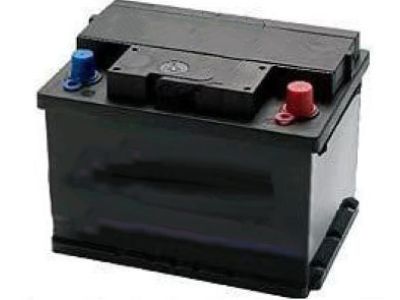
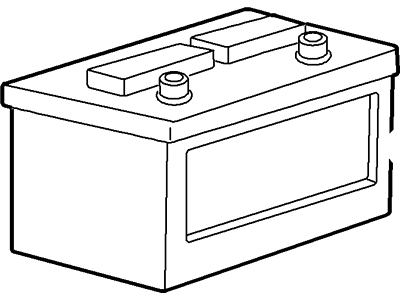
Ford Bronco II Car Batteries
The Car Batteries of the Ford Bronco II can be further described as an electrochemical cell that supplies electrical current to start the car's engine and to uphold the electricity for the starting mechanism, ignition and the fuel injection. It also assists the radio for example when the car engine is off and also keeps the car clock and other features such as memory for other components of the car even when the car is not in use. Since its inception, different types of batteries such Ford Bronco II Conventional Flooded Lead-Acid (FLA), FLA Maintenance-Free, and Absorbed Glass Mat (AGM) batteries, have been used. Although FLA batteries need some maintenance, AGM batteries have other benefits such as the absence of the need for the maintenance, less possibility of spillage, and increased performance qualities, good of off-road vehicle uses. Car Batteries type affects the dependability and power output of the car in consideration with different climates.
We provide a wide range of Ford Bronco II Car Batteries at the optimal prices. If you need Ford Bronco II Car Batteries, you can shop with confidence on our website. All our OEM parts come with a manufacturer's warranty and are delivered to your doorstep with a fast delivery service.
Ford Bronco II Car Batteries Parts Questions & Experts Answers
- Q:What precautions should be taken when working on or near car batteries on Ford Bronco II?A:When performing work on or in proximity to the battery, take extra care not to inadvertently connect any tool between the negative and positive terminals, or make ground, as this causes shorting and possible severe electric shock. Fire and other sources of ignition such as smoking and spark should not come in contact with battery because has explosive gases. It is mandatory to hold on the battery using a hold-down device in order to avoid its movement and consequently acids leakage and corrosion. Daily or at least weekly visual check for cracks, leakage and overall corrosion is required and damaged batteries need to be replaced as quickly as possible. Before removing a battery, the negative terminal should be disconnected and then the positive one, next, the hold-down device should be loosened and then the battery should be removed. As the battery is removed, ensure that the battery tray is clean as well as free from rust and clear it if necessary. In installation, tighten the hold-down device but do not over tighten it as you connect the positive cable before the negative one. Non-sealed batteries need routine examination of the electrolyte level and replenishing with distilled water if needed, while a sealed battery needs to be checked with the assistance of the hydrometer that is installed on it. There is also need to ensure that battery terminal and cables are free from any form of corrosion and cleaning should be done at least once a year. In a case where the battery is not frequently used then removing the negative terminal during the period of storage is recommended. It is recommended for the electrolyte level to be controlled once a month and the addition of distilled water is necessary in freezing weather. Specific gravity tests can show battery charge and also reveal if there is swelling and if the cells are very high or very low, then they should be replaced. Battery terminals and cable clamps need to be cleaned at least once a year, the electrical connection must be good and dielectric grease can be also used to retard corrosion. In charging the battery, this should be done slowly in order not to over heat the battery and when the battery is being replaced, an amperage rating of the battery must be equivalent or higher than the original battery, to allow for the increased electrical resistance in the battery.